A Q&A interview with Jack Mackay
Gloam is Jack Mackay’s debut novel, a chilling Gothic thriller oozing atmosphere and with some extremely scary moments and monsters. He answers our questions about the story in this special Q&A.
Gloam is your debut. Can you tell us where the idea began?
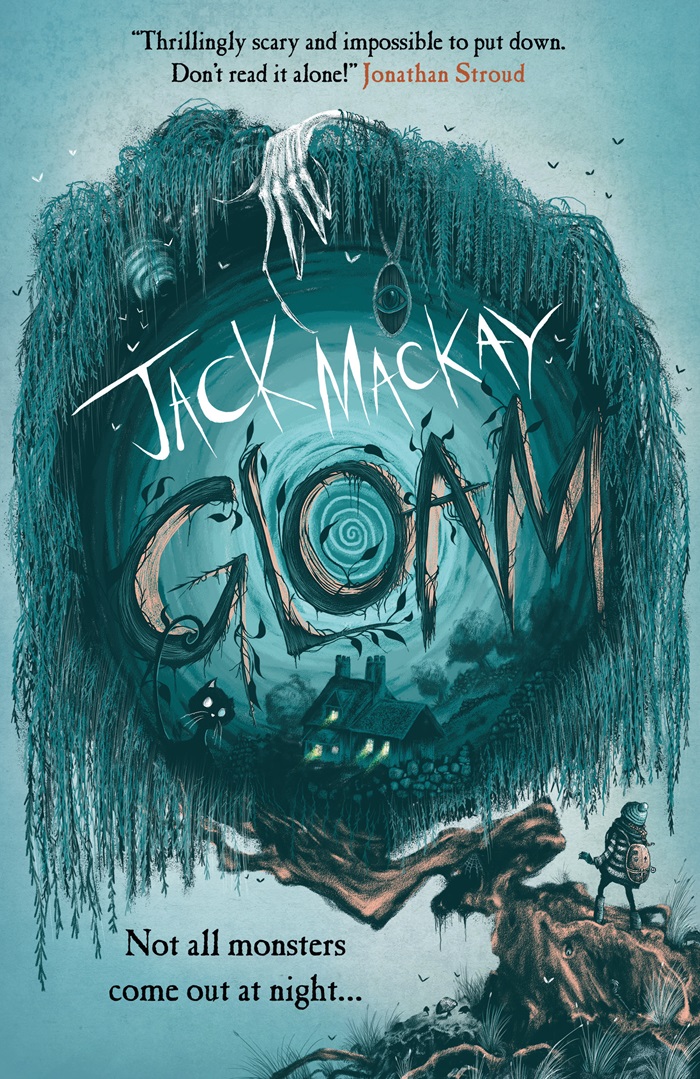 My sister was twelve when I started writing Gloam, and she loved Doctor Who, Coraline and other stories that aren’t afraid to be scary. Possibly inspired by my passionate sermons about horror movies at the dinner table, she decided that she wanted to prove that she was bold enough for horror. I wouldn’t let her watch Halloween (obviously) but when I started scouring for horror books in her age range, looking for things like Goosebumps which I loved at her age, I came up a little short. So I decided to write my own.
It just so happened that my grandparents had just started talking about selling their lovely old house in the Midlands, which I practically grew up in. The idea of an intruder in that family space was so existentially horrifying that it slowly transformed into an idea that eventually became Gloam – specifically, its villain: Esme Laverne. With that grounding in my childhood and family home, other glimmers of my own life started creeping into the writing process, until the story developed into some strange hybrid of fictional and real-life inspirations. The capital-H ‘House’ in Gloam is recognisably a copy of my grandparents’, only with the scariness dial turned up to 11, from the ominous cellar to the wasp-ridden treehouse in the garden. My grandparents were quite offended when they read it, but I assured them their house was never that scary in real life (at least, not in the daylight!)
How much were you influenced by favourite books, movies or stories?
I’m one of the most vociferous lovers of literature and film that I know, possibly to the extent that I might be a little annoying about it. Horror is particularly special to me. Part of the challenge of writing for a younger audience is translating the language of horror, much of which is geared towards adults, into a children’s space. But there are many writers and filmmakers who have achieved this with flying colours, and it’s them who I’m particularly indebted to. I’m sure readers with a similar taste to me will spot homages all over the book, from Goosebumps to Grimm to Cruella de Vil. I’m a product of my influences, so it follows that my writing is, too.
Gloam is a seriously scary story. What’s the appeal to you as a writer in scaring your readers?
I think we have a natural impulse to protect kids from negativity, and sometimes that manifests by giving them art that’s unremittingly nice and friendly and kind. Horror is associated with all kinds of unpleasantness – fear, disgust, grief – which some might argue are off-limits when writing for young people. But I disagree. I’m a big believer in the idea that horror can be just as life-affirming as any other genre. The sense of threat is naturally inflated, but there’s plenty of love and levity to be found in horror fiction, which the scares enhance by contrast. And there is great value in allowing ourselves to be scared within safe environments. It’s thrilling, but it’s more than that: it’s a way for us to confront the things that disturb us and process them in a healthy way. Horror gives us the power to face the things that go bump in the night. Young people experience these things just as acutely, if not more, than adults do, so they should be able to access art that acknowledges that aspect of their lives and gives them the tools they need to understand it.
Why do readers enjoy being scared?
There’s a great thrill in being transgressive, and reading scary stories (or watching scary movies, which I was guilty of at a younger age than is usually advisory) is a classic way to access that feeling within limits you can safely control. You can always close the book or turn off the television. So when you give yourself that environment, and trust in a piece of art that trusts you in return, being scared is awesome. It makes us feel alive. And that strong emotional response is the gateway into the analytical: why does it make me feel this way? What’s my relationship to this story? What am I learning about myself? These questions are enormously valuable for young people’s development, and being scared often gives them the impetus to explore them, maybe even for the first time.
Which of the nightmarish creatures you’ve created in the book do you find the most terrifying and why?
I love this question, because everyone who’s read it has a different favourite monster! I wanted to craft monsters that were built around the protagonists’ specific fears, so I find it very exciting that people are responding personally to them based on their own experiences. Seeing as Gwen is the most like me, her monster – an embodiment of grief and losing your childhood – resonates with me. It helps that I’m twenty-two and ended my formal education only last year, so I’m sensing the loss of my own childhood very strongly! But I’d count Esme among the monsters, and she’s by far the most invasive, powerful and manipulative of them. Adults might see shades of menace in her that go over young people’s heads. Re-reading some of her interactions with Gwen still makes me shiver, so I’d say she’s still the scariest!
How important is the setting and the landscape for your book in creating the scares?
Atmosphere is king in horror, and the setting is a vital part of generating atmosphere. I’ve always been a little bit obsessed with Holy Island and the long, muddy causeway that leads to it. The idea of getting stranded somewhere remote when the sea comes in is a great way to create a sense of growing claustrophobia, of being alone with the monster. Adding to that the enclosed family house, which is familiar yet unfamiliar, old and creaky and slowly becoming infested with rot, only enhances the sense of the uncanny.
Another contributor to the build-up of tension is the way children’s concerns are ignored by adults. How important is that and is it particularly relevant today?
Being underestimated and ignored seems to be a universal part of the experience of being young. It’s also a feeling that can only be exacerbated with grief, which is a uniquely isolating and frustrating experience, and something which Gwen and her siblings feel strongly since their mother’s passing. It’s also a natural wellspring of fear, whereby the horror of Gloam is born. But there’s also an empowering resolution to that theme, which is that if the adults won’t listen, then the kids will do it on their own. I wanted Gwen’s growing agency to be a focal point in her development, which I hope young readers will relate to. Young people are in a constant battle for their own agency, whether it be the freedom to play outside with friends without supervision, the freedom to pursue their passions without being dismissed or curtailed. Young people like to be challenged, and they have a powerful sense of when they’re being talked down to. I want to be a writer who trusts my audience to tackle scary fiction on their own terms.
Are you working on a new book? Do you want to continue to scare your readers?
I’m lucky enough to have another book in the works with my wonderful publishers at Rock the Boat, and I’m thrilled that it’s also a horror story. I won’t reveal too much, but having a read of W.W. Jacob’s The Monkey’s Paw might give you an idea of my creative touchstones for this next one. Though I want to try out all kinds of genres and mediums, horror will always be home to me, and I’ll always be excited to help young people like my sister access that space. In all aspects of creating art for young people, my ethos is write up, not down.
Gloam is published by Rock the Boat, £7.99pbk and out now.


