
Price:
Publisher:
Genre:
Age Range: 5-8 Infant/Junior
Length: 112pp
Buy the Book
Frank the Monster
Illustrator: Sofia FalkenhemFrank Steen is a boy who feels most at ease in the ordered, predictable company of books. In the noisy, expectation-filled world around him, he often senses that he is slightly out of step. Strandberg’s quietly unsettling illustrated novel begins with this emotional dislocation and follows it into stranger territory still, as Frank undergoes a transformation that is at once monstrous, comic and deeply revealing.
The story unfolds through a series of moments that balance humour with genuine pathos. Early scenes, such as Frank’s ninth birthday party, where carefully prepared sack races remain empty and unused, capture the painful gap between the child his parents expect him to be and the solitary reader he truly is. As physical changes begin to take hold, this sense of being misplaced intensifies. Frank’s heightened sensory awareness of the world around him, from the prickling of his skin to his fascination with the texture and taste of particular words, gives the narrative a subtle neurodivergent coding that feels both compassionate and recognisable.
Strandberg’s wit is at its sharpest in the library sequence. Frank’s research into werewolves leads him to imagine a different kind of creature altogether, one driven not by violence but by a yearning for affection. His realisation that he might be more “werewoof” than werewolf transforms horror into something unexpectedly tender. Yet the threat beyond his imagination grows very real. As rumours spread and fear grips the townspeople, Frank’s private struggle becomes a public danger. His father’s decision to place bars on the bedroom window, intended as protection, carries a painful irony. In trying to keep a monster out, he is imprisoning his own son.
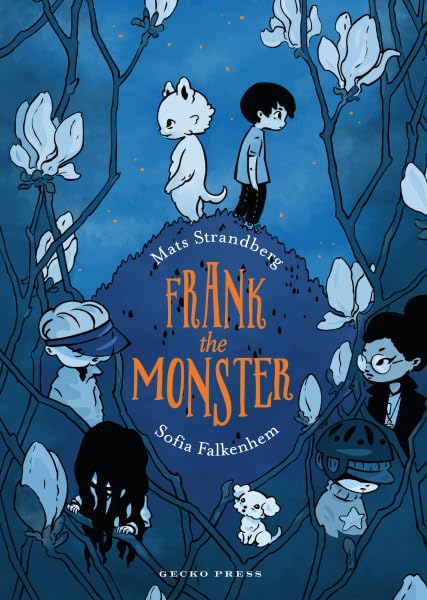
Marshall’s translation captures Frank’s voice with clarity and restraint, allowing the Swedish setting to feel both specific and accessible. Falkenhem’s duotone illustrations in teal, black and white deepen the atmosphere, often amplifying emotional contrasts between what is described and what is seen.
What emerges is a story about loneliness, embodiment and reluctant self-acceptance. Frank’s journey moves from fear of becoming something other to a tentative understanding that difference does not erase the need for connection. Strange, funny and unexpectedly moving, this is a quietly powerful exploration of what it means to be seen.


