
Price: N/A
Publisher:
Genre: Fantasy
Age Range: 14+ Secondary/Adult
Length: 448pp
Buy the Book
Blood of Gods and Girls
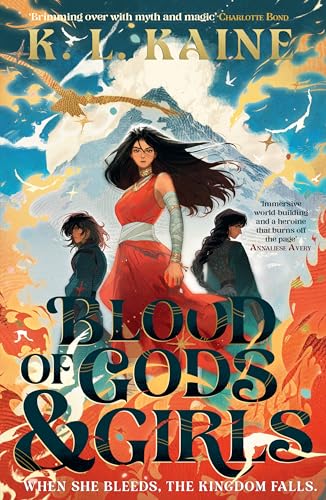
We’re in a fairly familiar fantasy world in K.L. Kaine’s YA novel: a small island state, its dusty capital city surrounded by mountains where live magical creatures, the territory ruled by an all-powerful king, this one apparently immortal. Our protagonist Nisha is of a familiar if pleasing type too, wily, tough physically and apparently mentally, living by her wits on the streets. What sets it apart, and gives its narrative a fiery propulsive drive, is the author’s fury at society’s treatment of women and girls, not just in this fictional society either, but all of them. In Nisha’s world, women are completely in thrall to men, with no say in who they marry, no control over their money, cast aside on a whim, sometimes into pits where they will starve to death. What’s more, they are told every day that they are worthless. This is despite the people’s worship of a goddess, protector of their land, with young girls chosen to be her mortal representatives. Nisha was one of those, and the only one who managed to escape her gilded cage, faking her own death to avoid recapture. Since she adopted a baby girl, abandoned by her family for the sin of being female, Nisha has even more reason to hide from the king’s guards. When she is discovered, she and Ratna, the little girl, are rescued by another young woman, a Golden Eagle Warrior no less, and taken to a community of women living high in the mountains. They believe that as the sole surviving vessel for the great Goddess, Nisha can tempt Shantavi back to help her people and, crucially, remove the gift of immortality she bestowed on her former lover, the king. Gradually, Nisha decides to help, to find the Goddess and to fight against everything she’s been told is right from the day she was born. With various challenges to be overcome and a close-knit group of comrades to help, including the boy who became her only friend in the temple complex, Nisha’s quest is genuinely exciting and the pages turn quickly. The possibility that one of those in her group is a traitor, ups the tension nicely. Her success depends on her ability to stop seeing herself as weak and inferior to men, and ‘to believe her own stories’ as Garuda the warrior tells her. That message is laid out for readers very clearly, but it’s an important and inspiring one, while the author is careful too not to write off all men, and to show that an equal society is better for everyone. This feminist fantasy finds opportunities for humour amongst the polemic and action and offers readers lots to enjoy as well as to think about.