
Price: N/A
Publisher:
Genre: Picture Book
Age Range: Under 5s Pre-School/Nursery/Infant
Length: 32pp
Buy the Book
Different (Big Emotions)
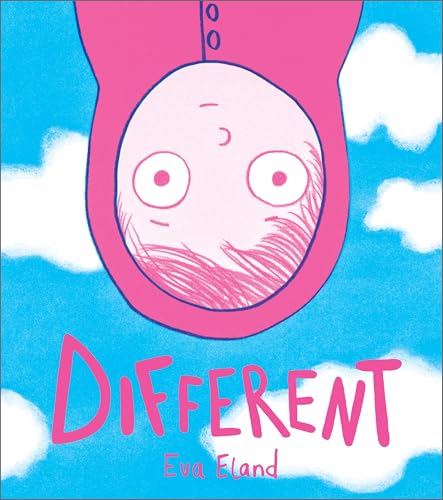
One morning, Mia wakes and something doesn’t feel right. Nothing is out of place, and yet everything is. She looks in the mirror. She goes outside. She tries to fit in — to be ‘just like the others.’ But still, she feels… different.
Eland returns with her unmistakable visual language — pared-back compositions, luminous washes of colour, and those softly outlined, wide-eyed figures that feel both vulnerable and strong. Like When Sadness Is at Your Door and Where Happiness Begins, this is emotionally literate storytelling distilled to its purest form. The line work is simple, almost childlike, yet profoundly intentional; the white space does as much work as the text.
Mia’s bright pink figure stands in gentle contrast to the cooler blues and greens around her — a visual cue that mirrors her internal state. The typographical choice of hot pink on the cover and title page reinforces that sense of visibility and self-definition. Even the title page offers quiet nods to Eland’s earlier books — small, framed images echoing her recurring themes of feeling, belonging, and inner weather. It feels like an artist in conversation with her own body of work.
The emotional arc is beautifully handled. Mia tries to ‘fix’ herself. She seeks answers from doctors, teachers, grown-ups. She attempts to shrink into the crowd. Yet nobody seems to notice. Nobody seems to care. Until she meets someone who also feels different. They are visually distinct — one vivid pink, the other cooler and calmer in tone — yet it is precisely this contrast that allows them to see one another clearly. Difference, here, becomes recognition.
Eland resists grand solutions. Mia may always feel a little different — and that’s the point. The closing spreads, rich with textured grasses, ladybirds and soft snowfall, suggest not conformity but acceptance.
There’s something quietly radical here. Rather than urging children to become ‘normal,’ Eland gently untethers them from the idea that normal was ever the goal. Different isn’t a problem to solve — it’s a truth to embrace.
Spare, tender, and visually assured, this feels like a natural continuation of Eland’s work: a soft but steady reminder that being yourself — bright pink and all — is more than enough.


