
Price: N/A
Publisher:
Genre:
Age Range: 10-14 Middle/Secondary
Length: 304pp
Buy the Book
How To Get Magically Popular
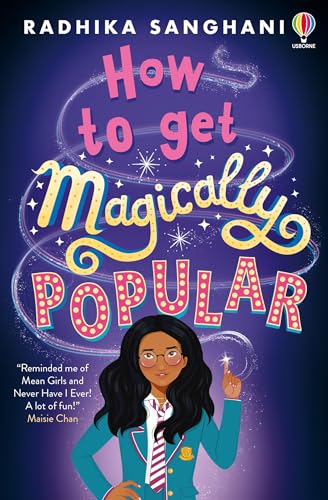
We meet Sabina initially in the lunch hall of her new school, alone. We learn that she has moved schools recently and that this has not been either easy or her choice. The intended audience for this title is very much those transition years at the start of KS3 and although it might be said there is little challenge within the text for this readership and the cover perhaps appeals more to KS2, the topic: the notion of feeling alone at a new school, is something many young readers of the intended age will relate to.
Sabina feels she is unable to fit in in every way – her new school is lacking in diversity, everyone appears to already be in solid friendship groups, and far from improving her popularity as she had hoped, Sabina’s previous life in London is completely alien to the children in this village. Miserable and hoping for a return to her old life, Sabina attends a yoga class and everything changes. Although she has previously meditated with her mum, and this is perhaps an important link as at this stage in the story Sabina’s relationship with her mum is challenged, this class in particular gives Sabina the chance to connect with her chakras and see into the future.
Suddenly this ability becomes a gateway to Sabina achieving popularity… or so she thinks. With her mum starting a new business and Sabina lacking the usual support of either a family unit or existing friendships she becomes more and more determined to use her new abilities to her advantage. That is until seeing into the future becomes as problematic as it is popular… faced with examining whether these new abilities are really what she needs and considering how to live in the moment more Sabina has to make important decisions about what she wants from her life and how best to achieve it.
In many ways the concept of popularity and teenage anxieties around achieving this are as relevant now as ever, and for this reason the title is likely to be successful. The profile of the author will also undoubtedly help. There is perhaps an underlying question about whether some of the issues the title raises, such as how to live in the moment, are pitched ideally for the age group and conversely the text itself and presentation at times feels a little young; nevertheless as teens continue to ponder their own place in society and are ever more plagued with questions about popularity, there is certainly a place for such a title.


