
Price: N/A
Publisher:
Genre: Illustrated Fiction
Age Range: 8-10 Junior/Middle
Length: 112pp
- Translated by: Sarah Ardizzone
- Abridged by:
Monsters
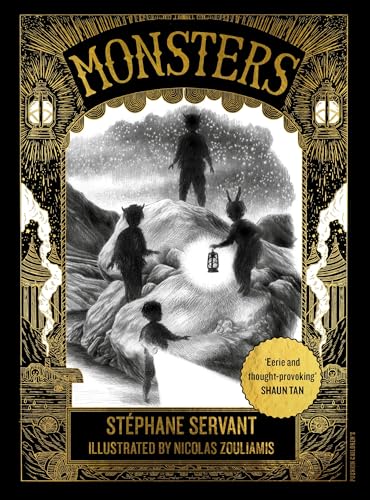
Illustrator: Nicolas ZouliamisOtto lives in a remote village rarely visited by travellers from the outside world. Any who do come are soon frightened away. We have the impression of a withdrawn self-sufficient community until The Circus of Dreams arrives. The villagers are thrilled and flock to the show. Otto is taken by his mother. He is entranced – then the Ringmaster announces a monster will be revealed. A shrouded cage – the covering is removed – and there, the monster – a boy…a human child! So who or what is Otto?
Who are the monsters? This is the question Servant subtly asks his audience. It is a story about the assumptions we make – assumptions that Otto makes, assumptions that, we, the readers will make because initially we do not see Otto face to face. There are clues when the circus arrives. Who is that lady sitting on the steps of her caravan? Does she have two heads? But then a circus is known for creating entertainment from apparent ‘freaks’ – monstrous beings. What if it the audience including Otto is ‘monstrous’, as well… except for that one exhibit? This is Otto’s narrative. But there is more. In parallel the haunting illustrations by Zouliamis tell another story; the story of how this boy has arrived here, in this remote village. It is a story that reveals monsters do not necessarily have grotesque faces or obvious differences. Monsters can exist in a home; or indeed a community. Otto also is a victim. Can differences be overcome? That is the hope, the message at the heart of this powerful slim novel, as Otto and the boy who is also Otto find the strength to face their monsters as they sing ‘A song about how monsters sometimes look like us. And about how cages are made to be broken.’ The text reaches us through the excellent translation by Sarah Ardizzone, direct, immediate. The illustrations do not just create the setting and landscape, they expand the story being told by the author, introducing visual details, enhancing our understanding, creating a wider picture for this. An outstanding book that poses questions without didacticism, shocking- but allowing a positive ending.


