
Price: N/A
Publisher:
Genre:
Age Range: 5-8 Infant/Junior
Length: 40pp
Buy the Book
Mousestache Moosestache
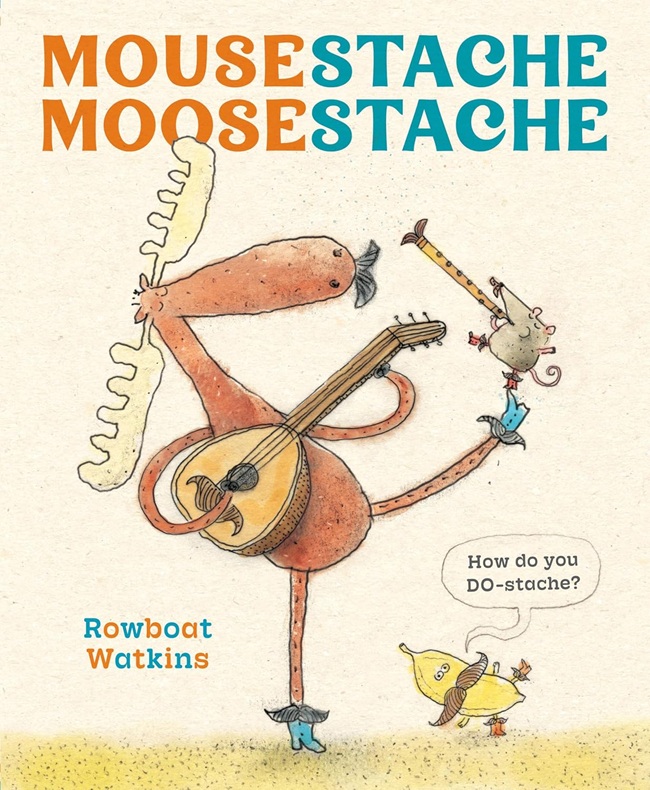
Starting from the cover itself, this book bursts into what can only be described as visual jazz. Moustaches of every conceivable shape and mood ripple, wobble, swoop and parade across the pages, setting the tone for a picturebook that revels in sound, rhythm and sheer imaginative abandon. There is no conventional narrative to follow here. Instead, Watkins offers a playful sequence of encounters and transformations, loosely connected by the ever-present ‘tache motif that migrates from character to character, landscape to landscape.
The text is clearly designed to be heard as much as read. Rhyme and repetition create a shifting musical structure that invites performance, encouraging readers to experiment with pace, pitch and emphasis. Some passages tumble forward with giddy momentum, while others linger on a phrase long enough for the accompanying illustration to deliver its visual punchline: I particularly enjoyed the shock and sweep of ‘migrating flockstaches’. It is a book that comes fully alive in the shared space of read aloud, where its comic timing and linguistic elasticity can be explored.
Watkins’ illustration style amplifies this sense of joyful unpredictability. Every line appears slightly wobbly, as though still in motion, and his softly textured washes of colour give the pages an airy quality. Panels vary in size and arrangement, each bringing its own burst of energy. A bustling spread of animals in unlikely vehicles carries a faint echo of Richard Scarry’s humorous anarchy, while elsewhere the eye is guided from one visual joke to the next by subtle directional cues. Migrating ‘flockstaches’ sweep across mountainous ‘rockstaches’, linking scenes through visual rhyme even when the narrative thread loosens.
What holds the book together is not plot but creative momentum. Absurdity is embraced rather than explained. Domestic life, nature, transport and fantasy coexist in a world governed by playful logic, where nothing is too strange to belong. Young readers will delight in spotting recurring details and anticipating the next transformation, while older ones may appreciate the affectionate nod to the messy inventiveness of childhood imagination.
Energetic, surreal and gloriously unconcerned with restraint, Watkins celebrates the pleasures of nonsense and the possibilities of language set free. It is a book to be performed, revisited and enjoyed in fragments as much as in full: a reminder that picturebooks can sometimes be less about telling a story than about inviting readers into an exuberant creative game.


