
Price: N/A
Publisher:
Genre:
Age Range: 10-14 Middle/Secondary
Length: 304pp
Buy the Book
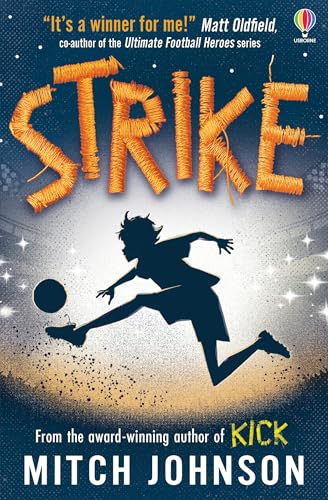
Strike
Many young readers will envy Owen, the narrator of Mitch Johnson’s new novel Strike, when he is scouted by Harrowfield FC alongside his best friend Teddy. But as he begins training at their academy, he starts to learn more about the dark side of football – particularly after he finds a note in his new pair of football boots from a sweatshop worker in Indonesia.
This is, first and foremost, an excellent football story with plenty of tense and exciting scenes in which victory is snatched from the jaws of defeat (and occasionally defeat from the jaws of victory). From playing for his local club to watching Harrowfield in the European finals, Johnson makes every match Owen experiences matter to readers, even those (like me) who are not football fans. This acts as a hook which enables readers to engage with a range of other themes.
I was particularly impressed by the presentation of family. Owen lives with his dad, whose own footballing dreams were cut short by an injury, so he now coaches the local team alongside working night shifts at a warehouse. Their grief following the death of Owen’s mum is sensitively explored, and Johnson offers us a lovely, authentic father-son relationship with lots of affectionate banter alongside moments of genuine intimacy and vulnerability – a valuable corrective to the many examples of toxic masculinity present in football and society more generally. Like many men, they don’t always find it easy to talk about their feelings, but I loved their ‘five-minute rule’ for discussing football matches and other difficult topics.
Another brilliant male role model is Harrowfield’s star player, Budi, who grew up in poverty in Indonesia and has used the challenges he has faced as a haemophiliac to his advantage. Budi inspires Owen in his campaigning against exploitation in the developing world, even when this threatens to cost both Budi and Owen everything they have worked so hard for. The plot ratchets up as they take on the club’s unscrupulous owner, and Johnson just about avoids an overly neat resolution while delivering a positive message about social justice.
Strike is a great example of how to appeal to reluctant middle-grade readers, mainly boys, without patronising them. Johnson delivers a compelling story which may also inspire readers to think more about injustice and inequality.


