
Price: N/A
Publisher:
Genre: Picture Book
Age Range: Under 5s Pre-School/Nursery/Infant
Length: 32pp
Buy the Book
The Butterfly House
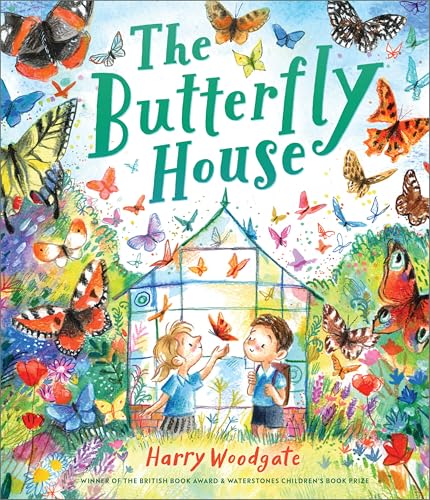
Holly has an encounter with Miss Brown, her reclusive next door neighbour that leads to her writing a letter to apologise for creeping her into her garden. Miss Brown responds by explaining ‘My brain was ill for a long time and I fear the wildness has spilled out and now I can’t tidy it up again.’ Holly looks for advice from her teacher and the project attracts the attention of other neighbours. But does Miss Brown approve?
Key to the communication between Holly and Miss Brown is the letter format; we see four between the two of them (and one invitation to the neighbourhood), and the narrative hints at others. There are plenty of ‘teachable moments’ here: a letter-writing project would not be out of the question, and more might come from the story: Harry Woodgate’s inclusion of the teacher is an open invitation to a school to start or promote a school allotment, for example.
There are some things to consider here: safeguarding needs to be discussed, although the use of letters to communicate is a clever way to keep things warm yet appropriately distant. There are some choices in how Miss Brown’s house is depicted and how it appears to improve, although extended help from the neighbours is not part of the story. The biggest issue for me is Miss Brown’s mental health. Harry Woodgate is sensitive and clear about the ‘wildness’ Miss Brown struggles with, and how she comes to the conclusion that ‘a bit of wildness is good for all of us.’ This is a lovely idea – but again, as with the safeguarding issues of Holly encountering her neighbour, presenting this book to a group of children could lead to discussions an adult would need to be prepared for. Discussion of mental health is, as Miss Brown herself says, a thorny issue, but well worth including – led by an adult who is primed for the deep questions this book might suggest.


