
Price: N/A
Publisher:
Genre:
Age Range: 8-10 Junior/Middle
Length: 64pp
Buy the Book
The Messenger
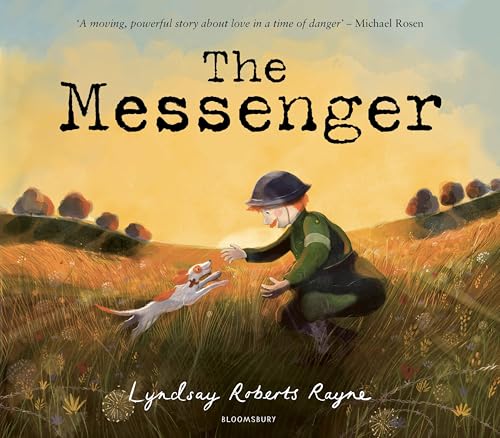
Some stories about war begin with battles. This one begins with a friendship. Before the title page, however, Lyndsay Robert Rayne quietly grounds what follows in history: illustrated portraits of different dogs accompany the extraordinary fact that some sixteen million animals served during the First World War. From that almost unimaginable multitude, Rayne then asks us to care about one small, unnamed dog.
At home, the dog belongs to Nell, whose father is already away at war. Their relationship is established largely without words. One masterful four-panel sequence carries Nell and her companion through the seasons, changing colour, light and landscape until the appearance of an aeroplane quietly signals another world approaching theirs. Then a letter arrives from Nell’s father. Realising that her beloved friend could help him, Nell makes the painful decision to send the dog away to serve alongside him. The emotional cost requires little explanation.
This trust in visual storytelling defines the book. Across its generous 64 pages, Rayne borrows the sequential language of the graphic novel, moving between small panels, repeated compositions and expansive double-page spreads. Words appear sparingly, often providing historical knowledge that pictures alone cannot easily supply. Training, transportation to Ypres and the geography of the trenches are anchored sufficiently for young readers, but the experience belongs overwhelmingly to the images. A trench map briefly turns war into routes, positions and objectives; for the dog who must cross it, those abstractions become mud, wire, darkness and danger.
Colour carries its own narrative. The greens, golds and seasonal light of home gradually surrender to bruised purples and blacks, interrupted by fierce orange washes that seem to consume the battlefield. Darkness eventually sinks so low into the trenches that human and animal figures appear almost swallowed by it. Against this, the dog’s small pale body becomes extraordinarily vulnerable.
Yet Rayne has prepared us for what follows through quieter moments. Again and again, the dog chooses proximity over expectation: staying close, finding her own route, refusing separation. When Nell’s father eventually risks carrying a vital message himself rather than send the animal he has come to love into terrible danger, he is wounded. The dog finds him. Her greatest act is therefore not simply one of trained obedience, but attachment: she will not leave him behind.
After the infernal darkness of the Front, winter brings an exquisite reversal. Snow makes the warmth of home visible: firelight, human touch and reunion glow against the cold. Even the page participates, moving from separated panels towards an expansive image in which the characters can finally occupy the same visual space again. Only afterwards does Rayne provide the historical material about messenger dogs and the British War Dog School, wisely allowing us to experience this story emotionally before returning us to the lives that inspired it.
This is an almost wordless book about carrying messages, and therein lies its quiet brilliance. The dog cannot read the words she carries, yet across these remarkable pages she communicates loyalty, fear, courage and love without needing language at all.
One of millions. Unnamed.
And impossible to forget.


