
Price: N/A
Publisher:
Genre:
Age Range: 14+ Secondary/Adult
Length: 400pp
Buy the Book
The Summer I Ate The Rich
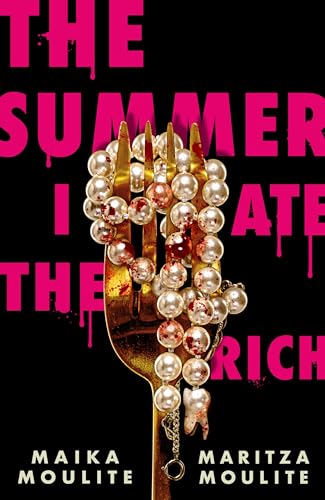
The eye-catching and provocative cover of this book, with its gold fork entwined with blood-stained pearls and its well-worn expression sends what seems to be a clear message to the reader: but, as in much of the rest of the book, things are often not quite what they seem. Having mentally entered vampire/zombie territory, all that remains is to sit back and enjoy a story from the traditional horror genre? Not so.
Brielle is a zombie – or zonbi in Haitian creole – and although she has been brought up in America and never visited the country of her ancestors she has inherited its traditions through her mother’s teachings. A zonbi is much more than a devourer of human flesh-though this is a trait of the American undead: Brielle’s Haitian inheritance, which is deeply rooted in the island’s mythology, teaches a fear of enforced servitude, springing from the horrors of slavery. This combination results in a far more nuanced and far-reaching story than the the stereotypical zombie flesh-ripper.
Brielle’s mother left her viciously powerful husband and the five daughters she bore him to come to America and try to make money with which to support her absent children and found herself in service to the Banks, an immensely wealthy family with well-guarded and sinister secrets. Their complete indifference to her well-being resulted in her returning too soon to work after an injury sustained there. Unable to afford the expensive pain relief she so badly needed-and which, ironically, the company owned by the family manufactured- her life became an ordeal which Brielle was determined to improve. Her talent-and passion-for cookery motivated her to set up a supper club which was soon in demand as a result of the secret combination of ingredients she used – including, of course, human flesh.
By means of the supper clubs and an internship at the Banks Corporation, she meets Preston, the family’s son and heir who is has a sinister secret of his own. Perhaps, rather too conveniently, their attraction is immediate and deep and Brielle begins to be part of a world she did not know existed. When she determines to bring Preston’s father Silas to justice for the manufacture of the painkiller which her mother and millions of others are addicted to-and, cynically, its antidote, he agrees to help in exchange for her silence about his secret-his accidental murder of his grandfather in a hit-and-run.
This book is a rich source of mythology, racial and financial inequalities, historic and modern slavery and redemption. Its happy ending avoids the trap of tying everything up with saccharine threads and there are plenty of plot developments which ensure that the rich are eaten both literally and metaphorically. Mature and capable readers will enjoy it but perhaps they may feel that the commentaries by Brielle’s sisters are a little ponderous-and they may well ask themselves the question-where on earth did a seriously impoverished Brielle find the money to set up her first culinary offering on the ferry?


