
Inclusive Books for Children releases third Excluded Voices report
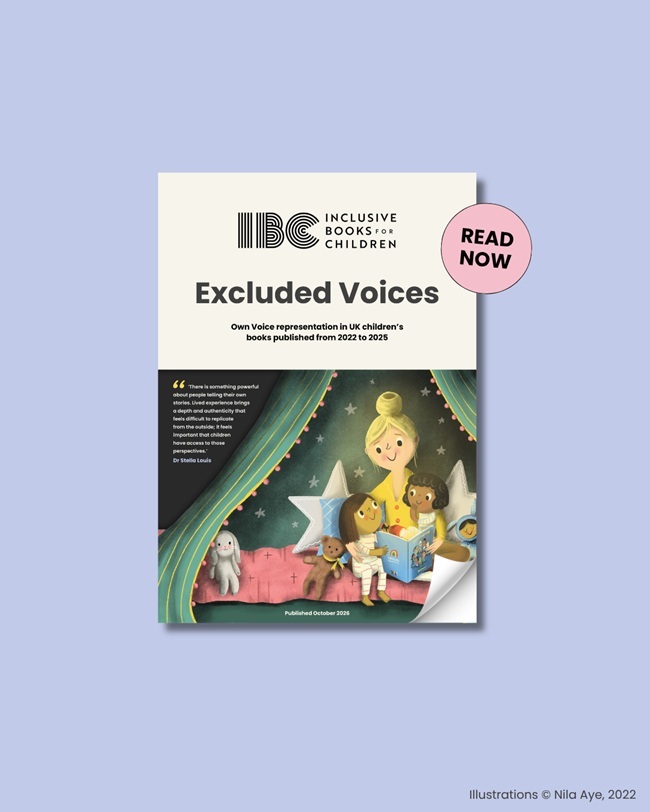
Excluded Voices cover, illustration Nila Aye.
Fewer than half of the ‘diverse children’s books’ published last year in the UK were by British minoritised ethnic, disabled or neurodivergent authors and illustrators according to the new Excluded Voices report by Inclusive Books for Children (IBC).
The report surveys baby and toddler books for ages 1 to 3, picture books for ages 3 to 7 and children’s fiction for ages 5 to 9.
The report finds that of 2,189 books published for children under 10 in 2025, just 150 (6.9%) featured main characters with neurodivergent, disabled or minoritised ethnic backgrounds, and only 73 of those 150 titles were by authors and illustrators who shared the same backgrounds as the books’ protagonists.
Key findings in the IBC Excluded Voices report:
- Just 47 books (2.1%) had Black main characters, down 7.8% on the previous year, despite around 8.5% of 1- to 9-year-olds being of Black heritage
- South Asian main characters featured in just 30 books (1.4%), down 14.3%, despite children of South Asian heritage making up around 12.4% of the 1 to 9 age group
- Only 3 books (0.1%) had main characters of Middle East and North African heritage, down 50% year on year, against an under 10s population of around 2.2%
- Picture books centring disabled characters decreased by 60% in 2025 to just 2 books, and neither title was by a disabled creator
- The increase in neurodivergent representation in picture books was sustained yet modest, from 3 to 13 books, with fewer than half being by neurodivergent authors and illustrators
- Of the 462 baby and toddler books surveyed, 22 (4.8%) had marginalised main characters, up 29.4% on the previous year, and of those, 5 were by British authors and illustrators of the same marginalised identities, a 2.5-fold increase
Most of the books surveyed were traditionally published fictional stories, except in the baby and toddler category, which featured a broader
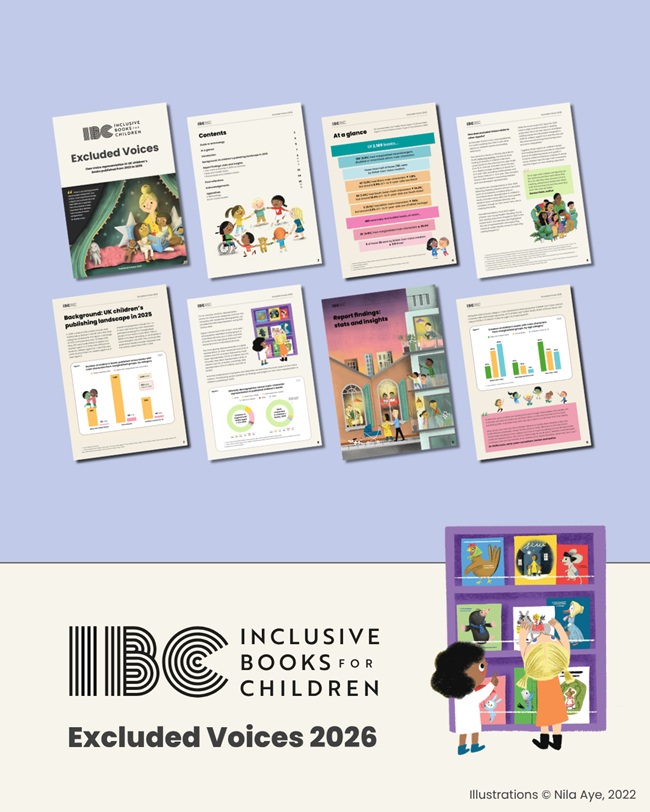
Excluded Voices pages
range of texts.
IBC has been running this research for three years, tracking the same age categories and employing the same methodology since the first report’s launch in 2024. The hope is that the sector will notice and take necessary actions to redress imbalances in representation, say the organisers.
The Centre for Literacy in Primary Education’s (CLPE) new Reflecting Realities report, the first UK study looking at diversity in children’s literature, will be published next month and covers books for the entire primary age range (3 to 11). Last year’s report, published in November 2025, showed an overall increase in the percentage of racially minoritised characters featured in published children’s books reviewed from 17% in 2023 to 24% in 2024.
Meanwhile, Reflecting Disability announced the results of its study into the representation of disabled people in children’s books last month, which found that 10% of children’s books feature disabled people in some way. Funded by Arts Council England with analysis carried out by The Reading Agency, it is the first project of its kind to offer a comprehensive exploration of the extent and quality of disabled characters in picture books, fiction and non-fiction across a full year (2024) of UK children’s publishing for 3-11 year olds.
Jake Hope, children’s book consultant and awards executive for the Carnegies, commented on the findings of the IBC report: ‘It’s a sobering thought that talented authors and illustrators with lived experiences continue to face barriers getting their stories published. The Excluded Voices report shows us who is still missing from UK publishing for children. At a time when children’s enjoyment of reading is at a significant low, it’s more important than ever that the stories children encounter reflect their lives, identities, experiences and emotions. These figures need to be more than mere statistics and a call to action for continued change and improvements.’
Author Serena Patel said, ‘At an age when children are figuring out the world around them and where they fit in, it’s vital they have access to funny, inspiring, adventurous books that reflect both the lives they live and the ones they don’t. We must do better.’
The full 2026 Excluded Voices report can be freely downloaded.


