
New National Literacy Trust research finds audio stories are a regular part of family life
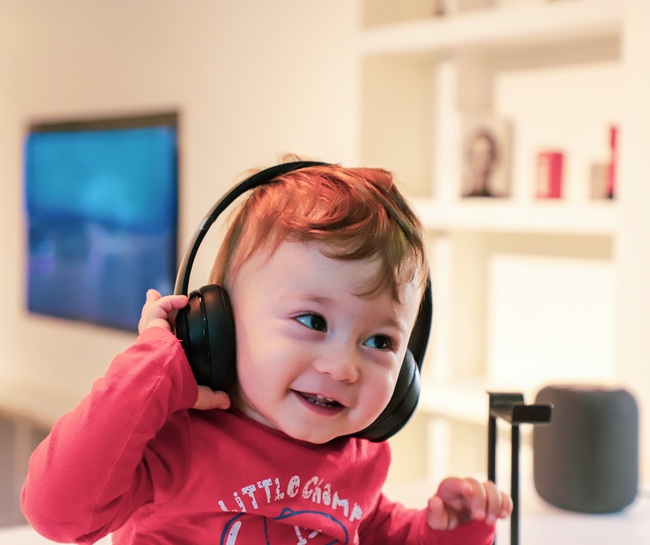 The National Literacy Trust has shared new research into how families with children under five use and experience audio stories in the home. The research was carried out in partnership with tonies®, the interactive audio platform for children.
Based on a survey of 3,194 UK parents and carers with children aged 0 to 5, it finds that audio stories are a regular part of everyday life for many UK families, with parents citing benefits for their children’s literacy, learning and wellbeing.
The research found that, in 2026, 3 in 5 (60.0%) parents said their child aged 0 to 5 listens to audio stories at home. Of these children, around half listen to audio stories at least once a day (49.1% independently, 46.5% with an adult).
Enjoyment of audio stories was also widespread, with 4 in 5 parents saying their child aged 0 to 5 enjoys listening to audio (85.0% with an adult, 79.5% independently).
Audio stories are a valued part of family life and deeply embedded in daily routines. Of young children who listen to audio stories at home, 4 in 5 (84.8%) do so with an adult, including at bedtime to help them wind down (37.1%) or fall asleep (31.9%), during family time (32.0%), play time (28.7%), when travelling (25.9%) or doing creative activities (20.7%).
Parents valued shared listening as a way to bond with their child, through opportunities to enjoy stories (42.1%) and spend quality time (39.4%) together. Many parents were also motivated to share opportunities to listen to audio stories to support their child’s learning (41.1%), provide a form of entertainment (40.4%) and for relaxation (38.4%).
In addition, more than a third (36.3%) of parents said they listen to stories with their child to reduce their child’s screen time, echoing previous concerns from parents which prompted the UK Government earlier this year to publish its first screen time guidance for under-fives to help parents shape healthy screen use habits at home.
The perceived benefits of listening to audio stories in the home were also widespread. More than a third of parents felt that audio stories supported their child’s wellbeing, by helping to boost their mood (35.9%), and their learning and creativity, by helping them to listen and pay attention for longer (36.8%) and using their imagination more (36.0%).
Meanwhile, listening to audio stories was reported to link to attitudes and skills that support early language and literacy development,  including helping children learn new words (40.0%), nurturing an interest in stories and books (34.9%), gaining a better understanding of words and language (34.0%) and sparking conversations about the stories they’ve heard (31.6%).
The research complements the National Literacy Trust’s annual study of parents’ engagement with daily activities which are known to support children’s early literacy development, including shared reading, singing songs and playing and is part of the National Literacy Trust’s Early Words Matter campaign to enable children living in areas of disadvantage to start primary school with the communication, language and literacy skills they need to succeed.
Tracy Jackson OBE, Assistant Director of Early Years at the National Literacy Trust, said, ‘The foundations of reading are laid long before a child can decode the words on a page, with listening at their heart. Our research with tonies shows that sharing stories in all their forms – whether reading picture books, listening to audio stories or singing nursery rhymes – can spark joy, capture children’s imaginations and deepen emotional connections. By equipping more families with the knowledge, skills and confidence they need to make reading, listening to and telling stories a part of everyday life, we can help more children build the early literacy skills they need to learn and thrive.’
Camilla Reid, author of books for babies and toddlers, and National Year of Reading Ambassador, said: ‘As an early years author, I’m a huge fan of audio stories and firmly believe that they’re a massively valuable tool in a child’s reading journey – helping them to love stories, of course, but also to focus, to concentrate and to listen – essential skills for their future learning, and for life itself.
‘In researching my recent picture book, I Am Ready for School, teachers repeatedly shared concerns about how some of their youngest pupils are missing out on a good night’s sleep due to passive screen use at night, affecting their ability to learn the next day. Listening to an audio story can be a brilliant way of calming the brain and establishing a good sleep routine – a simple but key factor for getting the most benefit from school.’
The research also found that, despite the widespread use of audio stories by families with children aged five and under across the UK, many would like further support to help them choose the right audio content for their child.
This included age recommendations (54.6%), suggestions based on their child’s interests (46.4%) and recommendations from trusted sources including other parents (44.1%), early years professionals (41.2%) and librarians (32.2%).
Families can discover a range of free tips, activities and audio story recommendations as part of the National Literacy Trust’s Early Words Matter campaign: literacytrust.org.uk/early-years/their-story-starts-with-you/


