
A Q&A interview with Tom Moorhouse
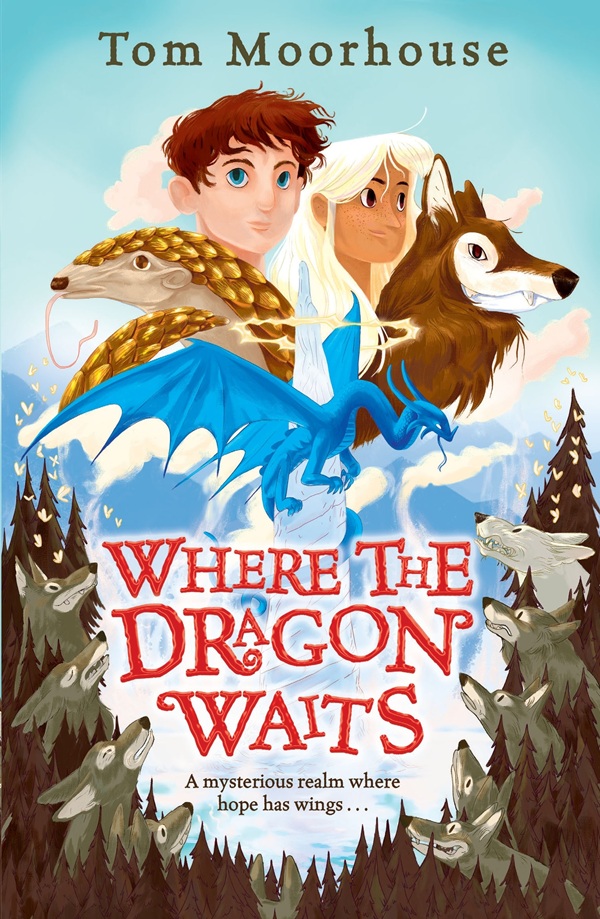
Best known for his animal adventure stories, including The River Singers and Trickster, Tom Moorhouse has now written a fantasy adventure. Where the Dragon Waits is an imaginative and original fantasy adventure story full of magic. Tom answers our questions about the book.
Where the Dragon Waits is a change of direction for you. Can you tell us how the idea came about?
 It does seem like a bit of a change of direction, doesn’t it? (From rodents trying to survive in relatively realistic environments to humans struggling against dragons, talking wolves and improbably tall rock spires.) I would, however, say that I’ve always thought of animal fiction books as ‘animal fantasy.’ Fantasy books essentially work by putting human or human-like characters in incredibly dangerous situations that are, however, part of the normal parameters of the world they inhabit. This allows readers to enjoy a nice perilous fantasy adventure without having to worry that it might happen to them – and the same applies to animal fantasy books (you’re unlikely to be eaten by a mink except in very unfortunate circumstances).
I have always wanted to write a book that was closer to fantasy than animal fantasy, but never quite found something that felt right. Then at some point a few years ago an image popped into my head of a scene viewed down through a circular opening…it was a scene of two people lying unconscious (I’m being vague here to not give anything away) and I felt myself thinking, ‘Ooh, there’s a story to be told about how they got there!’ And it turns out there was.
How much do you plan in advance when writing? Did you have an idea of the shape of the story and its conclusion when you started?
I apparently can barely plan at all when writing. My usual approach is to know what the ending will be – often writing this first – so I understand where the book needs to finish, and to have a good idea of the start. The bit in the middle, however, usually comes as a shock. I write iteratively, letting a new bit flow out of wherever it exists before it ends up on my screen. Then I’m surprised at what I’ve just written and have to go away and piece together what should happen next. Then I write that and am surprised, and carry on like that. I would love to be able to plan better because it would save on the tens of thousands of words that end up in a file marked ‘Excerpts’ because they won’t fit in the story.
You’re well known for your animal stories. In this you feature wolves and a pangolin… Did that involve research at all?
In this case no! In fact (and please don’t tell anyone) I nearly made a fairly disgraceful mistake by describing the pangolin as having ears
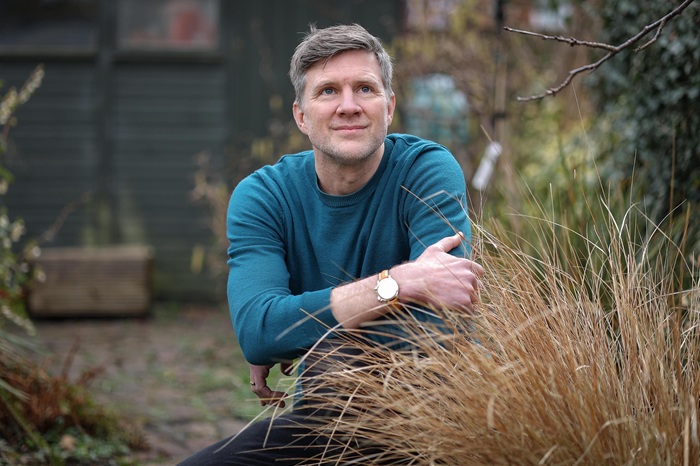
10/03/23. Tom Moorhouse photographed at/near his home in Oxford.
Picture: COPYRIGHT John Lawrence
that twitched. If you’ve ever seen a pangolin you’ll notice that the ears are tiny and not twitchable. That aside, the nice thing about the backstories of these particular animal characters was that they weren’t actually wolves or a pangolin, not really, and so they were free to behave without the normal animal constraints. This was very different from The River Singers, in which I wanted to be absolutely sure that my water voles were recognisably voley, doing vole things in a vole environment. (Is there a record for the most uses of the word ‘vole’ in a sentence?)
You also depict a great developing relationship between two very different humans. How much did you enjoy that? What were the particular challenges and rewards?
Possibly the aspect of writing I love the most is setting two characters up and watching them have affectionately snarky conversations. I nearly always overdo it and have to cut it back. And with Ed and Steff I particularly enjoyed myself because she’s seemingly so uncompromising and he’s seemingly so absent, but deep down they are more than a match for one another. One main challenge is that characters come into focus over time as I’m writing them, and so often start out saying stuff that is out of character by the time the book has progressed. And so I often have to go back and adjust and edit until they’re recognisably themselves throughout. This inevitably means having to cut lines that I think are funny or touching simply because the character wouldn’t say them any more.
There’s something of a spiritual element to the book. How did you approach that?
That is a very interesting question, and I hadn’t actually considered the book as having a spiritual element, rather than characters’ arcs involving them earning redemption / resolution through growth and overcoming adversity… which, now you mention it, is exactly what a lot of spirituality is about. I think you’ll surmise from this response that I focussed on the characters and who they were and what they individually needed to learn from their adventures in the Realm. I was intrigued by the idea that Steff and Ed each had qualities that the other needed to learn, and everything flowed from that.
What comes next for you? Are you working on another book for children at the moment?
I’m desperately trying to write the sequel to Where the Dragon Waits at the moment. It’s early on in the process but I largely know the general shape of it. It’s a daunting task because the ideas I have feel quite strange (the book involves characters from 8th century Mercia, for example) and I have to try to forget about Where the Dragon Waits and just write the book that the sequel needs to be. (I hope that makes sense – I’m not sure it fully makes sense to me, but that’s what I find myself doing!) I know I’m winning when I’m writing with a sense of fun, and I think I’ve got there. Now I just need to put the actual work in.
Where the Dragon Waits is published by David Fickling Books, 978-1788453837, £7.99 pbk.


