
This article is in the Beyond The Secret Garden Category
Beyond the Secret Garden: Poems by Black Poets
In the first Beyond the Secret Garden column of the new year, Darren Chetty and Karen Sands-O’Connor are inspired by a new poetry anthology.
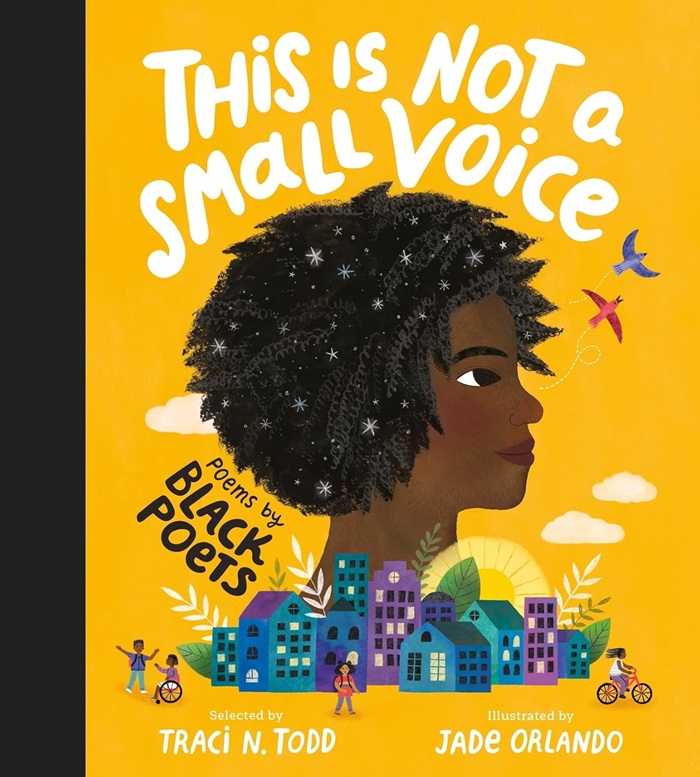
In September 2025, Nosy Crow published This is Not a Small Voice, a full colour 128 page hardback anthology, subtitled Poems by Black Poets, and selected by Traci Todd with warm, lively illustrations by Jade Orlando.
Poetry anthologies do useful work: they can introduce readers to new poets; bring together several poets in one place; and highlight both the similarities and differences between poets with something in common (whether that be something geographical or cultural or similar poetic themes or styles). Traci Todd begins her introduction by talking about the collection of poetry, Black Voices, that inspired her as a child. The collection focused on African American poets, as well as some Caribbean poets (such as Claude McKay) who took part in the Harlem Renaissance. In order to understand the achievements of This is Not a Small Voice, it is useful to look back at other anthologies published in Britain and see what has—and hasn’t—changed.
Una Marson, the Jamaican-born poet, playwright, and wartime broadcaster for the BBC grew up on British literature, but had rarely been given any Caribbean poets to read in school. As part of her Jamaican publishing venture, Pioneer Press, she published Anansi Stories and Dialect Verse (1950). Crucially, this included poems in patois by poets including Louise Bennett. Jamaican Patois had not previously been included in serious educational collections of poetry, as it had long been seen as a ‘broken’ form of English by the establishment. It would be some time before a British collection of poetry for young people included patois poetry. Anne Walmsley, a white British editor for Faber and Faber and Longmans who died in July, worked tirelessly to bring the voices and art of Caribbean and Caribbean-heritage writers to readers. She published The Sun’s Eye (Longman) in 1968, an anthology of poetry and short stories. However, her first attempts to include patois poetry failed; she writes in her introduction to the new edition (1989), ‘When I first submitted The Sun’s Eye for publication in 1962, it was rejected because some of the writing was in ‘dialect’. By the time of publication in 1968, dialogue in ‘dialect’ was permitted, but no work written entirely in what was still considered a ‘debased language form’. Louise Bennett’s poems would have to wait for the 1989 edition. Heinemann’s Facing the Sea (1986), also edited by Walmsley with Nick Caistor, not only included patois poems like Valerie Bloom’s ‘Trench Town Shock’, but also British-themed patois poems, such as Linton Kwesi Johnson’s ‘Sonny’s Lettah’.
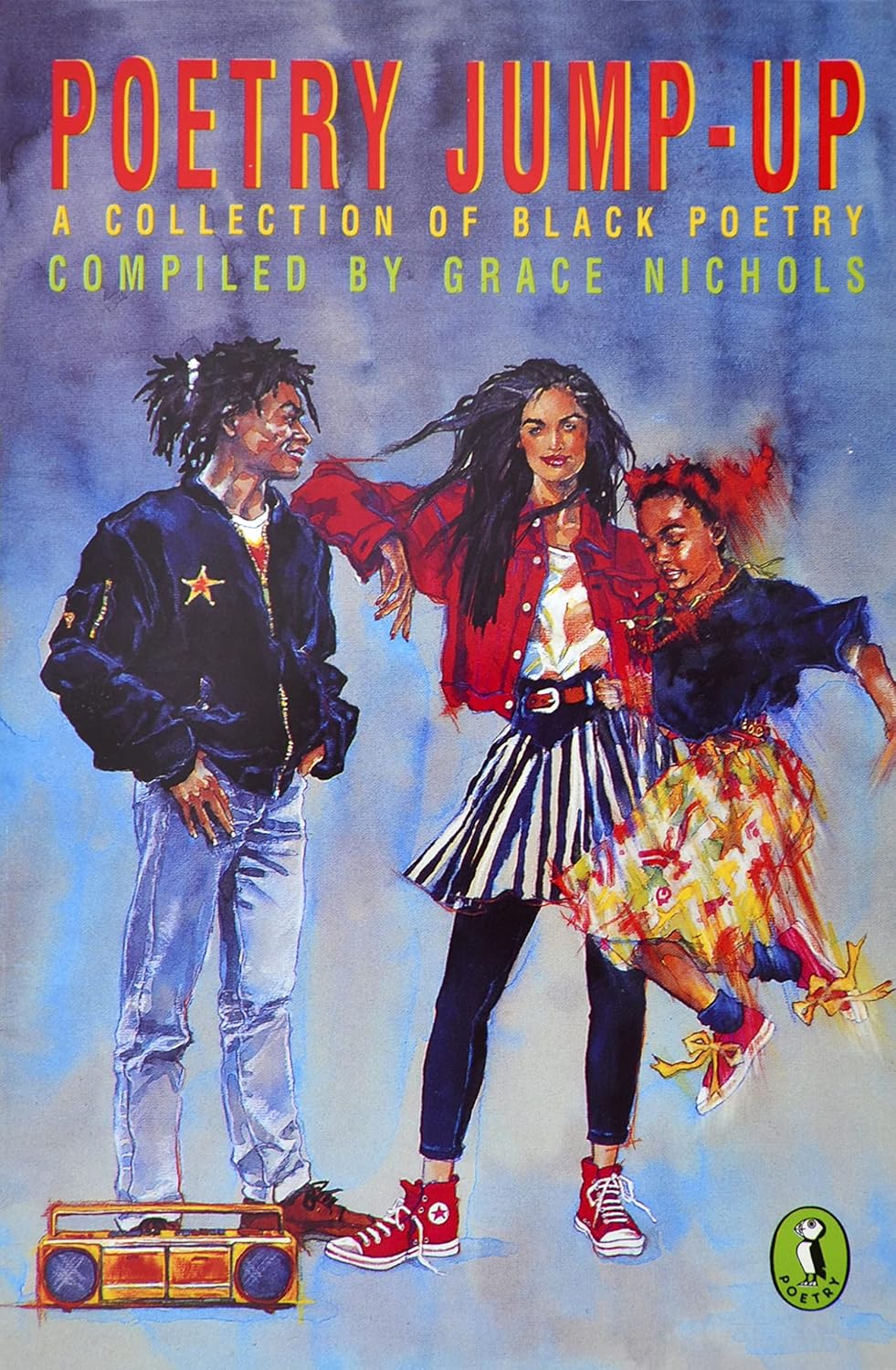 Walmsley’s anthologies were aimed at secondary school and above, and were focused on an educational market, but by the late 1980s, mainstream publishers were producing anthologies for younger readers as well. Blackie first produced Black Poetry, edited by Grace Nichols, in 1988; in 1990, Puffin republished it as Poetry Jump-Up: A collection of Black Poetry. Nichols anticipated the potential criticism of such an anthology, writing, ‘Some would argue that poetry has no colour and that one wouldn’t dream of putting together an anthology of ‘white poetry’. One might well say as a parallel to this, that the fact that one wouldn’t need to describe an anthology of poems by men as ‘men’s poetry’ as opposed to ‘women’s poetry’ points to certain real issues of omission and neglect by the literary establishment and to the whole question of power.’ (Poetry Jump-Up, p.7)
Nichols’ collection uses a definition of ‘Black poetry’ that was common in the 1970s and 1980s, which is to say one that included Asian and British Asian poets as well as Black British, African, and African Caribbean poets. ‘Black’ used in this sense is less likely to make sense to readers today; though its use is continued in British Trade Unions. Nichols also included poetry by young people, including her own children and the daughter of Jessica and Eric Huntley, Accabre Huntley, who had published two collections of poetry by the time she was 16 with her parents’ publishing house. The anthology is themed around common poetry anthology themes for children, including nature, animals, music and magic. By using these universal themes, Nichols reaches out to all poetry readers but also subtly suggests to other anthologists that these poets should not be left out of thematic collections just because they are ‘Black’.
Nichols, along with John Agard, also published poetry anthologies for even younger readers, such as A Caribbean Dozen (Walker, 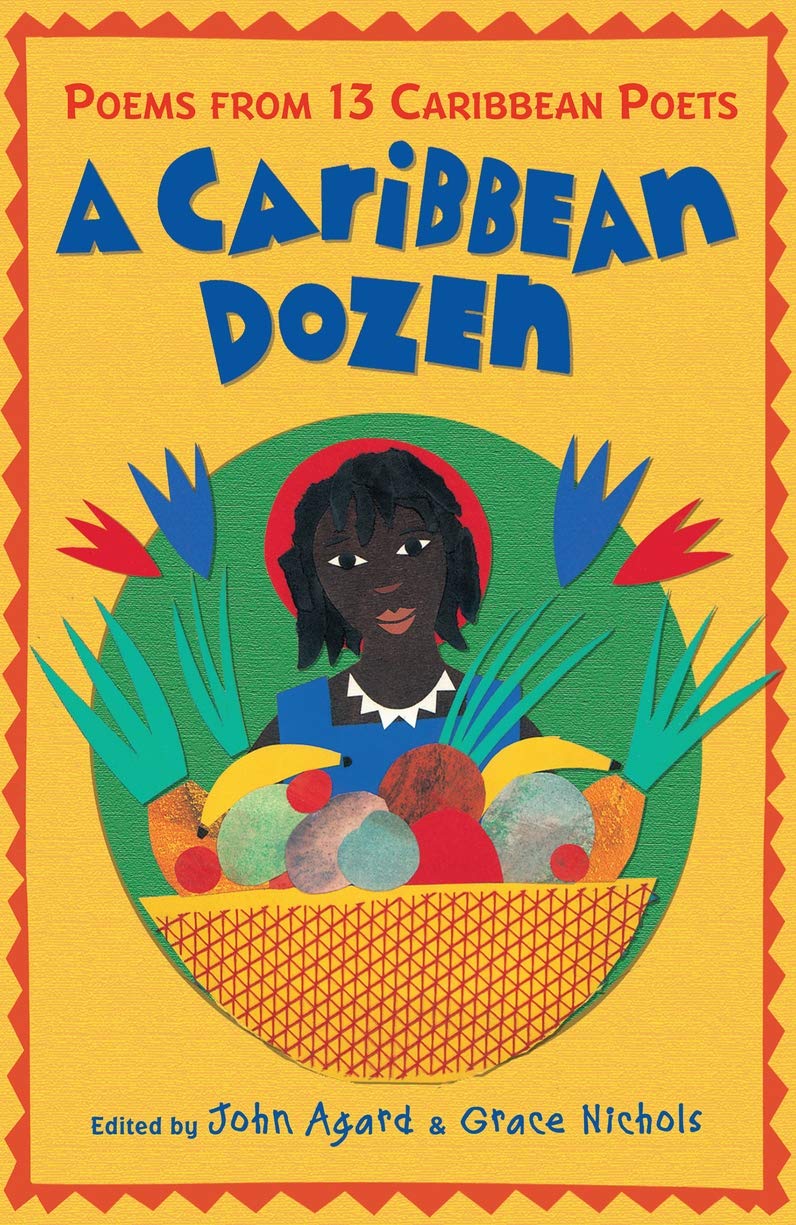 1994), illustrated by Cathie Felstead. The poems included in this anthology are all from Caribbean-born poets, although most of them lived or had lived in the UK, US, or Canada by the time of publication. Agard and Nichols note that ‘their formative meeting with the magic of the word happened under tropical skies where fireflies were shooting stars and English nursery rhymes and fairytales mingled with the tricky doings of Anancy spiderman’ (p. 11). Most of the poets included are Black, but David Campbell has Portuguese and Arawak ancestry. Anthologies like these are a reminder that terms like ‘Black’ and ‘Caribbean’ are not simply and universally defined as belonging to one community.
Ranters, Ravers and Rhymers (1990, William Collins) compiled by Farrukh Dhondy, is subtitled Poems by Black and Asian Poets. Poems are organized under four sections: ‘The Caribbean, India, Africa, and Black Britain’. In his introduction Dhondy explains that he has selected only poets who write in English and acknowledges that the poets themselves may not agree with his description of them as ‘black British’. His justification is that some of their work deals with the experiences of being in Britain; identities are revealed to be dynamic, overlapping and contested rather than static and essential.
The title of This is Not a Small Voice comes from a Sonia Sanchez poem: ‘This is not a small voice /you hear this is a large / voice coming out of these cities.’
The collection opens and closes with poems by Langston Hughes. ‘The Dream Keeper’ first published in 1925, begins ‘Bring me all of your dreams / You dreamers.’/ The closing poem ends with, ‘Beautiful, also / are the souls of my people.’
Between these invitations and affirmations are poems which though not categorised, appear to be loosely ordered thematically. In ‘In Praise of Okra’, January Gill O’Neil combines pop reference – ‘Your stringy, slipper texture/ Reminds them of the creature /From the movie Aliens’ – with the history of Black resilience and creativity, ‘So I write this poem/ In praise of okra/ & the cooks who understood/ How to make something out of nothing…’. Black history – and the withholding of it – emerges as a theme. Valerie Bloom’s ‘Ah Was Readin’ A Book’, is one that speaks about power, knowledge and ignorance; ‘Ah was readin’ a book about England / An’ a stop an’ wonder for a minute / If a English girl have a book ‘bout Jamaica / An’ if a little girl like me was in it.’
There are also threads of joy in collective identity and solidarity, what Mari Evans in ‘Who Can Be Born Black’ terms ‘our comingtogether /in a comingtogetherness’, celebrated also in Ja A. Jahannes’ poem, ‘Being Black in my neighbourhood /Is a splendid thing/ Like bright sunshine/ And new clothes in Spring’.
The poems span decades. An extract from ‘Lift Every Voice and Sing’ by James Weldon Johnson, first performed in 1900 and adopted by the NAACP in 1919, is one of the oldest included. The most recent poem, ‘Good Trouble’, by Nikki Grimes ends with a timely question; ‘Tomorrow, I’m starting / an after school banned-book club. / You want to come?’
While the collection includes South African poet Richard Rive and Nigerian poet Ijeoma Umebinyuo the majority of the poems are from US poets, with UK poets being the next most featured. An afterword section entitled Power and Protest discusses only the US and UK with Africa, the Caribbean, and Latin America not mentioned despite the rich history of struggles against colonialism, neo-colonialism and Apartheid, for example. This may well be due to commercial pressures – but for a book that is not explicitly framed around poetry from particular nations, it has the effect of not quite communicating as broad a vision of global Blackness as it might. This book is a superb achievement; there is plenty more poetry for future Black anthologies.
Dr Darren Chetty is a writer and a lecturer at UCL with research interests in education, philosophy, racism, children’s literature and hip-hop culture. He contributed to The Good Immigrant, edited by Nikesh Shukla, and has since published five books as co-author and co-editor. He tweets at @rapclassroom.
Karen Sands-O’Connor is a Visiting Professor of Education at the University of Sheffield. Her book British Activist Authors Addressing Children of Colour (Bloomsbury 2022) won the 2024 Children’s Literature Association Honor Book Award.
Darren and Karen’s book Beyond the Secret Garden: Racially Minoritised People in British Children’s Books is out now, published by English Media Centre.
This is Not a Small Voice: Poems by Black Poets, selected by Traci Todd and illustrated by Jade Orlando, is published by Nosy Crow, 978-1805132646, £20.00 hbk.


