
This article is in the Beyond The Secret Garden Category
Beyond the Secret Garden: Alphabet Books – Words and Worlds
In this edition of their Beyond the Secret Garden column, Darren Chetty and Karen Sands-O’Connor start with ABC.
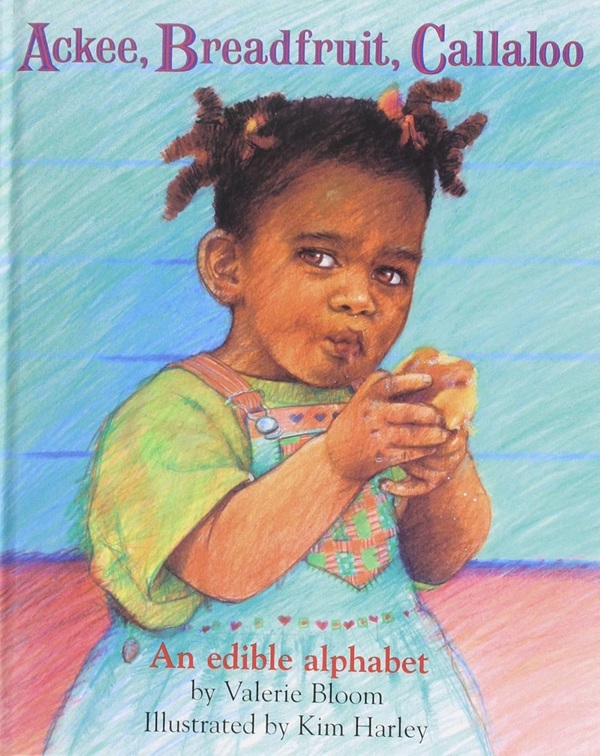
All alphabet books are political. This may seem like a surprising statement. Books designed to teach children their letters do not seem likely candidates for introducing partisan ideas. A is for apple, right? And apples are delicious, not dogmatic. But alphabet books are, more than most childhood reading, deliberately didactic. They are meant to teach a child about the world around them at the same time as teaching letters (and sometimes sounds). An apple is familiar, also healthy for a child. But so too is ackee, and when Valerie Bloom chooses to use ackee instead of apple in her alphabet book Ackee, Breadfruit, Callaloo (Bogle L’Ouverture/Macmillan 1999), she is making a political choice to value familiar Caribbean food over familiar British food.
Some alphabet books are more overtly political than others. An ABC for Baby Patriots, by Mrs Ernest Ames (first published in 1899) extols the virtues of the British Empire in outrageous, overtly racist fashion. While some have called her book satirical, it was published by the successful children’s publisher, Dean and Son. Nineteenth century alphabets often referenced the expanding British Empire, from Peter Piper’s Practical Principles of Plain and Perfect Pronunciation (J. Harris 1813) in which a young boy ‘itches for an Indian image’; to The Mother’s Picture Alphabet (first published by the British editors of The Children’s Friend monthly magazine in 1862) where ‘S begins Slave’ in a call for Americans to follow the British example and abolish enslavement.
Occasionally, an alphabet book relies on its illustrations to make its politics clear. W. Suschitzky’s Open-Air ABC (Collins, 1947) includes photographs, taken by Suschitzky, of outdoor scenes in Britain. While many alphabet books from this time had pictures of (G is for) Golliwogs (caricatured dolls supposedly representing Black people), or (I is for) Indian (often white children dressed up in headdresses and buckskins), Suschitzky’s book takes an unusual step in presenting a full-colour photograph of a well-dressed Black child with a book, seated on a park bench, looking patiently and directly at the camera as the image accompanying ‘N Negro’ (the term in common parlance of the time to describe people of African descent). This is not the usual image of people of African descent found in 1940s British children’s literature. So in that sense, the photographer (who spent much of the late-1940s photographing children, globally and in London) was doing something quite radical. However, at the same time, the publisher undercuts Suschitzky’s vision by presenting the book as made up of ‘all sorts of objects the child is familiar with’ (jacket flap). Describing a Black child as an object, however beautiful and beautifully photographed, for (presumed white) children to look at undermines the radical possibilities of Suschitzky’s photograph.
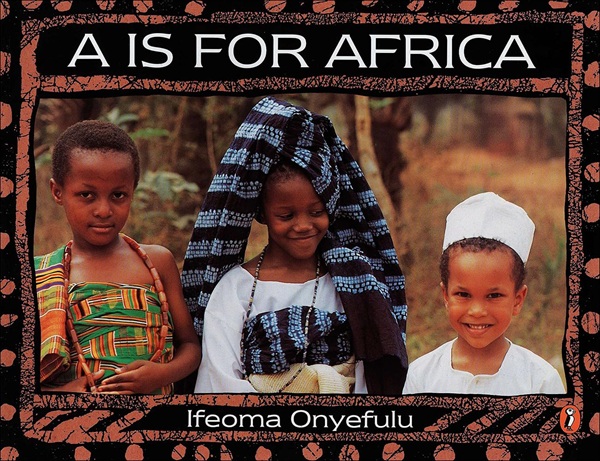 After the second world war, the British population underwent a dramatic change, with many people from the (former) British Empire coming to help Britain rebuild. This also meant an increase in independent publishers from these communities producing books for young people. Bogle L’Ouverture, one of the earliest Black British publishers to produce books for children, published Valerie Bloom’s Ackee, Breadfruit, Callaloo quoted at the beginning of this column. Alphabet books produced by Verna Wilkins’ Tamarind Press, including her own ABC I Can Be (Tamarind 1993) and Dawn Allette’s Caribbean Animals (Tamarind 2004). More mainstream publishers also responded to the changing population; Frances Lincoln, for example, published Ifeoma Onyefulu’s A is for Africa and Prodeepta Das’s I is for India in 1996. Both of these books were photographic alphabets, offering children pictures of real communities in places that were often stereotyped as less developed than Britain. What most of these alphabets from the late 1990s and early 2000s have in common, however, is a depiction of communities of Black and Asian people outside of Britain. Wilkins’ ABC I Can Be is unusual for its time in depicting Black British and British Asian workers to be direct role models for British children who might not otherwise see themselves in jobs dominated by white British people.
Many of the alphabet books published more recently focus on particular regions of the world. Two books published in India but sometimes 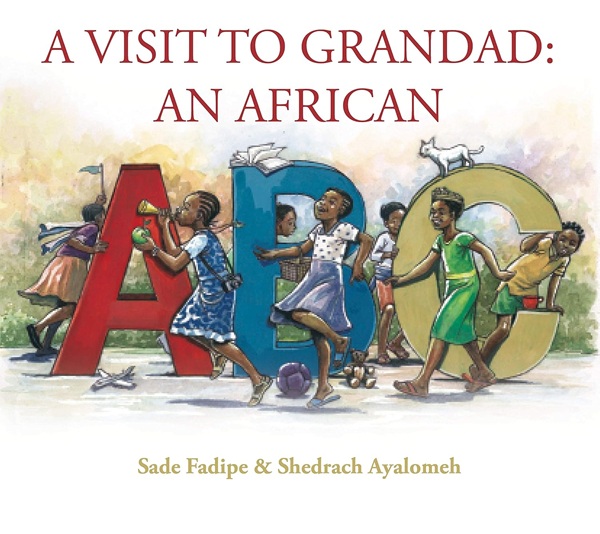 found in the UK are Priti Paul’s ABC Desi (Apeejay 2016) and J is for Jalebi by Chitwan Mittal and Ambika Karandikar (AdiDev 2021). The latter is an illustrated Hindi alphabet book ‘for little foodies’ that includes the English spelling of each word. A Visit to Grandad: An African ABC (Cassava Republic 2016) by Sade Fadipe and Shedrach Ayalomeh is a rhyming narrative picture book that employs the alphabet structure. The plot allows for a range of detailed interior and exterior views of Nigeria as young Adenah goes on a car journey to visit her grandfather in the village.
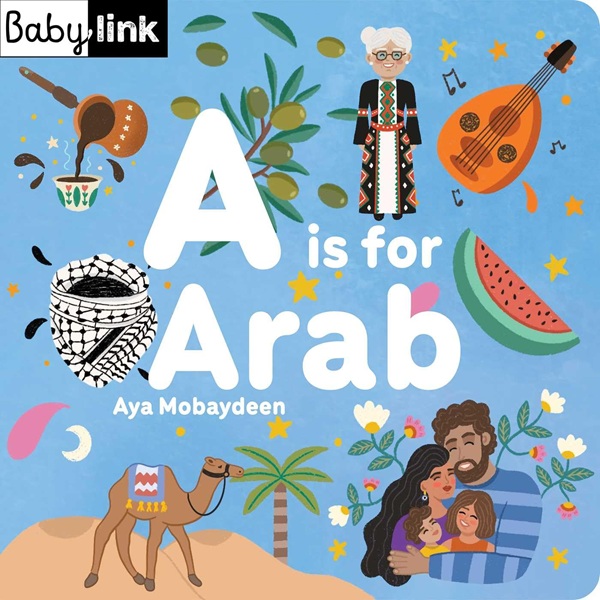 Other alphabet books have a focus on the diversity of particular groups of people such as Aya Mobaydeen’s board book A is for Arab (Crocodile 2025) and M is for Melanin: A Celebration of the Black Child by Tiffany Rose (Macmillan 2019). Ayo’s Adventure: Across the African Diaspora from Afro to Zulu with words by Ain Heath Drew and art by Erin K. Robinson (Barefoot Books 2024) uses the alphabet format to highlight the diversity and connections within the African diaspora, each illustrated double page spread focusing in a particular country in Africa and the Americas.
Some recent ABC books are themed around religion and culture. Published in the USA, R is for Ramadan (Gibbs Smith 2019) by Greg Paprocki offers a diverse representation of Muslims observing the holy month. The same publisher’s Classic Lit A-Z by Jennifer Adams and Alison Oliver (2017) depicts Aladdin, Shakespeare’s Oberon and most surprisingly Frances Hodgson Burnett’s Becky, ‘a serving girl and Sara Crewe’s friend’ as brown people – with (presumably) Mowgli riding a tiger on the cover. Karimah Campbell’s self-published picture book ABC Come and Skank with Me is an A-Z of Reggae Legends. A QR code on each page takes you to the artists’ websites.
A number of recent ABCs with overtly political titles feature racially minoritised people such as A is for Activist written and illustrated by Innosanto Nagara (2013 Seven Stories), F is for Feminism: An Alphabet Book of Empowerment Illustrated by Carolyn Suzuki (Ladybird 2019) and An ABC of Democracy, written by Nancy Shapiro and illustrated by Paulina Morgan. (Frances Lincoln 2022). An Encyclopedia of Gardening for Colored Children is a fascinating experiment with the form, combining Jamaica Kincaid’s words, often 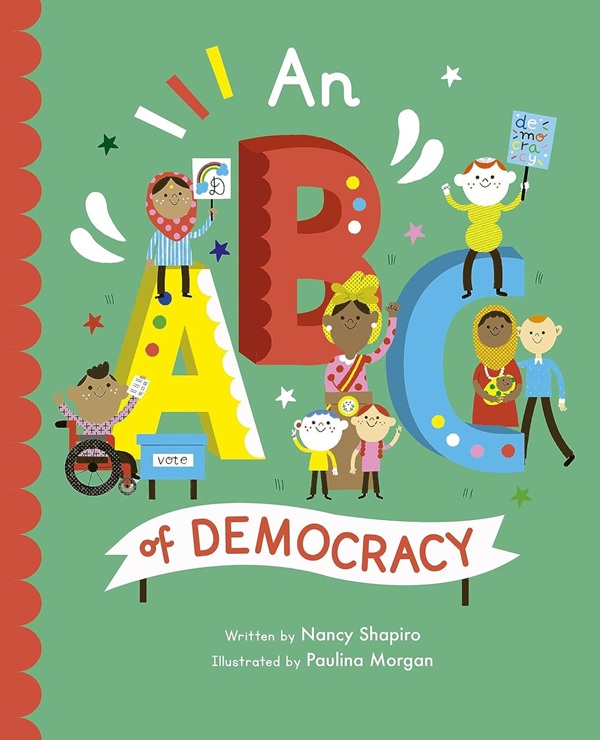 laced with irony, with Kara Walker’s startling watercolour paintings (Farrar, Straus and Giroux 2024). Kincaid frequently deploys irony to highlight the cruelty of colonialism. We learn that breadfruit is native to the Polynesian Islands, was found by botanist Joseph Banks and Captain James Cook and sent to the West Indies: ‘The slaves were apparently taking time from their labors to grow food to feed their hungry selves’ (p9). ‘Daffodil’ leads her to Wordsworth’s poem which ‘became canonical in the education of children who were subjects of the British Empire. For the most part, these children were native to places where a daffodil would be unable to grow and would never be seen by them’ (p13). Perhaps most suitable for teen readers as well as adults, the book reveals the colonial histories lurking within the garden. Kincaid can be read as acknowledging and subverting the political nature of the alphabet book, drawing our attention to the very construction of knowledge in the process.
Dr Darren Chetty is a writer and a lecturer at UCL with research interests in education, philosophy, racism, children’s literature and hip-hop culture. He contributed to The Good Immigrant, edited by Nikesh Shukla, and has since published five books as co-author and co-editor. He tweets at @rapclassroom.
Karen Sands-O’Connor is a Visiting Professor of Education at the University of Sheffield. Her book British Activist Authors Addressing Children of Colour (Bloomsbury 2022) won the 2024 Children’s Literature Association Honor Book Award.
Darren and Karen’s book Beyond the Secret Garden: Racially Minoritised People in British Children’s Books is out now, published by English Media Centre.
Books Mentioned
Ackee, Breadfruit, Callaloo Valerie Bloom (Bogle L’Ouverture/Macmillan 1999)
An ABC for Baby Patriots, by Mrs Ernest Ames (first published in 1899)
Peter Piper’s Practical Principles of Plain and Perfect Pronunciation (J. Harris 1813)
The Mother’s Picture Alphabet (1862)
ABC I Can Be Verna Wlkins (Tamarind 1993) a
Caribbean Animals Dawn Allette (Tamarind 2004)
A is for Africa, Ifeoma Onyefulu (1996) Francis Lincoln
I is for India, Prodeepta Das (1996) Francis Lincoln
The South African Alphabet 2012 / From Aardvark to Zuma (2014) Alex Latimer
A Visit to Grandad: An African ABC Sade Fadipe & Shedrach Ayalomeh (2015) Cassava
Ayo’s Adventure : Across the African Diaspora from Afro to Zulu words by Ain Heath Drew, art by Erin K. Robinson (2024). Barefoot Books
An Encyclopedia of Gardening for Colored Children Jamaica Kincaid & Kara Walker (2024). Farrar, Straus and Giroux Books.
M is for Melanin: A Celebration of the Black Child. Tiffany Rose (2019). Macmillan.
A is for Activist written and illustrated by Innosanto Nagara (2013). Seven Stories.
F is for Feminism: An Alphabet Book of Empowerment. Illustrated by Carolyn Suzuki (2019). Ladybird
An ABC of Democracy, Writen by Nancy Shapiro, illustrated by Paulina Morgan. (2022). Frances Lincoln
R is for Ramadan. Greg Paprocki. (2019). Gibbs Smith.
ABC Come Skank with Me. A-Z Reggae Legends. Karimah Campbell. Self Published


