
This article is in the Beyond The Secret Garden Category
Beyond the Secret Garden: Reading Gender
In the latest of their long-running series, Darren Chetty and Karen Sands-O’Connor turn their attention to gender.
Gender and reading have long been tied together. John Newbery’s A Little Pretty Pocket-Book (1744) offered all readers a toy with book purchase – but boys got a ball and girls got a pincushion. In the nineteenth and early twentieth centuries, the Boys’ Own Paper and the Girls’ Own Paper modelled appropriate behaviour for their respective audiences – however, the ‘Letters’ section of each publication indicates that readers did not always stick to their assigned publication. Interestingly, according to Chen and Moruzi (2019), girl readers were welcomed by the Boys’ Own editors, but boys were redirected away from reading Girls’ Own publications. Throughout the nineteenth and twentieth centuries, publishers and librarians published separate lists of ‘books for boys’ and ‘books for girls’. As late as the mid-1970s, for example, Penguin Peacock editor Kaye Webb was recommending ‘Peacocks Especially for Girls’ that included Good Wives by Louisa May Alcott, Fifteen by Beverly Cleary, and Betty Falk’s The Peacock Cookery Book. Webb’s other list, interestingly, was labelled not ‘books especially for boys’ but ‘general reading’, cementing the idea that girls are welcome to read boys’ books but boys were either not interested in reading or not encouraged to read books with girl main characters. Her general list included reprints of Empire fiction and nonfiction by authors such as John Buchan (The Three Hostages) or J. H. Williams (Elephant Bill), science fiction (Heinlein’s Citizen of the Galaxy) and sports books (Eamon Dunphy and Peter Ball’s Only a Game).
Few of these early stories and books had main characters from racially minoritised backgrounds; those that did often focused on the specific problems, rather than the joys, of being a minoritised boy or girl. William Rainey’s story, The Mystery of an Ancient Papyrus, printed serially in the magazine Chatterbox in 1916, contains no female characters at all and contrasts white British boy Dick with a young Arab boy, Selim who acts as guide to Dick and his cousin in Egypt. Dick initially comments that Selim ‘absolutely doesn’t know the difference between right and wrong. He says it can’t be helped, it’s due to his bringing up’. Dick adds that Selim’s mother was a Black African woman and his father a Muslim, and this accounted for his amorality. Yet Selim’s and Dick’s actions parallel each other. While on board a ship, Selim steals oranges which he shares with Dick and another boy. Dick also steals food to give to ‘the dervish’, a stowaway on the ship that he has discovered in the hold. When Selim is caught and punished for his theft, he tries to point out Dick’s complicity in eating the oranges and Dick’s own theft. But Dick tells Selim that Selim’s theft is ‘downright wicked’ and that ‘It wasn’t quite right what you said about me – pocketing the slice of meat at dinner-time. That was different; the food was mine’ even if he had taken it ‘to give to someone else. So you see it was quite different’. While Selim is punished for his theft, Dick is rewarded for his, as ‘the dervish’ later saves Dick’s life. The same act is seen as generous in a white 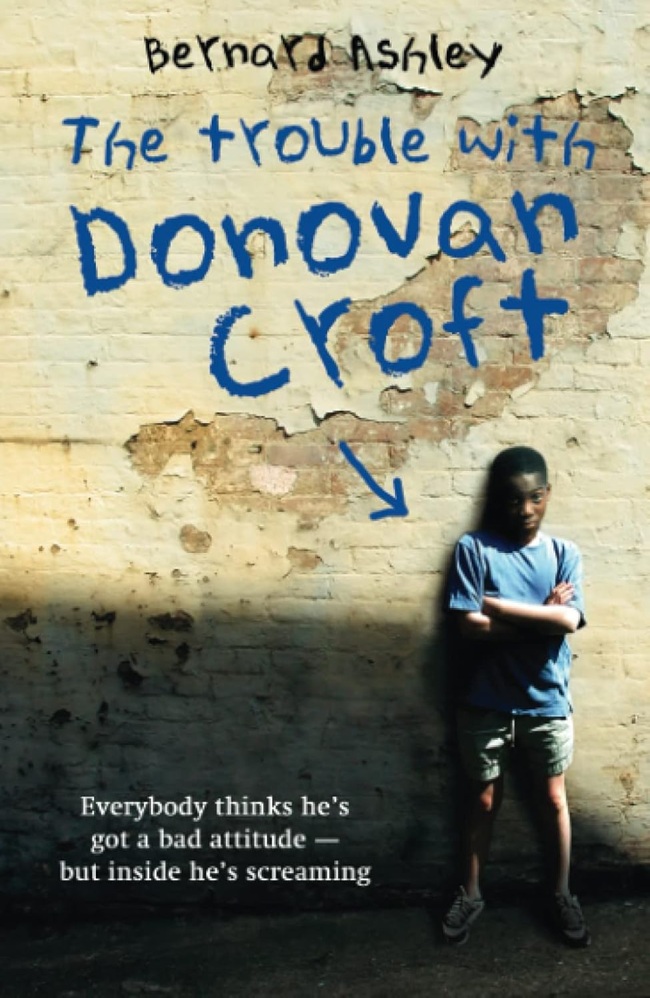 British boy and as wicked in an Arab boy.
Fifty years later, being racialised still defined how gender was performed in books for young people. Joan Tate’s Jenny (1964) and Mrs Jenny (1966) might be similar in some ways to careers novels or Kaye Webb’s ‘girls’ books. Jenny is sixteen at the start of the first book, and has to navigate work, family, and romance. However, Jenny’s world is one in which ‘Many of the coloured people in Wanchester had only one room for whole families’; she is chased by white boys on her way back from work; she is called a ‘black tart’ for dancing with a white boy at a dance. Girlhood experiences such as a first job or a first dance turn sour for Jenny because she is racialised by white people.
Tate’s Jenny books are unusual in depicting a Black girl as the main character navigating life. Black girls are rarely depicted in Windrush-era mainstream fiction for young people as having traditional feminine qualities or experiences, instead being shown as something ‘other’ and outside girlhood – and indeed, humanness. Jean MacGibbon’s Hal (1974) is imagined by white boy Barry as being part of a jungle, despite them both living in London; the narration describes her as having ‘a spine that flexed like an animal’s’. Gillian Cross’s Clipper, in the four-book series beginning with Save Our School (1982) is known for her athletics, and is friends with boys rather than girls. So-called ‘Tomboys’ abound in children’s books, and are often seen as feminist characters (in as much as they resist gender norms), but Clipper is frequently depicted as (potentially) violent and even animal-like. At one point her friend Barny comments, ‘That’s the trouble with you, Clipper. You always rush in like a mad gorilla’. Boys from racially minoritised backgrounds in books written during this time period are often silenced. Ray Pope’s Is it Always Like This? (1970) includes a British Pakistani boy, Tormon, who is constantly removing himself from situations when his racialised maleness is criticised; for example, when another character says that white children shouldn’t be left ‘with a coloured boy’, Tormon responds that he will go, agreeing that a Pakistani boy being left in charge of white children ‘isn’t nice’. Bernard Ashley’s title character in The Trouble With Donovan Croft is a problem for the white boy because Donovan is Black; Ashley does not let Donovan speak for himself until the end of the book and even then, it is the white boy who is the main character and whose problems matter. Eamon Dunphy’s ‘diary’ of his time as a professional footballer at Millwall, Only a Game?, never mentions the Black players who suffered from Millwall’s 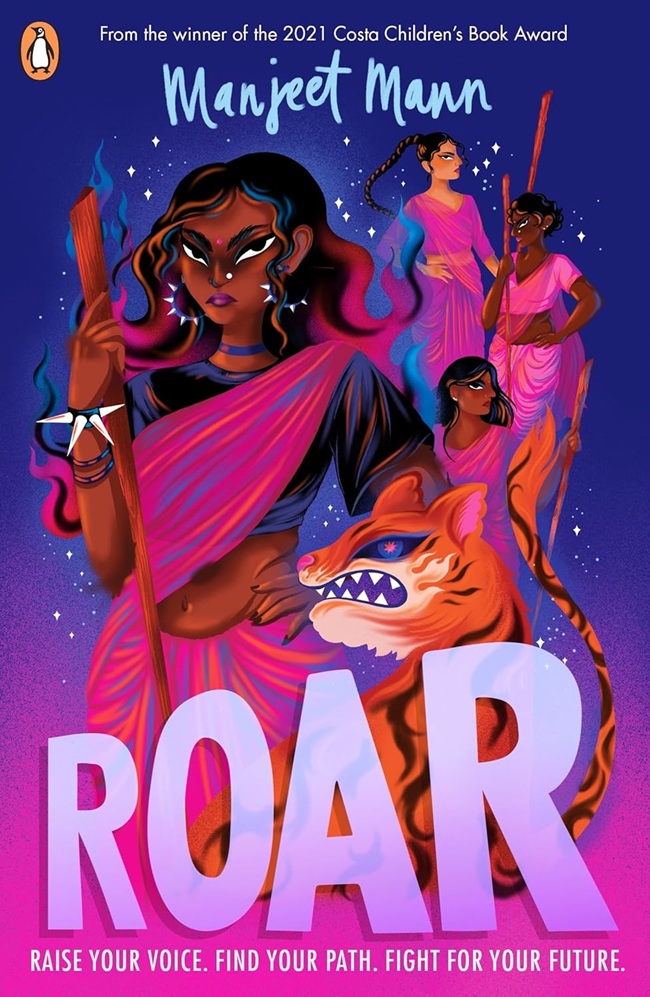 ‘football hooliganism’ that involved banana missiles and monkey noises at Millwall matches.
Recently we have noticed a growth in books that examine gender and patriarchy within minoritised communities. Manjeet Mann’s Roar (2025), for example, discusses the way that patriarchy and the caste system doubly oppresses girls and women in India. Yet this is challenging territory. Susan Okin’s 1999 paper ‘Is Multiculturalism Bad for Women?’ argued that patriarchal gender roles are often justified with reference to cultural tradition. Respondents, such as Chandra Talpade Mohanty highlighted how women within minority communities developed critiques and activism that diverge from (white) liberal feminism. In this context, situating a critique of patriarchy within a minoritised community runs the risk of readers associating that community alone with patriarchy. We have yet to encounter a children’s book that explores the global violence and chaos caused by the actions of successive prime ministers educated in elite single sex schools – we doubt we ever will.
Meena’s Saturday is written by Kusum Mepani and illustrated by Yasmeen Ismail (2024). Meena’s Saturday 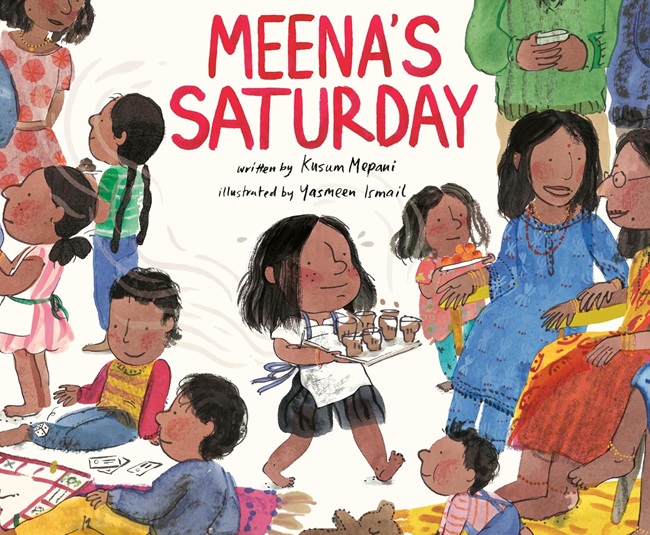 starts early and involves helping her mother with shopping, cooking and preparing chai. Her brother, however, can stay in bed and read. Meena narrates that ‘[i]n my family, boys get special treatments because they’re boys.’ But the text suggests this isn’t an issue confined to Meena’s family. ‘Mum says that when she grew up in Gujarat, India, that’s just the way it worked.’ Observing that ‘the men always eat first’, Meena decides that today is the day to interrupt that tradition. The picture book is relatively rare in opening up consideration of gender roles and the invocation of ‘tradition’ and ‘back home’ as ways of maintaining patriarchal gender roles in Indian families. At the same time Indian women are not depicted as oppressed victims; we see warmth and camaraderie among the women in the kitchen. Meena dreams of a robot that could do their tasks and of a table that would allow everyone to eat together. Direct criticism of the men who uphold this tradition is avoided.
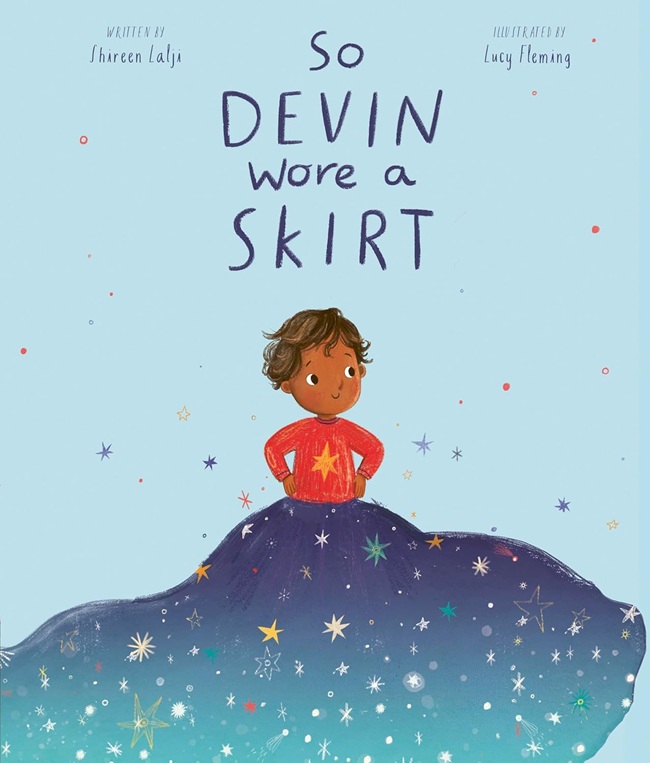
So Devin Wore a Skirt written by Shireen Lalji and illustrated by Lucy Fleming (2025) opens up consideration of gender presentation. Young Devin wishes to wear a skirt at a family function. The family are worried what his grandfather will think about this. However his grandfather is very welcoming of the decision and dances with Devin. While Lalji appears to focus on gender presentation, the text does less to question gender roles in extended South Asian families (the actual community is kept vague). Mum serves samosas while Dad looks after the barbecue. Characters wear traditional South Asian clothes. Grandfather’s approval is sought – and on this occasion given. The story shows Devin happy to be himself while also celebrating a sense of tradition. Books such as these, and other children’s books on gender in racially minoritised communities, demonstrate the complexities not just of being gender, but of doing gender on the page for young readers.
Dr Darren Chetty is a writer and a lecturer at UCL with research interests in education, philosophy, racism, children’s literature and hip-hop culture. He contributed to The Good Immigrant, edited by Nikesh Shukla, and has since published five books as co-author and co-editor. He tweets at @rapclassroom.
Karen Sands-O’Connor is a Visiting Professor of Education at the University of Sheffield. Her book British Activist Authors Addressing Children of Colour (Bloomsbury 2022) won the 2024 Children’s Literature Association Honor Book Award.
Darren and Karen’s book Beyond the Secret Garden: Racially Minoritised People in British Children’s Books is out now, published by English Media Centre.
Books mentioned:
A Little Pretty Pocket-Book, John Newberry, Dodo Press, 9781409949749, 108pp, O/P.
Good Wives, Louisa May Alcott, Penguin Classics, 9780141197753, 320pp, O/P.
Fifteen, Beverly Cleary, HarperCollins, 9780380728046, 208pp, O/P.
The Peacock Cookery Book, Betty Falk, Penguin, 229pp, O/P.
The Three Hostages, John Buchan, Penguin, 9780140009088, 288pp, O/P.
Elephant Bill, J.H. Williams, Long Riders’ Guild Press, 9781590480779, 356pp, £20 pbk.
Citizen of the Galaxy, Robert A. Heinlein, Gallery Books, 9781416505525, 282pp, O/P.
Only a Game?, Eamon Dunphy, Penguin, 9780140102901, 208pp, £11.99 pbk.
Jenny, Joan Tate, illus. Charles Keeping, Heinemann Educational Publishers, 9780435118761, 60pp, O/P.
Mrs Jenny, Joan Tate, Heinemann Educational Publishers, 9780435118846, 64pp, O/P.
Hal, Jean Macgibbon, Puffin, 9780140309683, 224pp, O/P.
Save Our School, Gillian Cross, Chivers Audio Books, 9780745144702, O/P.
Is it Always Like This?, Ray Pope, The Book Service Ltd, 9780356034058, 136pp, O/P.
The Trouble With Donovan Croft, Bernard Ashley, Oxford University Press, 9780192755568, 208pp, £6.99 pbk.
Roar, Manjeet Mann, Penguin, 9780241647622, 416pp, £9.99 pbk.
Meena’s Saturday, Kusum Mepani, illus. Yasmeen Ismail, Puffin, 9780241739877, 40pp, £8.99 pbk.
So Devin Wore a Skirt, Shireen Lalji, illus. Lucy Fleming, Frances Lincoln Children’s Books, 9780711298521, 32pp, £7.99 pbk.


