This article is in the Beyond The Secret Garden Category
Beyond the Secret Garden: Multilingual Children’s Literature
In the latest in their long-running series, Darren Chetty and Karen Sands-O’Connor turn to multilingual books.
 Britain, unlike many other countries, has no official language. Although over 90% of people in Britain have English as their main language, according to the Office for National Statistics, several other ‘living languages’ are spoken, including Welsh, Gaelic, Cornish, Scots, Irish and British Sign Language. Polish, Romanian, Panjabi, Urdu, Portuguese, Spanish and Arabic all have over 200,000 speakers in the UK, as of the 2021 census. Yet multilingual books (books using multiple languages) are still, according to Sabine Little, ‘comparatively rare’ (‘Multilingual Picture Books’ 2025, p. 3). Of those that exist, many are bilingual and often demonstrate a hierarchy of languages (with English nearly always privileged in predominantly English-speaking countries). Multilingual children’s literature is often seen as a concession to someone learning the dominant language rather than a vital part of the story.
Although historically, British children’s books have nearly always privileged English, the use of other languages in books for young readers wasn’t always rare. Throughout the British Empire, children’s books introduced readers to new words from the colonies, such as veldt, pajamas, or hurricane. Often, these colonial words were indicated by italicizing but not given any definition; readers had to learn through context. In G.A. Henty’s In Times of Peril (1881), which concerned the Sepoy Uprising, the English girl Rose is given a disguise by her uncle: ‘I have also ordered her to get me two dresses: one, such as a young Mussulman [sic] zemindar wears’ (32). The reader is not told what a zemindar is, but as the word is repeated several times throughout the novel, the reader can gather that such a person has money and servants. While this use of words from the colonial empire was meant as instructive, the instruction had purpose: to teach the white British reader how to survive in the colonies and protect and defend themselves against the ‘native’.
Throughout the 19th and early 20th centuries, European languages were considered a necessary part of education for the middle and upper classes; therefore, readers often encountered them as part of their leisure reading as well. French, for example, is found untranslated in Jane Eyre (1848), both when Mr. Rochester’s ward Adèle speaks it, and in the repartee between Mr. Rochester and Miss Ingram. Jane is engaged as governess to Adèle because she speaks French; she starts to learn German but is asked to give it up in favour of Hindustani by her cousin St John Rivers, but unlike the French neither language is included in the text. French is also one of the languages Sara Crewe can speak in Burnett’s A Little Princess (1905) and she embarrasses Miss Minchin by speaking it fluently to the French master who is expected to teach her. Sara also speaks Hindustani, but her words to Ram Dass are not recorded in the book, just that: ‘She spoke to him in the language he knew’ (173). Like Burnett’s other well-known heroine, Mary Lennox, Sara has learnt Hindustani to speak to servants. Sara is nicer than Mary in the way that she uses language, but Hindustani is a language to communicate between colonizer and colonized. Including some languages but not others sets up a language hierarchy among European languages as well as between imperial and colonial languages.
After the second world war, when migration from the colonies and former colonies to Britain increased dramatically, the number of 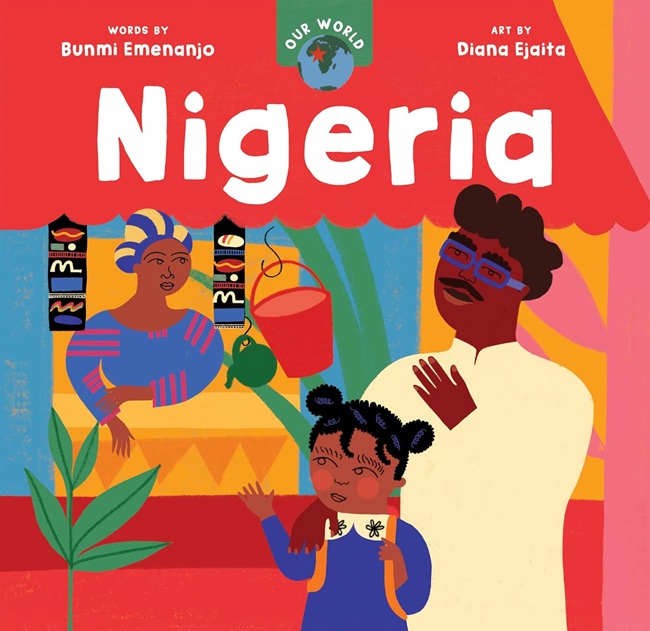 languages spoken on a regular basis across the nation also rose. Although initially most mainstream publishers emphasized English-only texts especially for racially minoritised communities, by the 1980s some publishers were creating bilingual books, such as Blackie’s All About Me series (1987; written by Jennie Ingham and photographed by Prodeepta Das). This series was designed for the educational market and the cover of the books were in English only, indicating that it was the dominant speaker who was selecting a text for a child new to English, rather than a child picking out a story because it included visible familiar language. Hamish Hamilton’s series about racially minoritised communities in Britain, including books like Kikar’s Drum (1984; written by Olivia Bennett and photographed by Christopher Cormack) were also designed to teach, but focused on the child from outside the community rather than the child inside the community. This book, and others like it, include a glossary at the beginning as well as explanations within the text: ‘patka’ is defined in the glossary, but also in the text, when Bennett writes, ‘Mum tidies his hair in a small knot and covers it with a square piece of cloth called a patka’ (5). This renders the glossary unnecessary except for highlighting the ‘otherness’ of the language.
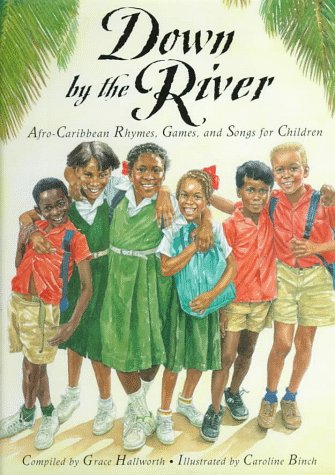
Poetry was one of the few places in this time period where multilingualism was depicted in celebratory fashion. This was especially the case in collections edited by poets from the Caribbean where people of African, Indian, European and East Asian heritage had shared cultural traditions for over a century. Grace Hallworth’s collections, including Down by the River (Scholastic 1996) but also those designed for the classroom such as Buy a Penny Ginger (Longman 1994) and Rhythm and Rhyme (Longman 1995) have words from multiple languages, including French (‘Baissez down’, p. 4 of Rhythm and Rhyme), Spanish (‘Acas Acas Los Maracas’, p. 40 of Rhythm and Rhyme), Swahili (‘Moja mbil tatu’, p. 4 of Buy a Penny Ginger), as well as words unique to Trinidad such as ‘congotay’ (part of the phrase one day congotay meaning one day justice will be done) and ‘washekong’ (a kind of shoe; the word is possibly of Chinese derivation). Hallworth, in her introduction to Down by the River, calls her childhood home ‘a fantastic mix’ and said that ‘Although we represented so many races, our culture was the same—Trinidadian.’
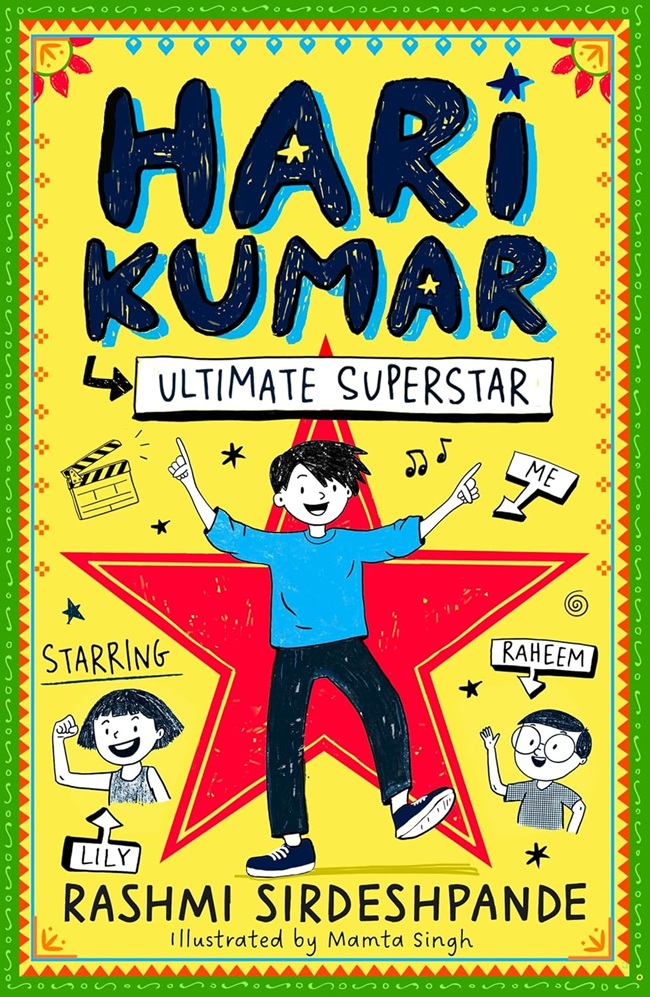 While many children in the UK live their lives using more than one language, this has rarely been acknowledged in the novels that are published. However, there are signs of more books engaging with multilingualism in recent years. Yassmin Abdel-Magied’s fantasy adventure Silver Brook: Yumna and the Golden Horse (Hodder 2026) includes ‘Left, right, left, bismillah, yallah!’ on its opening page, English and Arabic combined in a single sentence. In Rasmi Sidershpande’s diary novel Hari Kumar, Ultimate Superstar (2026) Hari’s Indian and French relatives use terms of endearment such as ‘beta’, ‘bachaa’ and ‘mon petit chou’ and Hari writes about the Sanskrit origins of his name.
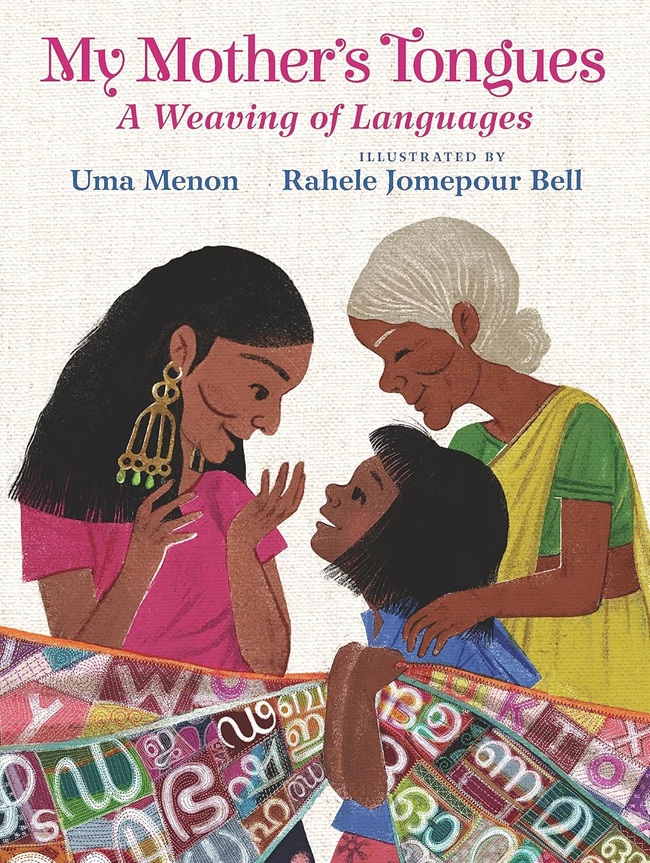
Recently, multilingual families have more often been a subject for picture books. My Mother’s Tongues: A Weaving of Languages (Walker 2024) written by Uma Menon, and illustrated by Rahele Jomepour Bell, begins with the sentence ‘My mother has two tongues’ and includes Malayalam words in Malayalam and Latin scripts. More languages are introduced throughout the narrative, the young narrator ending with ‘Having a tapestry of tongues will be my superpower’. In I’ll Go and Come Back (Walker 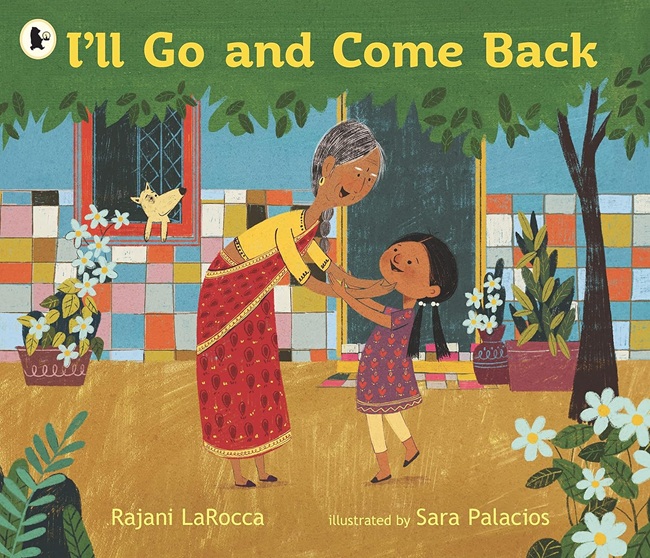 Books 2022) by Rajani LaRocca, illustrated by Sara Palacios, young Jyoti makes her first trip from North America to India since she was a baby and spends time with her grandmother, who then comes to visit her the following year. The book uses the refrain, ‘She didn’t speak much English and I didn’t speak much Tamil, but we understood each other.’ Kende! Kende! Kende! (Child’s Play 2024) written by Kirsten Cappy and Yaya Gentille and Illustrated by Rahana Dariah is an affirming story ‘inspired by families in Central Africa who are forced to leave their homes.’ In addition to the multilingual text, the book offers QR codes too hear translated recordings in French, English, Lingala, Swahili, Portuguese, Kinyarwanda, and Arabic. Nigeria (Barefoot Books 2025) written by Bunmi Emenanjo with art by Diana Ejaita, is a board book that tells a story set in Nigeria. Characters use Yoruba, Igbo, and Hausa and phrases are asterisked and explained on the same page, enabling a smooth reading experience that captures some of the linguistic diversity of the country.
Dr Darren Chetty is a writer and a lecturer at UCL with research interests in education, philosophy, racism, children’s literature and hip-hop culture. He contributed to The Good Immigrant, edited by Nikesh Shukla, and has since published five books as co-author and co-editor. He tweets at @rapclassroom.
Karen Sands-O’Connor is a Visiting Professor of Education at the University of Sheffield. Her book British Activist Authors Addressing Children of Colour (Bloomsbury 2022) won the 2024 Children’s Literature Association Honor Book Award.
Darren and Karen’s book Beyond the Secret Garden: Racially Minoritised People in British Children’s Books is out now, published by English Media Centre.
Books Mentioned
In Times of Peril (1881), G.A. Henty
Jane Eyre (1848), Charlotte Bronte
A Little Princess (1905), Frances Hodgson Burnett
All About Me series (1987) written by Jennie Ingham and photographed by Prodeepta Das
Kikar’s Drum (1984) written by Olivia Bennett and photographed by Christopher Cormack
Down by the River, Grace Hallworth (Scholastic 1996)
Buy a Penny Ginger (Longman 1994) Grace Hallworth
Rhythm and Rhyme (Longman 1995), Grace Hallworth
Hari Kumar, Ultimate Superstar (2026) Rashmi Sirdeshpande, illustrated by Mamta Singh
Silver Brook: Yumna and the Golden Horse Yassmin Abdel-Magied (Hodder 2026)
Nigeria Bunmi Emenanjo, art by Diana Ejaita (Barefoot Books 2025)
My Mother’s Tongues: A Weaving of Languages Uma Menon, illustrated by Rahele Jomepour Bell (Walker 2024)
Kende! Kende! Kende! Kirsten Cappy & Yaya Gentille, Illustrated by Rahana Dariah (Child’s Play 2024)
I’ll Go and Come Back Rajani LaRocca, illustrated by Sara Palacios (Walker Books 2022)


