
This article is in the Letterbox Library Recommends Category
Letterbox Library Recommends: Books on Social Isolation and Loneliness
In the latest column highlighting books by theme, the Letterbox Library team look at the particular ways social isolation and loneliness are represented in inclusive children’s books.
Where once social isolation seemed largely addressed in children’s literature through stories about new arrivals or bullying, it now feels as if a more expansive understanding has arrived. Loneliness is more regularly narrated as a result of grief or as a progression, often alongside increasing age or illness, with a character’s isolation resulting from a casual rather than intended neglect by the wider community. It is typically a young protagonist who first notices and brings attention to the lonely person. Interestingly, some of the most nuanced explorations of loneliness have occurred within specifically inclusive children’s books, almost as if a diverse landscape lends itself to the theme.
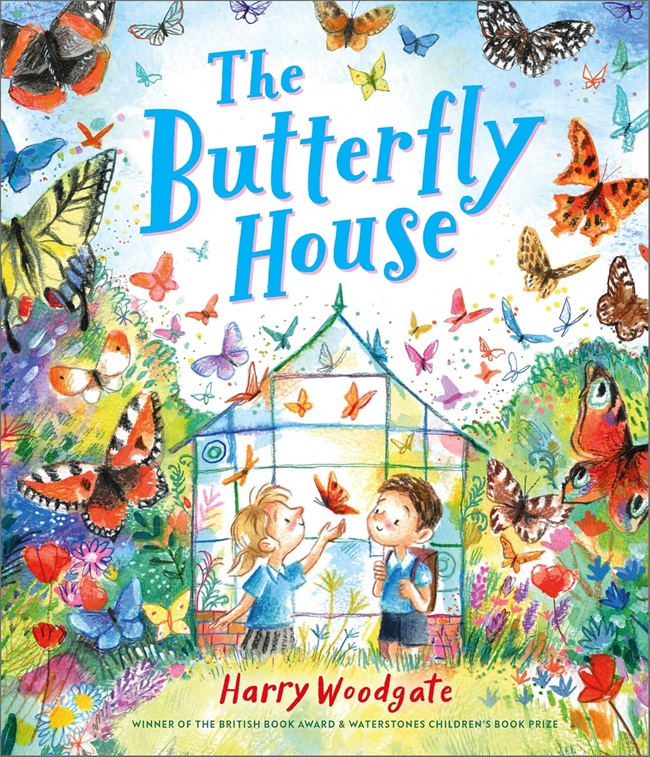 Picture book, The Butterfly House, skilfully navigates poor mental health as both a cause and effect of loneliness. A young girl, Holly, is fascinated by her neighbour’s house, a ramshackle oddity shrouded in vegetation. The inhabitant is the reclusive Miss Brown, an elderly (white) woman with spiky hair, who tells Holly, ‘my brain was ill for a long time’, leading to her own internalised ‘thorny branches’ and an externalised wilderness home. A determined Holly reaches out to her neighbours and, one Saturday, the entire street -a very diverse bunch- gathers to resurrect Miss Brown’s garden. It’s a gift which Miss Brown relishes, easing her loneliness, and then also extends by opening up her garden to the public for people to ‘just have somewhere quiet to feel better.’
In Christmas Lights on Mistletoe Street, another alert (hearing impaired) child, also named Holly, once again summons up her street to help heal an elderly (white) woman’s loneliness. Despite this being Holly and her mum’s very first Christmas on Mistletoe Street, they are fully involved in the cheerful exchanges and bustle of their very diverse (including multifaith) neighbourhood. This same cohesive community has, however, ‘casually’ failed to notice Ivy who lives all alone. Ivy’s own description of her isolation is subtly done, inviting questions. There is no mention of family or a partner. Instead, Ivy details a busy social life which has declined with time and restricted mobility; ‘life got busier for everyone, so the [Christmas] parties stopped and I’ve found it harder to go out’. A series of vignettes neatly illustrate this progression. And so, Holly resolves that very same Christmas Eve to bring the party to Ivy’s doorstep. Mistletoe Street’s residents respond by bringing all the festive requisites, from tea to cake to carols. As with Butterfly House a child’s social concern results in a legacy. Going forward, the neighbourhood commits to a new tradition of celebrating at Ivy’s front door.
Curiously, both of these picture books figure single parent/mum families, a structure repeated with two Barrington Stoke chapter books. 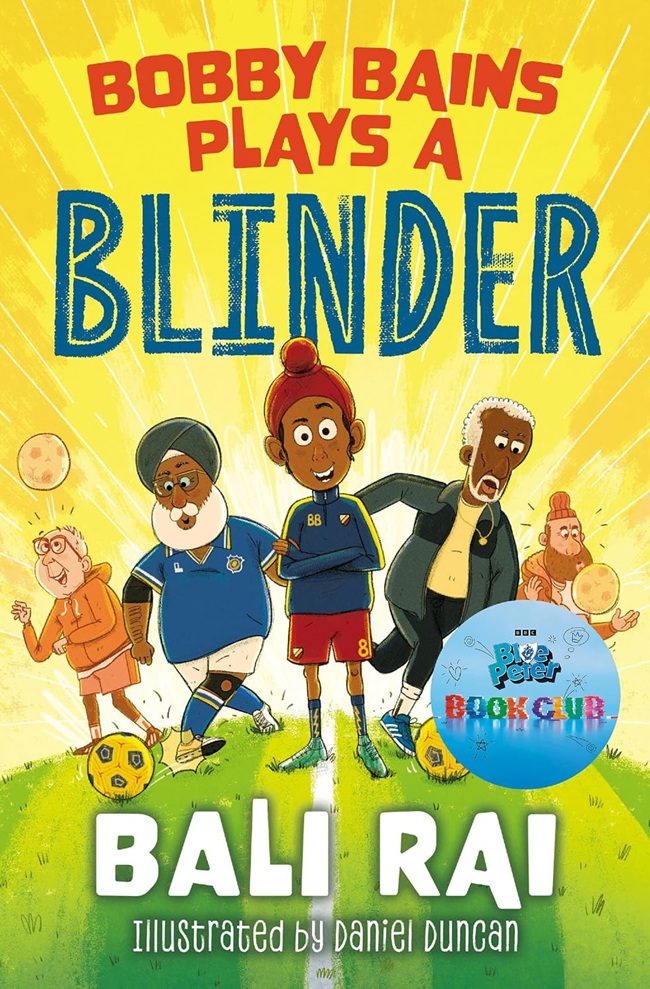 Bobby Bains Plays a Blinder and Budgie share other similarities: they are contextualised, although very differently, by poverty; boy characters lead on empathy, a welcome antidote to girls (and women) in books, as so often in life, bearing the larger share of social care. Bobby Bains repeats the Christmas setting, a rather obvious one for stirring up ‘charitable’ thoughts, but, in a neat little twist, Bobby and his family are practising Sikhs. While helping Mum deliver food parcels, Bobby meets Trevor (a Black man) who tells him that since he was widowed ‘there’s nothing worth going out for.’ Bobby is determined to lure this ‘cool old dude, like Nana-ji’ back out into the world and succeeds by establishing a local walking football group. Trevor’s social isolation coincides with food poverty, a topic also made explicit by Mum’s food bank job and Bobby’s classroom’s discussion about hunger. Arguably, given its explanations of Sikh tenets of ‘selfless service’, the narrative works through a prism of faith rather than one of community activism but the book’s final act of empathy – the Bains family invite Trevor to a vegetarian Christmas dinner – does suggest a new social cohesion, beyond one-off charitable acts.
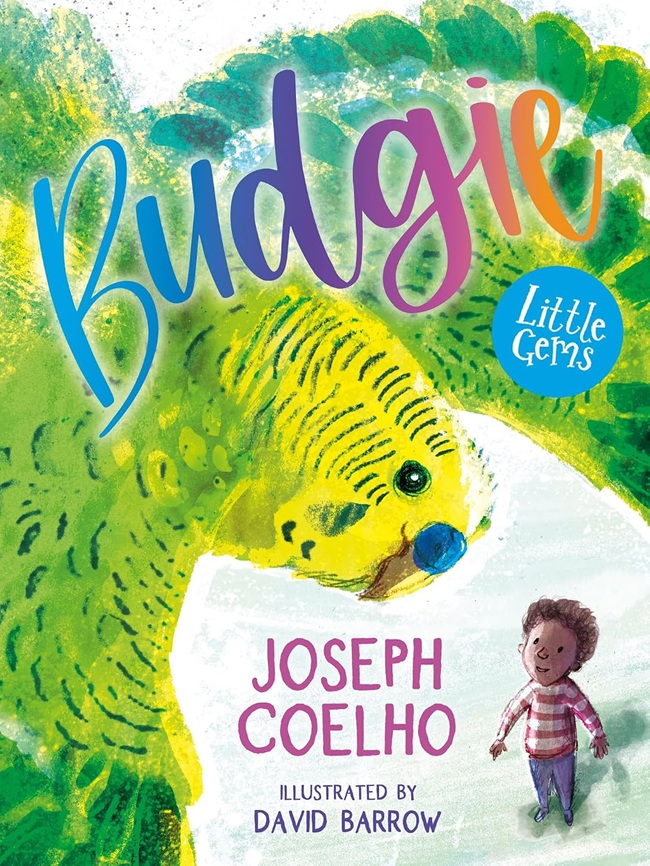
Poverty is the backdrop to, but not an issue explored within, Budgie. Loneliness is also a clear undercurrent to the narrative, but one which only gradually creeps up. Here an elderly (white) man behaves like the opposite of a recluse, patrolling the estate solo, brandishing his walking stick at children who dare to climb trees. This includes Miles who lives with his mum and sibling (a family of colour) on the block’s 3rd floor and who refers to Mr Buxton through ever extending hyphenated compounds: ‘Mr-Spoiler-Of-Fun, Mr-Thinks-He-Owns-The-Trees Mr Buxton.’ An unexpected, shared experience of grief brings the unlikely pair together in an emotional, but never sentimental, scene in Miles’ flat. While extending a sympathetic ear to Miles, we discover that Mr Buxton is grieving the loss of his husband. Preconceptions are confounded, words of comfort exchanged and tears shed, giving way to shared giggles and chuckles. Mum even brings out the ‘posh biscuits.’ Mr Buxton’s social isolation comes to be understood and, we suspect, with those closing scenes, upended forever in the warm hug of Miles’ family.
Est. 1983, Letterbox Library is an online children’s bookseller specialising in diverse, inclusive and social justice themed children’s books.
Books mentioned, all available from Letterbox Library:
The Butterfly House, Harry Woodgate (Andersen Press 2025)
Christmas Lights on Mistletoe Street, Kate Thompson & Natelle Quek (Puffin Books 2025)
Bobby Bains Plays a Blinder, Bali Rai & Daniel Duncan (Barrington Stoke 2024)
Budgie, Joseph Coelho, illus David Barrow (Barrington Stoke 2023)


