
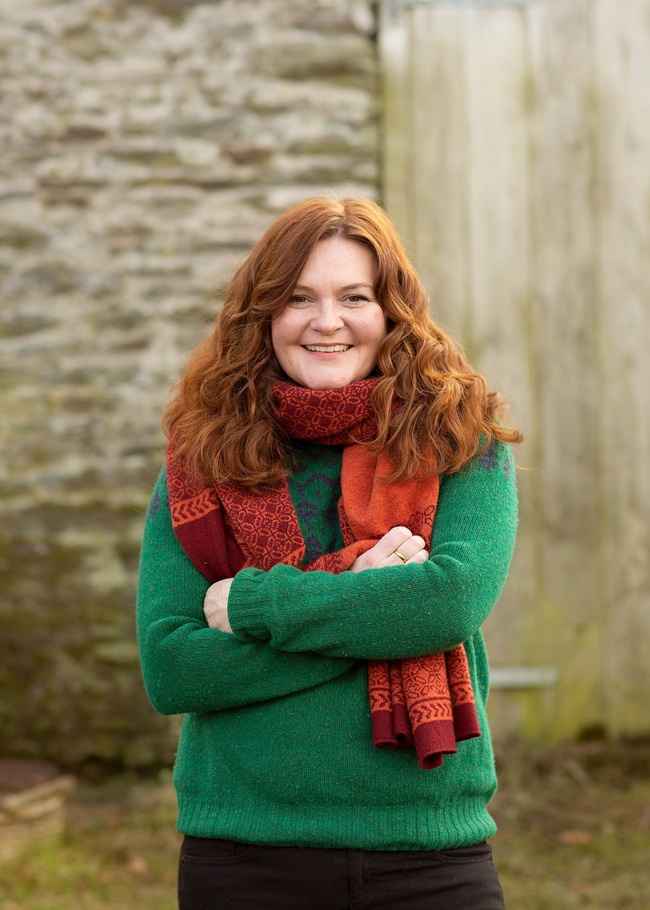
Reimagining Welsh mythology: an interview with CM Lewis
Michelle Pauli interviews multi-award-winning author CM Lewis about her new fantasy adventure.
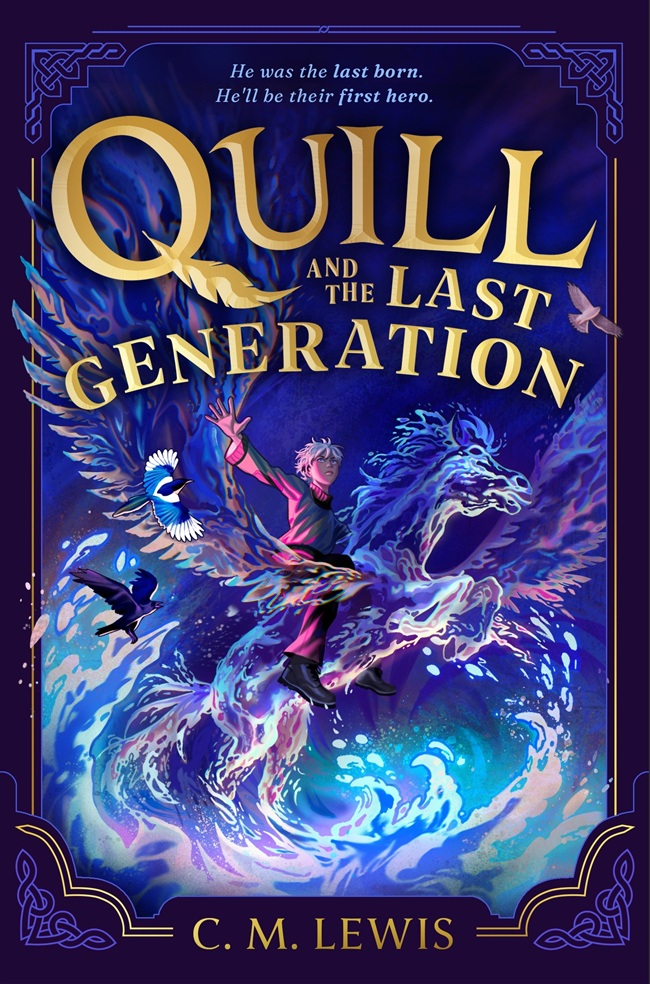 No babies have been born for twelve years in a world locked in perpetual winter – but one boy from that last generation of children might hold the key to restoring the light. It’s a striking premise and, for multi-award-winning Welsh author CM Lewis, one that emerged from the mythology that steeped her childhood – stories she’s now reimagining in her debut middle grade fantasy novel, Quill and the Last Generation.
The first in a trilogy, it follows twelve-year-old Quill, who discovers he’s far more than the sailmaker’s son he believes himself to be. When a shapeshifting raven reveals Quill’s true heritage and the urgent quest to recover the Light of the World, Quill must navigate the underworld, master newfound powers and face the King of Darkness – all while learning to trust himself and his companions.
Lewis, acclaimed screenwriter and three-time winner of Wales Book of the Year (for both adult and children’s books, and in both Welsh and English language), is perhaps best known for her literary fiction. But fantasy, she explains, gave her a creative freedom she hadn’t found before, and a chance to share the Welsh myths she grew up with in a playful, accessible way.
‘I’m first language Welsh and I didn’t learn English until I was six so Welsh mythology and folklore were the stories I grew up with. They were my canon and I wanted to share those stories with a wider readership,’ says Lewis.
The concept of the story emerged from that mythological foundation, but also from Lewis’s own theory about storytelling itself. ‘I believe a story should almost resemble a quill in that it has a strong backbone to it, and all the words should be in the right place, with nothing sticking out – exactly like the filaments on the side of a feather,’ she explains.
From that metaphor came Quill, a character inspired less from mythology than from Lewis’s own, very real ‘thoughtful, quiet, soft boys,’ as she describes her sons. These are the kinds of boys, she notes, who aren’t often recognised as heroes in adventure stories, or at least not without having to change who they are. It’s this gentle power that makes Quill stand out – even if, as his shapeshifting friend Deryn tells him, ‘it’s not very cool.’
That exploration into what it means to be a hero leads to a different kind of heroism – one rooted in emotional intelligence rather than physical prowess. ‘Being heroic is learning to know yourself and to have trust in your instincts. So there’s a lot of kindness in the book – Quill gets around the dragons through kindness and cleverness, not force.’ He is also guided by strong male role models, again in response to Lewis’s concern about the dearth of these figures in popular culture, beyond a handful of footballers and actors.
The book draws richly from Welsh mythology, particularly the Mabinogion and the legends of Annwn – the underworld – but Lewis has adapted these ancient stories with a contemporary sensibility. She’s transformed the one-way journey of souls into a cyclical system where two worlds depend on each other, and reimagined creatures such as the ceffyl dŵr (the water horse that, in darker tellings, would drop drunken travellers to their deaths) into Solas, Quill’s dangerous but loyal companion.
‘I felt like I had permission to play with these tales because they are the stories from my culture,’ Lewis explains. Her deep engagement with the source material cannot be faulted, right back to the hours she spent at A-level transcribing myths from old Welsh into modern Welsh. ‘Some academics might not like the changes,’ she acknowledges. ‘But it’s fun and it invites people who have no idea about the Welsh language into a culture which is important to me as a writer.’
With that invitation, however, comes responsibility. ‘The stories have been retold before by people from outside, and I think there’s been a sense that they’ve been misrepresented sometimes or that they’ve been used for a certain purpose,’ says Lewis. ‘There can also be a heaviness to this mission sometimes, a seriousness in feeling that you are trying to represent a culture and language. And because Welsh language writers have traditionally not written much in English, our language and culture has often been hidden.’
But while respecting the responsibility, Lewis also sees joy in the work of opening doors. ‘Sometimes it’s nice to write stories that are just joyful and fun, while also knowing that you’re introducing stories to kids that might not even know there’s a Welsh language, let alone that there’s a rich and deep history attached to it.’
Despite the joy, the book doesn’t shy away from the darkness in the myths either. Loss and grief thread through the narrative as Quill loses parents in both the underworld and the world above. Lewis approaches these themes with honesty rather than easy resolution: ‘When you are dealing with the underworld and souls, loss springs naturally from that cycle, and it’s important to be honest with children. There are no easy answers in this book, but it is nuanced and age appropriate.’
Perhaps surprisingly, given her deep connection to Welsh mythology, fantasy as a genre didn’t initially feel available to Lewis in her Welsh-language writing, despite genre being less of a straitjacket in Welsh writing. ‘In Wales, you’re a storyteller and that’s it,’ she notes. ‘It’s no more complicated than that, which is really lovely because people don’t pigeonhole you in the same way.’ However, writing in English opened the fantasy door and, as Lewis puts it, she’s having ‘an absolute ball’ taking the genre and running with it.
The trilogy structure – chosen deliberately for the three points of the Celtic knot – will continue that introduction, and Lewis is already deep into the series. She also has a YA novel coming in March with Simon & Schuster, but it’s clear her imagination is now firmly in the realm of magic and myth. ‘I have an idea for another middle grade fantasy series as well. I’m just blown away by how much I’ve enjoyed this.’
For now, though, she’s excited to see how readers respond to Quill’s journey – a journey that asks what it truly means to be a hero, celebrates kindness and cleverness, and invites readers into the rich world of Welsh mythology. ‘I just hope people have fun with it and enjoy it and will be hungry for the second one. And we welcome them into being curious about Welsh mythology.’
With a son serving as resident dragon expert (rewarded, Lewis notes, in sherbet lemons) and the warmth and depth that characterise all her work, Lewis has created a tale that succeeds as both a thrilling fantasy adventure and a tender exploration of what makes a hero. It’s mythology reimagined, a culture shared and storytelling at its finest – all held together, of course, by that strong backbone, just like filaments on a feather.
Michelle Pauli is a freelance writer and editor specialising in books and education. She created and edited the Guardian children’s books site.
Quill and the Last Generation is published by Macmillan Children’s Books.


