

Authorgraph no 277: Patrick Ness
Interview by Nicolette Jones.
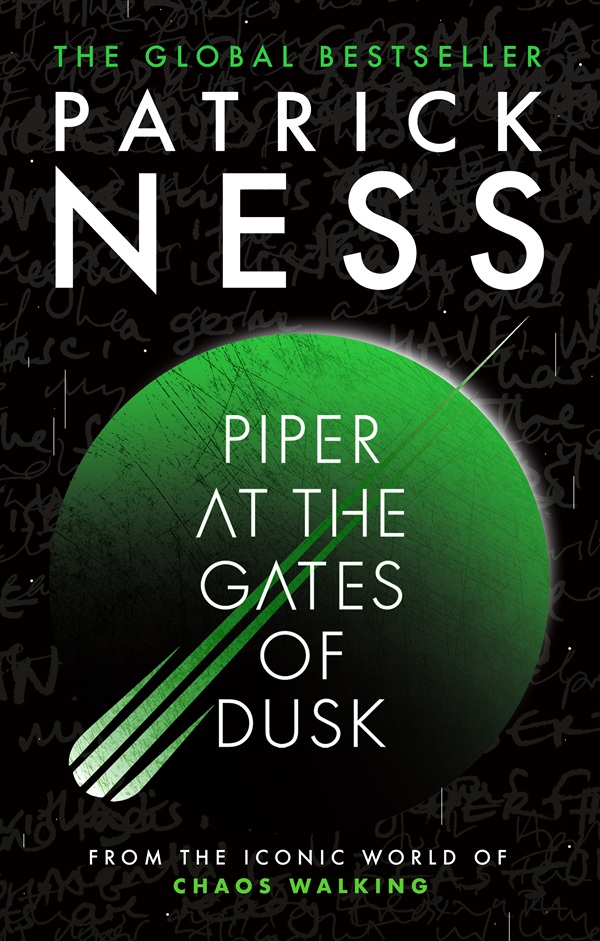 Patrick Ness was happy with how his celebrated Chaos Walking trilogy ended, and he considered its story complete. But now there is Piper at the Gates of Dusk, the first book in a new trilogy from his world where, to begin with, all the thoughts of men were audible (as ‘Noise’), and only women’s were silent. It is set twenty years later and Todd and Viola are now the parents of two boys, Ben (in honour of his grandfather) and Max. And in the foreword Ness says he feels nervous.
‘My terror is complacency. I think that’s how mediocre books get written. If I’m starting a book thinking, yeah, I know how to do this and it’s going to be fine, fine is the death word. I didn’t want to repeat myself and fall into the terrible, terrible trap of fine. But it was scary enough; I like to be fruitfully nervous and fruitfully scared for any book, because it makes you pay attention.’
Despite the nerves, two new ideas turned Ness’s doubts into a fourth volume. ‘The main idea I had been turning around and around was the Pied Piper, which is not an easy fairy tale to unpack. What is it? A lesson? Part of it is about how we’re led and how we act as groups. And that to me is always a scary, scary thing. And then there is that terrible exception, the boy who gets left behind. And that feels so poignant to me, the feeling of being left out; every teenager feels that.’
The second idea came about because in the 18 years since Ness wrote The Knife of Never Letting Go, ‘the conversation about gender has 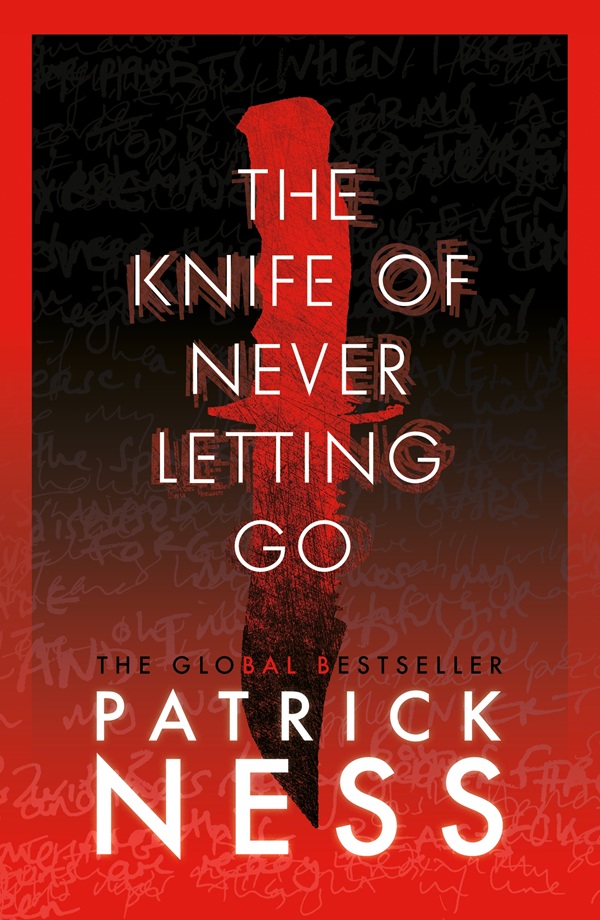 changed. I drew a line between genders, not to – and really, this is a strong emphasis – not to point out some core difference between them, but just to explore how humans handle obvious difference. But I’ve been asked what about the people in between? What about someone who might be transitioning from one to another? And I thought, that feels really interesting. How do they exist in that world and how does the world view them?’
We learn, after a while, that one character was born with Noise, but was assigned female at birth, before transitioning when he got older. ‘What I’m trying to suggest is that there is a spectrum on the Noise. Ben [the grandfather] talks about it a little bit: some boys have quieter Noise and some girls have a little bit of Noise, and sometimes those girls are girls and sometimes those girls are boys.’
Ness gives Viola the opportunity to ask some questions. Such as: Are you sure? Is it a phase? Are you a tomboy? ‘It felt a little risky, because I want us to love Viola, and Viola is on the right side of everything, but it also is the experience of the closet. You live an entire life in secret. And then you come out of the closet, usually after many years of thought and decision, and you want everybody to be right there with you at the end of the road, when the reality is they haven’t had all this time to come to terms with it or to ask their questions. I just thought Viola is the scientist, and would want to know the facts of the case. You’re allowed to wonder. You’re allowed to be curious about something that you have no personal experience of. But in the end, believe the person who has the experience.’ Viola does when she has her answers.
The title of the book, alluding to a chapter of The Wind in the Willows (also quoted in an epigraph), suggests that Kenneth Grahame is another inspiration. Ness admits he is a fan. ‘The Wind in the Willows never apologizes for its setting or characters. It is 100% its own world. And it expects you to come to it, just lays it down as it is. And that is my favourite sort of universe. While you’re reading it, it makes perfect sense. And that’s what I always want to do. I want to give you a universe that doesn’t justify itself.
‘And every time I think of The Wind in the Willows, I think of them [Mole and Ratty] in that little boat, and the sun just peeking over. Obviously my book is not bucolic. It’s violent and messy, but the sun peeking over those two in a boat feels like what that world could be and what it might have been, what it was before humans got there.’
Certainly the opening of the new novel is not bucolic. It opens with a rampaging monster – a burning god, whose nature does not become clear till late in the book. ‘The images of the god were pure gut. I didn’t question. I just think the nightmares I have tend to be something huge and overwhelming. And so I thought, let’s not unpick. Let’s just leave it as that. I tend to find out what my books are about when I’ve finished.’
 The monsters in this story, like the Piper, make children disappear. And the book has a twisty plot, which can make the reader feel safe, then suddenly not, and meanwhile it carries big themes and big emotions. ‘I always say, show me a writer who says plot isn’t important and I’ll show you a writer who can’t plot. I love plot. I love a story that is a rollercoaster. I always do my best to make sure that my plot works. Then I can concentrate on everything I really love, which is characters and jokes and odd scenes. So that’s really important to me: plot as structure, on which you can pile all kinds of fun stuff. That to me is the magic.’
The stuff piled onto the plot includes explorations of relationships between brothers, of what it means to be a good father, and the power of adoption. There is a good deal of personal experience behind this. ‘I have two brothers and a sister. My younger brother is adopted and his oldest son is adopted. And every book I’ve ever written has been one way or another about found family because that’s often the queer experience – though definitely not exclusively. Biology can be important, but that a human being can reach out to another human being to whom they’re not biologically related and say, you are family, is a miracle to me. A beautiful miracle. And in the midst of all these terrible choices that humanity is making, that’s a gorgeous one.’
Ness talks about his characters as if they exist outside himself. ‘I feel like Ben is a glimpse of those boys we see more and more these days – which is great – boys who say I love you to their male friends. That kind of boy who’s learning that there is more to a man’s emotional life than he’s been allowed in the past. Give him a chance to be the good guy, to love his brother, and he will. I found that really moving.’
Ness lost his father just over a year ago, and fatherhood is also a strong theme. ‘I was very close to my father. He was an unexpected man, quite religious, quite conservative, former military, and yet we always got along, always, my entire life. He had been somewhat burned by his own upbringing, by his own father. His first priority was I love my family. Everything else we’ll figure out. And that’s what I try to have Todd be. There is something so moving about a dad like my dad, who steps outside of a stereotype and who will surprise you. I have always thought Todd would make a great dad, and he is.’
It is not surprising, given the exploration of authoritarianism in Chaos Walking, that there is also a strong political current to the new book. 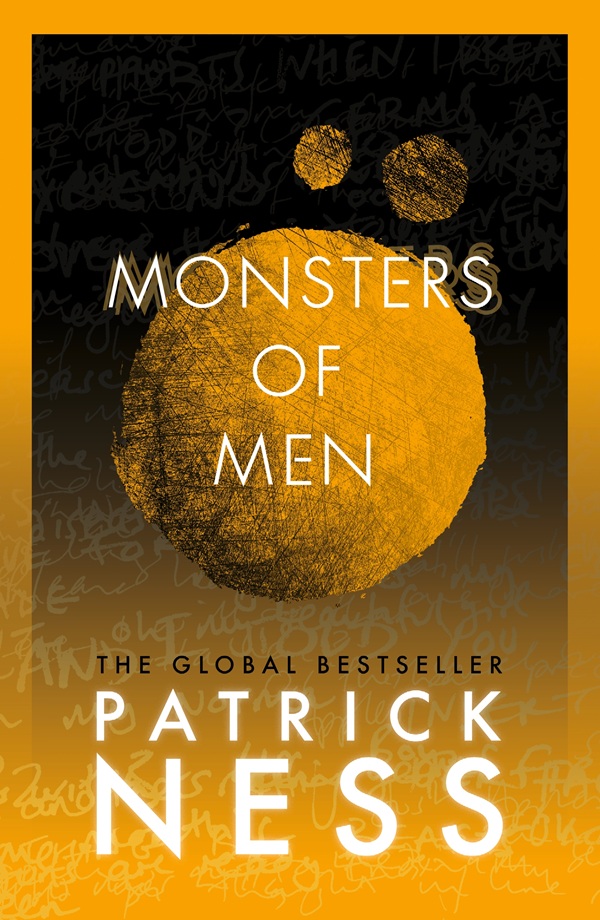 An elected leader who lies, not least to himself, and a scapegoated community. This has resonances both in the US, where Ness finished the book, and in Britain, to which he has now returned. There is no single real-life model for the character but only an internal logic to the way people behave, inevitably informed by real events – although people have seen more emphasis on politics in the book than Ness expected.
And there is another unlikely source of inspiration for this book: E M Forster and the cross-class relationship in his novel, Maurice. ‘Maurice and Scudder run off together and have a happy ending. And they have nothing in common.’ The dynamic influenced Todd and Viola. ‘They’re entirely different people: their upbringings, their references, everything is different. But I believe that they would be in love, and I believe that they would have a connection. But what if years later they have a little bit less in common than they thought. How would they deal with it? Of all places, this comes from Maurice by E M Forster, and wondering what happens twenty years later.’
And now there are answers for readers who wonder too.
Nicolette Jones writes about children’s books for the Sunday Times and is the author of The Illustrators: Raymond Briggs (Thames & Hudson); The American Art Tapes: Voices of Twentieth Century Art (Tate Publishing) and Inspire Me! (Nosy Crow), illustrated by Axel Scheffler.
Books mentioned:
Piper at the Gates of Dusk, 978-1529537581, £16.99pbk
The Knife of Never Letting Go, 978-1406379167, £9.99 pbk
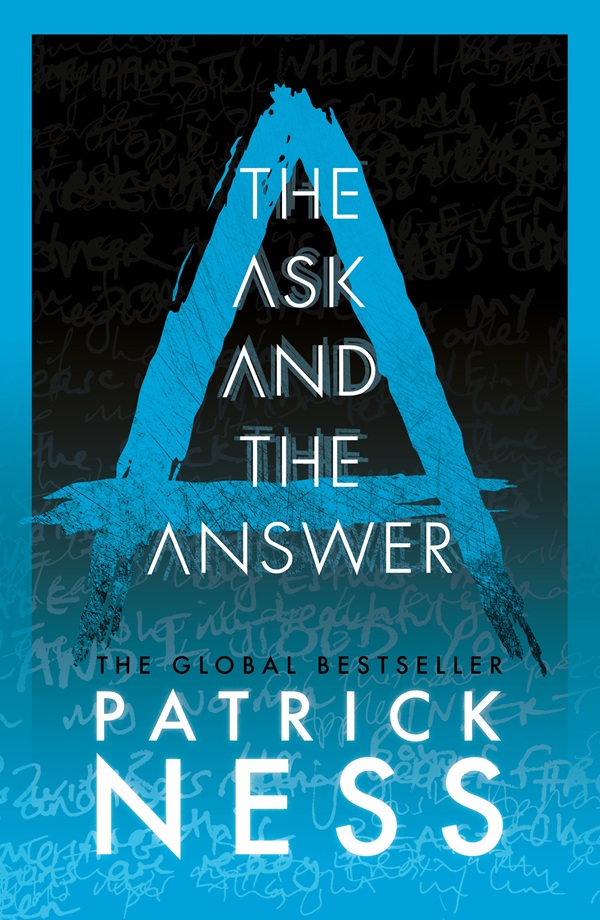
The Ask and the Answer, 978-1406379174, £9.99 pbk
Monsters of Men, 978-1406379181, £9.99 pbk


