

The Air in Amazement
It’s the time of year for telling stories, but who do they belong to, and how do they change? Neil Philip finds multiple layers in a story we all think we know.
People were having a go at the poet Michael Rosen on Twitter recently because his wonderful book We’re Going on a Bear Hunt is based on tradition (as if the words ‘Retold by’ on the title page weren’t a clue). I got a bit involved, trying to explain that this is how folklore works. Everything – stories, songs, rituals, folkways, superstitions, beliefs – mutates and evolves, as culture itself does. Nothing is fixed. Even the same storyteller, telling the same story, tells it differently to different audiences, on different occasions.
The same is true of myth. The only time when a myth seems fixed and immutable is when we only have one source for it—this is true for Kathlamet myths, for which the only source is one man, Charles Cultee; Cultee was also for a while the only source of Chinook myths, but his versions were later joined by those of another of the last speakers of the Chinook language, Mrs Victoria Howard. As soon as you have multiple sources, you have multiple versions, which both overlap and contradict each other.
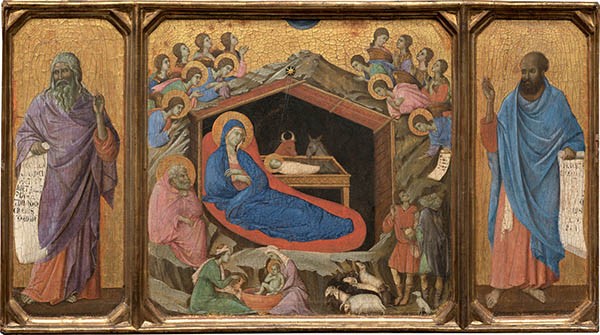 Take a story we all know, the Nativity of Jesus. The Bible gives us two sources for this, in the Gospels of Matthew and Luke. These two sources agree on very little, except the virginity of Mary and that Jesus was the Son of God. Luke has most of the usual story – the innkeeper, the manger, the shepherds. Matthew has the Magi and their gifts. Combined, these two accounts give us the Nativity as it is acted out in schools,
But hang on. All you have to do is open The Apocryphal New Testament and another tradition springs to life, in which Jesus is born not in a stable but a cave. The fullest and most poetic of these Nativities is in the Protevangelium of James, dating to the second half of the second century. This gives a completely different story.
In this version, Mary goes into labour while riding the she-ass through the desert on the way to Jerusalem. Joseph finds a cave where she can give birth, and then the most magical thing happens—the text suddenly switches from the third person to the first, and the narrator ‘becomes’ Joseph as the whole world comes to a breathless halt:
‘And he found a cave there and brought her into it, and left her in the care of his sons and went out to seek for a Hebrew midwife in the region of Bethlehem. Now I, Joseph, was walking, and yet I did not walk, and I looked up to the air and saw the air in amazement. And I looked up at the vault of heaven and saw it standing still and the birds of the heaven motionless. And I looked down at the earth, and saw a dish placed there and workmen reclining, and their hands were in the dish. But those who chewed did not chew, and those who lifted up did not lift, and those who put something to their mouth put nothing to their mouth, but everybody looked upwards. And behold, sheep were being driven and they did not come forward but stood still; and the shepherd raised his hand to strike them with his staff but his hand remained upright. And I looked at the flow of the river, and saw the mouths of the kids over it and they did not drink. And then suddenly everything went on its course.’
After this transcendent moment, a midwife appears, shortly joined by another who, not believing the story of divine pregnancy, insists on testing Mary’s virginity. For this sin her hand is consumed by fire, but then restored by an angel of the Lord.
There are no shepherds with humble gifts, but there are three wise men, who follow the star to the cave with their gifts of gold, frankincense, and myrrh, leaving behind them an angry and vengeful Herod.
The book of Genesis has two seemingly contradictory accounts of the creation of the first humans. In 1:27, ‘Male and female he created them. But in 2:22, Adam is alone until God creates Eve from his rib. The first of these accounts gave rise to Jewish myths of Adam’s first wife, Lilith; but it is also often translated, even in the Talmud, as ‘He created him male and female.’ The tradition that Adam was originally a hermaphrodite is remarkably persistent in the many extra-Biblical stories about him, and even appears in Arab folklore. For instance ‘The Creation of Adam’ in Joseph Meyouhas, Bible Tales in Arab Folk-Lore, tells us: ‘Adam, in the beginning, was in two halves, male and female, joined and bound to one another, but after a time the two halves parted and became separate bodies.’ These two halves marry, but the Lilith half (called here Qarina) refuses to submit to Adam, and Allah drives her from the Garden of Eden to become the companion of Iblis (Satan).
By choosing Biblical stories for my examples, I hope I have offended no one. I simply thought it interesting to pick stories that everyone thinks they know well, and show how multi-layered they actually are as soon as you start to place one version on top of another.
Neil Philip is the author of numerous books of fairy and folk tales, including Horse Hooves and Chicken Feet, which won the Aesop Award of the American Folklore Society. His most recent book is The Watkins Book of English Folktales.


