
All We Need is Love (and a continued commitment to inclusive literature)
Farrah Serroukh picks out the key take away from the most recent CLPE Reflecting Realities Report.
Soon trails of pine needles on the pavements outside will be one of the few reminders that another festive season has come and gone. Strolling past the shop assistant who carefully dethrones the tree in the window whilst neatly packing away the sparkling decorations. Passing abandoned bare trees propped up against railings, avoiding their sad gaze out of respect. And feeling for the tree that is mercilessly dragged along the cold concrete after weeks of enjoying its short-lived status of glorified glowing alter.
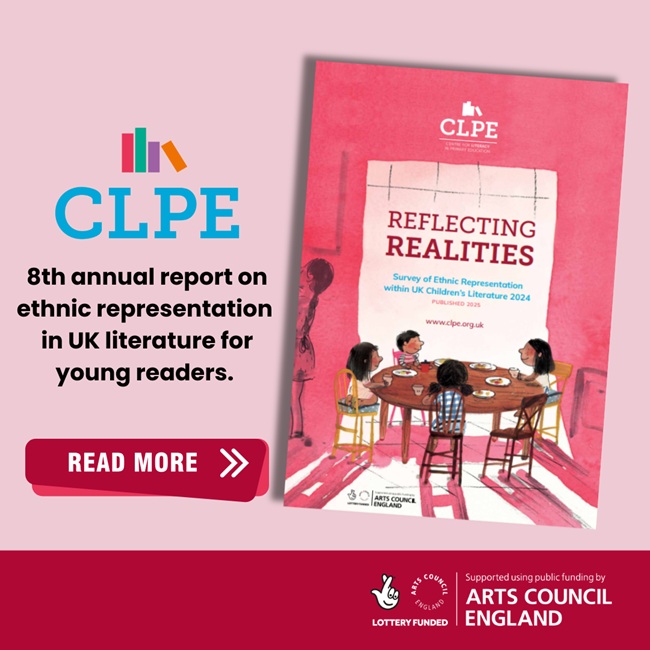
 But what has any of this got to do with an annual survey of ethnic representation in children’s literature? The latest CLPE Reflecting Realities report published in the lead up to Christmas, two months ago, marked the eighth instalment of the survey series. Over the course of eight years the children’s literature community have witnessed remarkable shifts in the quality and quantity of representative children’s books published in the UK.
The survey reports on the level and nature of ethnic representation within picturebooks, fiction and non-fiction aimed at readers aged 3-11. We report on the profile of characters and casts and share insights into the representation featured across genres and text types. The findings of the eighth report indicated marked improvements in comparison to the data shared in the seventh report, with overall representative output increasing from 17% to 24%. In the first six annual reports, we observed significant and consistent growth in the volume of children’s literature featuring racially minoritised characters from 4% in the first report to 30% in the sixth report. Amongst other factors, the initial shock caused by the low baseline figure documented in the first report appeared to fuel this remarkable growth. In the seventh survey published in 2024, we reported the first decrease in the presence of racially minoritised characters in the overall output and in other key measures that we have tracked over of time. These findings were in stark contrast to the prior six reports and provided a sobering reminder that the work of ensuring inclusion requires critically reflective, deep and sustained effort to ensure a long term systemically integrated approach.
If we are to ensure that the gains made during this period are embedded as a sustained industry standard, then it is crucial to apply an 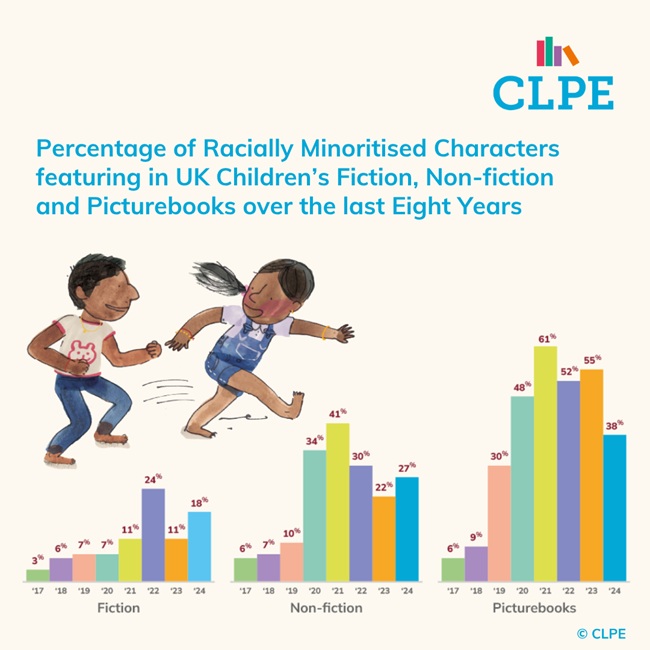 inclusive lens at every stage of the publishing process – from the seed of an idea for a story to the published book reaching the hands of the reader. This journey from seed to shelf has some parallels with the abandoned trees. Unlike puppies and despite the love poured into them, Christmas trees do have a very finite life span. Like trees of the festive season, a great deal of love, energy, thought and care is invested into the production of a book. However, unlike the trees, the aspiration is that these bound treasures have infinite shelf lives and reach as many readers as possible.
As well as an increase in overall output reported in the eighth survey compared to the seventh report, we also observed an increase in the presence of racially minoritised main characters from 7% to 24% in titles reviewed. We noted an increase in representative fiction output from 11% to 18% and an increase in representative non-fiction output from 22% to 27%. The one area in which we observed a drop was in picturebook output. Although we expressed concern about the dramatic decrease from 55% to 38%, we were pleased to be able to share the rich breadth of realities encountered through this text type. This breadth encompassed a range of ethnic representations as well as varied portrayals of gender, sexuality, family compositions, socio-economic contexts, communities, experiences and themes. Although the exemplifications highlighted were varied in style and subject matter, it was apparent that the theme of love was at the core of every title. Each picturebook highlighted in the eighth report centred love in different ways, from the love of
- and care for a hive of bees in Lulu meets the Bees (Anna McQuinn, illus Rosalind Beardshaw Alanna Max).
- and support for a child on their first day at Nursery in Olu’s Teacher: A Story About Starting Nursery (Jamel C. Campbell, illus Lydia Mba, Walker Books).
- food and family in Papa’s Butter Chicken (Monica Saigal, illus Abeeha Tariq, Little Tiger) and Dim Sum Palace (written and illustrated by X Fang, Pushkin Children’s Books).
- families in Changing Tides (written and illustrated by Júlia Moscardó, Little Tiger) and The Big Day (Rachel Plummer, illus Forrest Burdet, Little Tiger).
- and connection to heritage in My Mother’s Tongues: A Weaving of Languages (Uma Menon, illus Rahele Jomepour Bell, Walker Books)
- community in One Sweet Song (Jyoti Rajan Gopal, illus Sonia Sánchez, Walker Books)
- our world in titles like Ayo’s Adventure: Across the African Diaspora from Afro to Zulu (written and illustrated by Ain Heath Drew, Barefoot Books) and L is for Love(Atinuke, illus Angela Brooksbank, Walker Books).
Each book was clearly made with love and is a celebration of our humanity – showcasing the power of literature to be a much-needed force for good. As we make our way into the new year, our hope is that the publishing industry remain steadfast in their commitment to inclusive literature by applying an inclusive lens at every stage of the process and continuing to infuse the books with love because when all is said and done love is really all you need.
Click here to read the latest CLPE Reflecting Realties Report.
Farrah Serroukh is Research and Development Director, CLPE.


