
Out and about in the National Year of Reading
The National Year of Reading 2026 from the Department for Education and the National Literacy Trust seeks to address the steep decline in the nation’s enjoyment of reading, as research shows that children and young people’s reading enjoyment and daily reading habits have reached 20-year lows. Charlotte Moore, Campaign Manager at the National Literacy Trust, reports on successful local initiatives up and running now.
Reading for pleasure matters. When children and young people enjoy reading, they read more often, helping to strengthen vital reading skills and improve academic attainment across the board. Not only that, but it also supports improved wellbeing, helps to build empathy and confidence, and sparks imaginations. And these benefits are felt long into adulthood.
Inspiring a transformative love of reading sits at the heart of our place-based work in communities across the UK where low literacy and poverty are having the most serious impact on children’s and families’ lives.
Our teams in 21 localities across the four nations, from Belfast to Lowestoft, Cornwall to Dundee, work tirelessly with schools, community groups, businesses, local government and families to promote reading for pleasure and the myriad benefits it brings.
But not every year can be the official National Year of Reading, and this intensely focused 12-month period, when the bang of the drum is loudest, is being seized as an opportunity to extend our reach and impact. Beyond this year, the success of the National Year of Reading will depend on the legacy we are able to build by empowering more children and families to discover a love of reading and develop the reading skills they need to succeed.
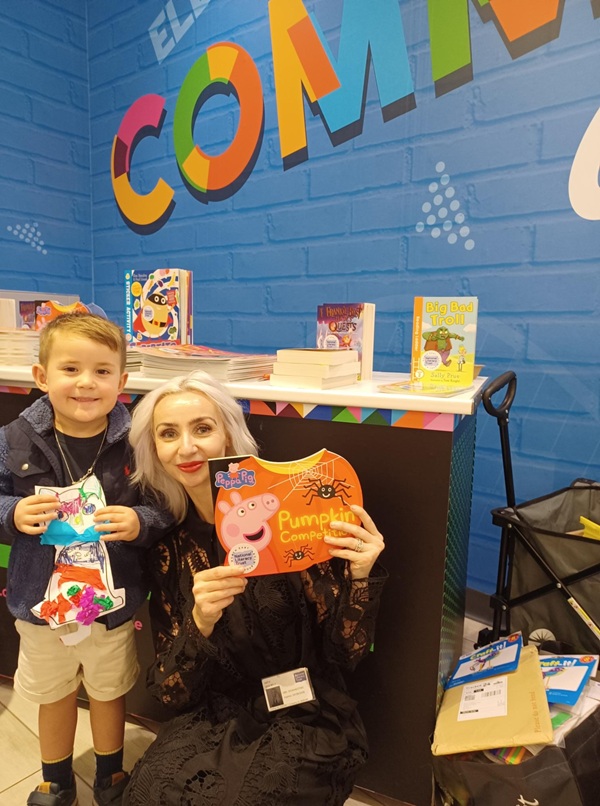 ‘It’s definitely the right time for us,’ says Linzi Winn, Manager of the National Literacy Trust in the North East, which focuses its efforts on reaching audiences in Newcastle and Gateshead, where the need is greatest.
The National Year of Reading has given Winn an extra hook with which to introduce the National Literacy Trust’s mission and work to potential partners in these cities. Organisations and foundations have approached her, too, either with funding for projects or an eagerness to sign-up as volunteers, and this has allowed work to evolve, take place in many different forms and engage new community groups.
A collaboration with Gateshead Music Service to celebrate National Storytelling Week in February saw Newcastle musician Kema Kay visit school children to deliver sessions that linked music and literacy. Not only did this encapsulate the National Year of Reading’s campaign message to ‘Go All In’ on your passions through reading, but it engaged the strong Nigerian community in Gateshead. Winn says, ‘These voices weren’t necessarily represented so much in the books children were reading. We wanted to find an artist that resonated with them, that inspired them with interest first.’
Summer plans in Newcastle and Gateshead include a travelling teepee to take storytelling and reading to families in the places and spaces where they already spend time. ‘A lot of the places that have all the exciting stuff on in the summer are ticketed, and that’s a huge barrier, so getting funding from Daisy Education for the teepee has been absolutely brilliant for us.’
Recruiting volunteers – known as Literacy Champions – is key for Winn as part of the legacy of the National Year of Reading. Families who see people from their community championing the benefits of reading are more likely to connect with the habit, and this, Winn says, is ‘the way in.’
‘In one of our areas in Byker, we’ve got partners literally next door to one another, all doing something different. The Family Hub is next to a local housing association, which is next to the food bank and schools, and that collaboration within the community really raises the profile of literacy and embeds reading in the places families encounter every day.’
This is echoed in Dundee, where Manager Jenni Leigh is seeing the National Year of Reading as a way of encouraging conversation about 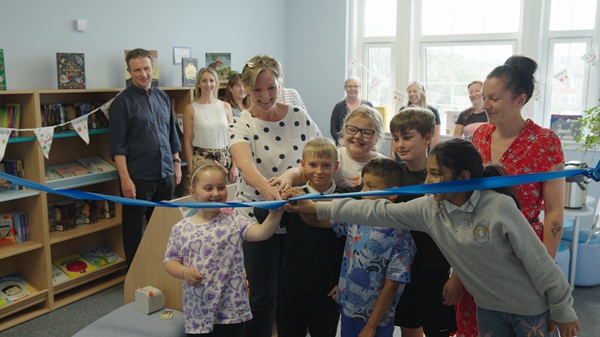 reading and building a momentum that connects people, places and books.
Following the National Year of Reading’s Scottish launch in Edinburgh this January, which was supported by Her Majesty The Queen, Patron of the National Literacy Trust, Leigh said, ‘Without a doubt, the reach of the launch event was huge. I thought it was quite spectacular. And in terms of opening doors, it hopefully has for other people in the country. There are many people talking about it – but we just need a lot more people to do so.’
Her hope is that momentum keeps building in Dundee, made all-the-more likely with partners like DC Thomson, who publish The Beano, on board.
‘I think the current trends we’re seeing through our Annual Literacy Survey show it’s not a losing battle, but we are fighting against the tide,’ she adds. ‘Visibility of reading and conversation, they’re key things for me.’
Plans are afoot to work with Dundee Libraries to host free events with storytellers and authors that open venues and new reading experiences to families who wouldn’t be able to afford to attend paid events. But Leigh also sees opportunity in working with families who already centre reading in their homes and social lives.
‘I went to Waterstones Children’s Book Festival recently and was giving stickers and bookmarks to everyone waiting in line for Cressida Cowell’s event. I was encouraging all the children to tell their friends at school how much they love reading, and their favourite book, and talk to them about the library. The people who know the value of reading can help us spread the message; theirs are the voices in the community who people will listen to.’
Naturally, these conversations are more easily sparked in a National Year of Reading, where the practice is front and centre.
Leigh continues, ‘In lots of ways, we are carrying on as normal with the programmes we deliver and the work we do, but with a sense of a weight of something really interesting and exciting that we can plug into. It adds another layer to everything we do.’
 In Swindon, the campaign that threads through the National Year of Reading – encouraging people to read around their passions and interests – was already on the radar. Anish Harrison is the Manager of the National Literacy Trust in Swindon and has gleaned from conversations, particularly with dads, that hobbies are a big hook to get parents to pick up a book and share it with their children.
Consequently, plans in Swindon were easily aligned with the Go All In campaign. A recent virtual author event with Big Manny, best known for his science-themed social media content, had 1,276 pupils registered to attend from 11 local schools. An event with a motorsport correspondent who now writes children’s books about Formula 1 drivers is planned. Literacy Champion volunteers are putting on workshops about comic books, and Little Tiger Press is working with Harrison to bring a different author every month to meet young people in the town.
Harrison says the National Year of Reading has been used to ‘really sharpen and enhance our offer in Swindon.’
The priority she is keeping in mind is that ‘you don’t just want to get the low-hanging fruit from this. Because I still think there’s such a narrow view of what reading is. So we need to have the Go All In messaging reinforced from lots of different places and contextualised. And that’s what we’re trying to do.’
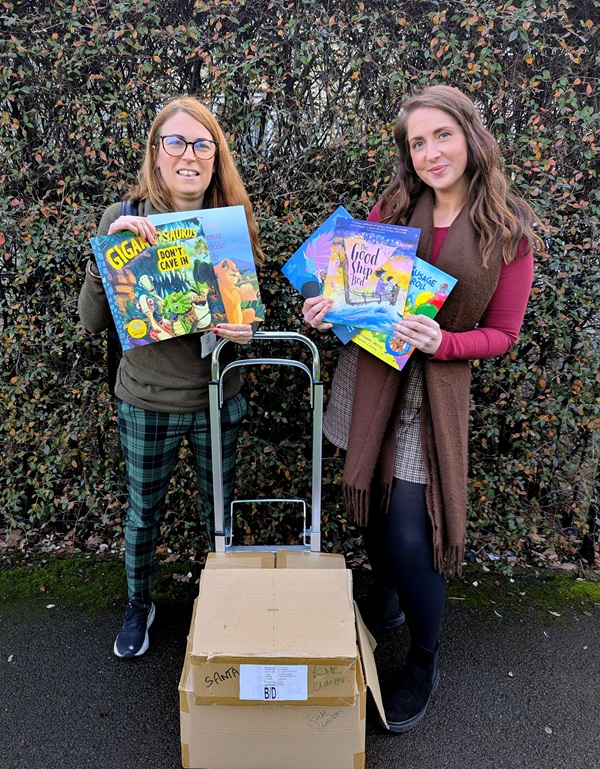
One of the most important solutions Harrison highlights is giving children and young people the freedom to choose what and how they read. The National Literacy Trust relies on generous donations from publishers and booksellers to be able to gift books for free to children who need them most in communities where as many as 1 in 6 children say they don’t have a single book of their own. This matters because when children have access to high-quality, diverse books and reading materials, they’re more likely to enjoy reading, read more often and reap the benefits of reading for their education, wellbeing and confidence.
Many of the children Harrison works with see reading as something done for school and aren’t then motivated to explore the shelves in their school or public library to see if anything piques their interest.
‘We notice that boys from a certain age group wouldn’t come near us when we were gifting books at community events in the summer. Older boys are very discerning; they know exactly what they like and what they don’t like. But as soon as it was framed around their interests, the change in their outlook was instantaneous – so we took the decision to find more ways to get a wider selection of books in for them.’
Donations from local bookshops and businesses helped, with manga, football and Lego books going down a storm with those who previously shunned our activities.
‘I would say that we’ve got a bit more work to do with young women, aged 15 and up. But we’ve honed our work through time, through discussions, through observations – we know what our communities want. It’s not that they don’t like reading, but reading has to mean something a lot wider. And we have to get that choice spot-on first time, or we lose them.’
Across the UK, National Literacy Trust teams are working with communities to harness the excitement and appeal of the National Year 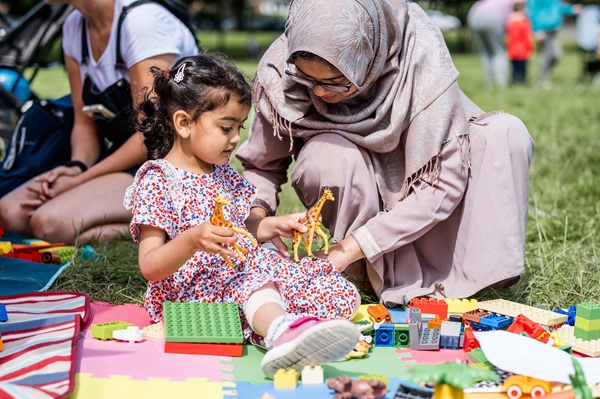 of Reading to make reading feel personal, relevant, accessible and special. Through conversations that lead to collaborations, which open up opportunities to provide more children and families with opportunities to choose what, when and how they read, the legacy of the National Year of Reading will thrive.
Charlotte Moore is a Campaigns Manager working in marketing and communications at the National Literacy Trust, having previously worked as a local journalist and for Peterborough library services.


