You’re a Good Man, Mr Stanton! Celebrating 20 years of Mr Gum
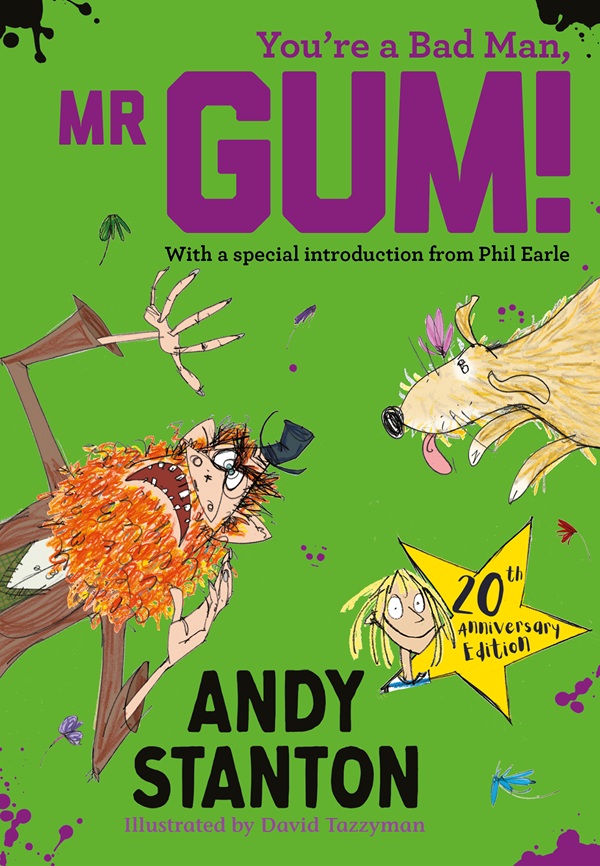
On the publication of a special 20th anniversary edition of You’re a Bad Man, Mr Gum! Joanne Owen talks to creator, Andy Stanton.
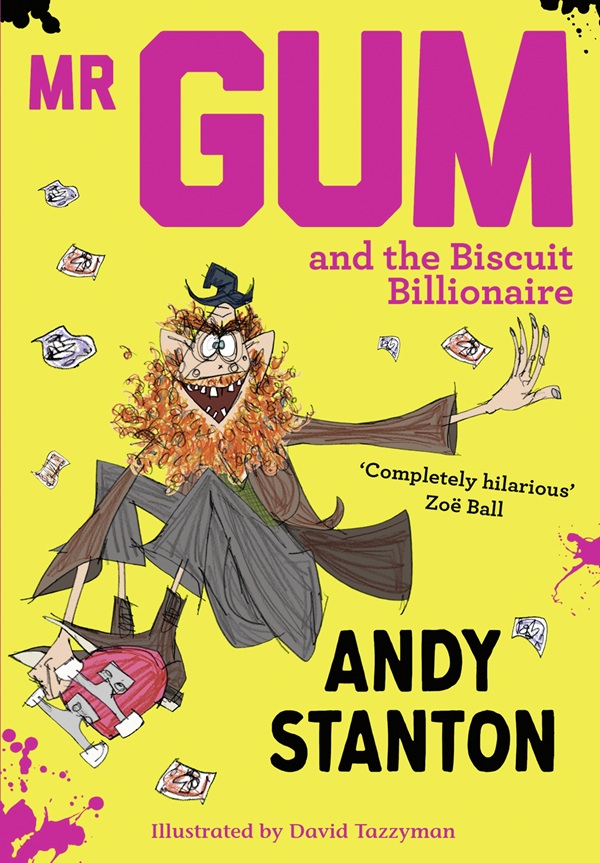
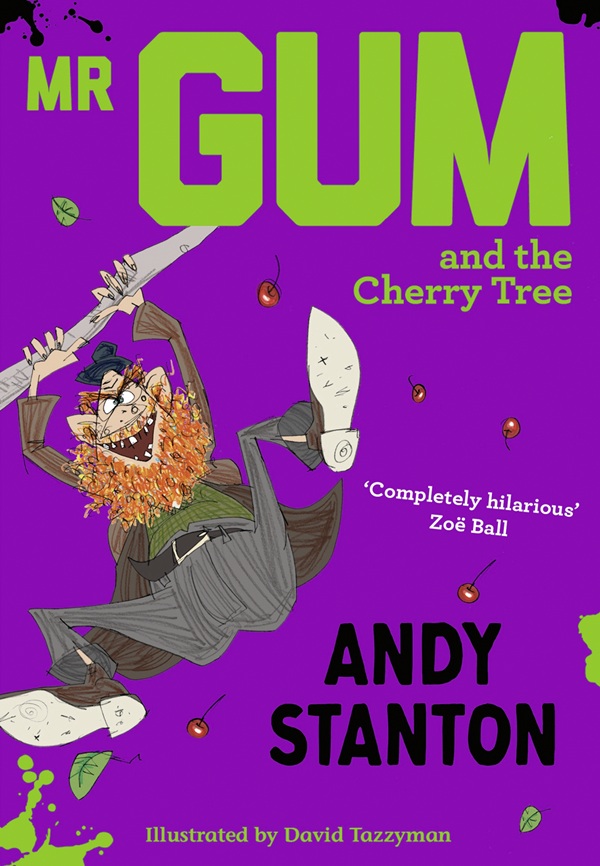
‘Mr Gum was always about trying to push kids to see what’s possible. To subvert their expectations. There’s no ‘you can’t’. You can.’ So says Andy Stanton on the 20th anniversary edition of You’re a Bad Man, Mr Gum! in a statement that cuts to the core of the series’ child-centred heart. Across nine books, there’s no denying Mr Gum’s splendidly subversive sensibilities as the stories encourage kids to embrace the sheer joy of invention. For example, why wouldn’t a dog named Jake buy tinfoil from a magpie for a few horse chestnuts? Why can’t books have one-sentence chapters, chapters that don’t exist, and pretend endings? And why wouldn’t kids go crazy for stories featuring a ‘complete horror’ called Mr Gum, a determined ‘girl worth liking’ called Polly, and a cracking ensemble cast who’d fit right into the best Monty Python sketches? Welcome to Andy Stanton’s liberating Lamonic Bibber story world. A place of dirt and chaos with a kid at the helm of its moral compass. A surrealist space of Spike Milligan-esque streams of consciousness, boundary-breaking breakings of the fourth wall, and more tangential plot twists than you can shake a bag of sticks at (if you know, you know).
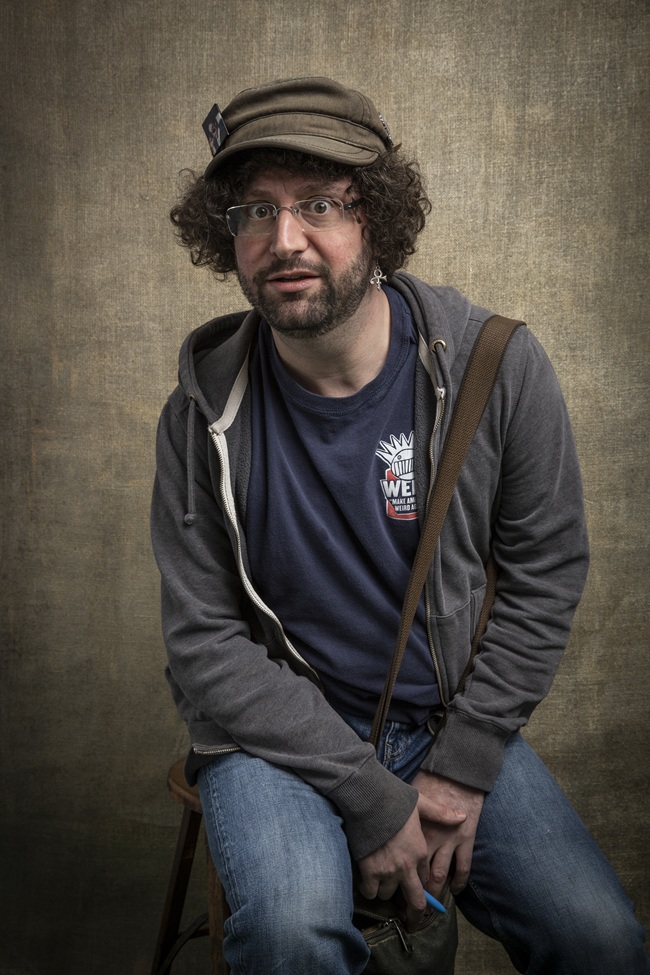
 Since ‘putting a bend in the road of kids’ literature’ in 2006, the Mr Gum series has sold more than four million copies in the UK and been translated into 34 languages. So, given Mr Gum’s enduring global appeal, the first question on my mind is what Andy initially hoped readers would take from the books (that and whether the truth really is a lemon meringue — again, if you know, you know). His answer is resolutely child-first: ‘I really like talking to kids of the ages I write for, broadly 7 to 11. I think you can really light a fire creatively under kids of that age. Around that age, kids start to understand conceptual humour and conceptualisation in general.’ While we talk, Andy’s respect for his audience is ever-present: ‘I want to show kids they can play with ideas, and there are no limits on those ideas.’
From the onomatopoeic oomph of Billy William the Third saying ‘funty’ for ‘funny’, to the charming 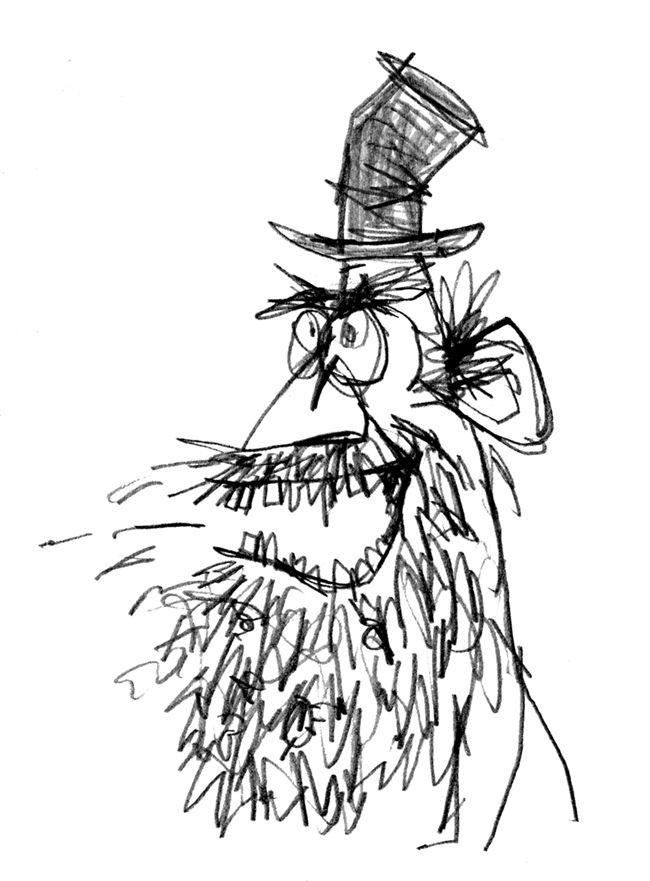 Worzel Gummidge-ism of Mr Gum being described as a ‘lazer’, that limitlessness is abundantly apparent in Andy’s ‘mangling’ of words, as he describes his joyous wordplay jousts. Importantly, though, even the most seemingly absurd elements of the books are imbued with purpose. ‘Everything in these books is intentional,’ Andy explains. ‘Myself, my editor, the illustrator, the art designer — everybody involved worked really hard to make a quality artefact that was child-friendly. The first thing is, the books feel thick because of the design, but there aren’t that many words so the child gets a sense of achievement from reading what feels like a long book. Secondly, although the book isn’t long, it’s dense with meaning, so it’s the kind of book you can revisit.’ Moreover, Andy ‘always wanted to make sure I wasn’t, as they say in comedy these days, punching down. I always wanted to make sure the message of Mr Gum was kind-hearted and warm and safe. I’m showing a topsy-turvy world where all the adults are really silly, and the child is the moral compass. And that, of course, is a great staple of children’s literature, and my books are very much in that tradition.’ Which moves me to ask who Andy thinks Mr Gum’s bookshelf bedfellows should be: ‘Just next to Roald Dahl for the setting, and next to The Young Ones book because that was how I learned to break the fourth wall. Oh, and it should sit next to Dracula, because to me Dracula is accidentally one of the funniest books
  ever written, the classic potboiler. And I think The Cat in the Hat should be somewhere nearby as well.’
Also aligning the series with the best traditions of ground-breaking children’s literature is the striking way the Mr Gum books came into being, especially their heroine, Polly: ‘The first book was improvised in one night out of years of frustration from having too many ideas but not developing them. So, I just thought, I’m going to start writing from a germ of an idea and see what happens. About five chapters in, I thought, this being some sort of simulacrum of a children’s book, it would be good to have a child in it. Then the door opened and in walked Polly, fully formed, somewhere between an Eastend urchin and a Mississippi bluesman, and she just anchored everything.’ I wonder, then, alongside the ingenious intentionality, did chance play a part in Mr Gum’s origin story and development? ‘I think a good phrase for Mr Gum might be ‘lightning in a bottle’,’ Andy suggests. ‘A lot of things were conscious on my part, and a lot of things were instinctive, and a lot of things were lucky.’
 While the positive impact of the Mr Gum books is clear (‘Many parents tell me their child learned to read from Mr Gum, and a lot of parents of autistic children tell me their children respond really strongly to Mr Gum’), Andy’s longer-term wishes for the lazer’s legacy are, needless to say, child-centred and compassionate: ‘A child once wrote to me and said, ‘What’s the message in Mr Gum?’ And I thought about it and eventually said, ‘Well, the lesson is that life often doesn’t make very much sense, and it’s very confusing and strange, but let’s all try to be as nice to each other as possible.’ So, it’s a pretty simple message, but I’d like the legacy of Mr. Gum to be for people to see that you can take your mind anywhere, but there’s got to be a kindness underneath.’ As creative aspirations go, never has a better, truer word been spoken, not even by a lemon meringue.
Joanne Owen is a writer, reviewer and workshop presenter. With a background in children’s publishing, she’s the author of several books for children and young adults, among them the Martha Mayhem series, the Carnegie Medal-nominated Puppet Master, and You Can Write Awesome Stories.
The 20th anniversary edition of You’re a Bad Man, Mr Gum! by Andy Stanton, illustrated by David Tazzyman is out now, along with new audio editions of all nine books in the series.


