
Price: N/A
Publisher:
Genre:
Age Range: 8-10 Junior/Middle
Length: 240pp
Buy the Book
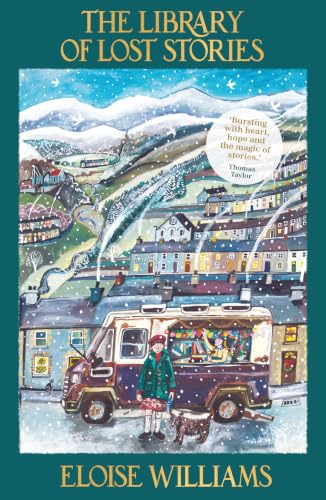
The Library of Lost Stories
Noni and her dad are in trouble; trouble that Noni is making every effort to hide from neighbours and authority. Her dad seems to be unable to work, sunk in grief and depression. Noni is his unofficial carer – aged eleven. They are now living under the threat of the bailiffs. How can Noni – also grieving the death of her mother – help him? She discovers that in the past the library van was important to her parents. But the library van no longer runs – in fact it rests mouldering on Mrs. William’s driveway. Perhaps Noni could restore it? An ambitious plan and there is an added problem, Mrs. Williams is definitely a witch…
Though set in the 1970’s, ten years after the Aberfan disaster, the themes within this novel are still very relevant, adding depth to the narrative. The setting is a small village in Wales that has been profoundly affected by the disaster as has Noni’s father. However the author does not overwhelm the reader with an atmosphere of gloom. Noni (or to give her full name Rhiannon) is a character to reckon with. She springs off the page, opinionated, angry, determined, scared – and a true storyteller whose stories may not always adhere to a boring truth. She has real agency despite her age. She is entirely believable. This is one of the strengths of Eloise Williams – her ability to bring her cast of characters to life. Much of this is through her depiction of their community clearly drawn from familiarity but also through the writing. Williams herself is a storyteller – the first Children’s Laureate for Wales. Her language is direct, accessible with the added musicality of the Welsh vocabulary that floats through the text bringing local colour and interest to the reading. There is sadness running through the narrative but plenty of humour. This is above all a story of hope, friendship and new beginnings. It is also a story about stories and their importance in creating meaning and identity, history and memory both for individuals and a community. Bringing these together is the powerful symbol of the library, the repository for the stories, and a place for people. These themes add depth but above all as a true storyteller Williams brings to her readers the pleasure of a story well told – a story of tribulation and challenge, a redoubtable character and a satisfying ending; a truly happy book that engages both through its message and the writing.


