

A Q&A interview with Lisa Williamson
Lisa Williamson won the Waterstones Children’s Book Award with her debut YA novel, The Art of Being Normal, and was also shortlisted for the Branford Boase Award and YA Book Prize. Since then she has written three more sensitive, contemporary YA novels and her fifth, The Summer After the Night Before is out now. Lisa answers our questions about her writing for young adults.
The Summer After the Night Before is your fifth YA novel. What draws you to write for this age group and what do you find so rewarding about it?
 I found being a teenager really intense. I’m not sure I’ve felt highs and lows like it since! Crucially, I remember being a teenager incredibly well. It helped that I was very quiet and shy and spent a lot of time watching and listening to everyone around me. I also kept sporadic diaries. Just opening one and seeing my teenage handwriting takes me back in time. When you’re a teenager, you’re often experiencing things for the first time, which is endlessly interesting to explore as a writer. So much of your life is still up for grabs and that’s both scary and exciting.
Can you tell us how the idea for the book developed? Do you still like to use research in your novels?
It started with a conversation with a close friend about something that happened to her over 20 years ago. Despite the passage of time, it had impacted her deeply, in ways I don’t think she (or I as her friend) appreciated at the time. Although what happens to Molly is quite different, revisiting my friend’s experience was a jumping-off point. I immediately knew that the story featured a girl waking up in her friend’s brother’s bed with little memory of how she got there. The rest of the story though was a mystery to me. I’m quite an instinctive writer. I don’t like to plan too much, as very often, I don’t know how my characters are going to behave in certain situations until I write them. I researched black-out sex and listened to the excellent About the Boys podcast on BBC Sounds. Beyond this, I found the best way to develop the book was just to write and see what happened.
The book covers serious issues. How responsible do you feel to be honest with readers or to provide them with advice?
I don’t feel a responsibility to give advice, but I most definitely think that young people deserve honesty. I don’t have all the answers and would never claim to, but I like to think that reading Molly, Rhiannon and Ben’s story might help readers navigate situations in their own lives. My main job as an author is to entertain and that is always at the forefront of my mind when I’m writing. I would hate if a young person felt like reading any of my books was a chore. If they come away feeling empowered or enlightened, that’s amazing, but above all, I want them to have enjoyed the experience.
It’s ten years since your debut novel The Art of Being Normal was published. How do you feel your writing has developed in that time?
For a start, I’ve got a lot faster! My first few books took two years each to write, whereas The Summer After the Night Before took around six months. I think a lot of this is down to confidence and instinct. Early on in my career, if whatever project I was working on wasn’t going so well, I would jump ship and start something new, only to inevitably lose confidence in that project too. I’m now a lot better at trusting the process and recognising that doubts are an inevitable part of this. Every project brings its own challenges. However, the more books I have under my belt, the more physical evidence I have that I might actually be quite good at this!
What’s the nicest thing a young person has ever said about your books?
I’ve had several young people tell me that The Art of Being Normal helped them come out to friends and family. Hearing that is always incredibly special and the most amazing example of the power of books and stories.
It’s the National Year of Reading and talk of a ‘crisis in reading’ is at the forefront. What do you think is the best way to encourage the reading habit?
Leading by example. I make a habit of always having a book or my Kindle with me so that if I’m at a loose end, I can read instead of doomscroll on my phone. I have a 12-year-old stepdaughter, and I read to her every night we are together. It’s incredibly bonding and something we both really enjoy. I personally don’t think anyone is too old to be read to. It’s also vital that all schools have a library and librarian, and that library use in general is encouraged as much as possible. When visiting schools, if students ask me where they can get my books, I always highlight their local library and make it clear how easy it is to get a card and request titles. I’m also fully behind bans on social media for under-16s. I grew up in the ’80s and ’90s and spent so many long empty Sundays lying around reading. I’m in no doubt that if I’d had a phone, I’d have been glued to it.
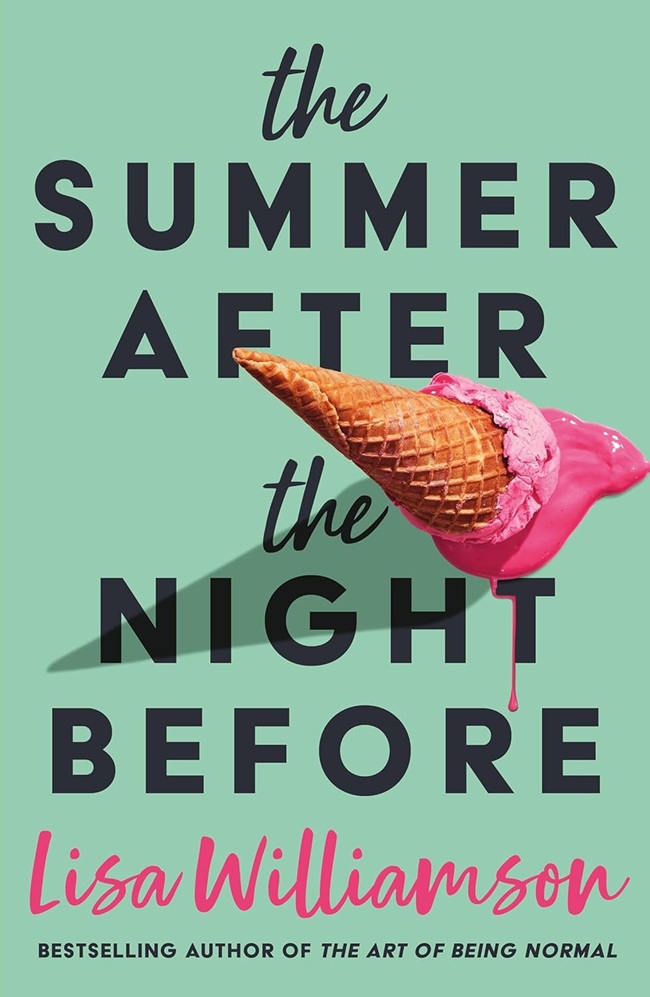
The Summer After the Night Before by Lisa Williamson is published by David Fickling Books, 978-1788451871, £8.99pbk.


