
The magic of words: the poetry world of John Agard
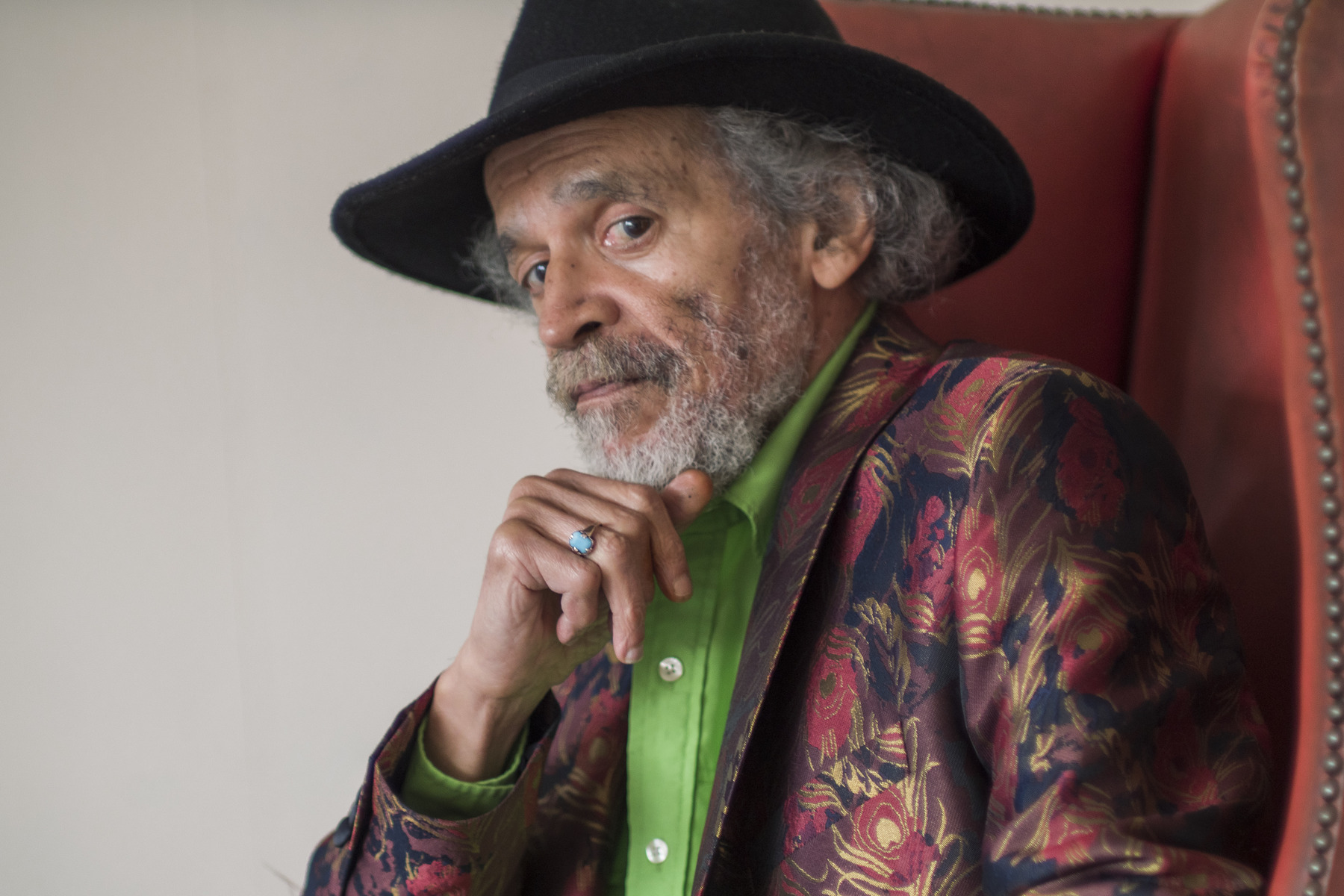
Earlier this month John Agard was announced as winner of the CLiPPA, CLPE Poetry Award. It’s his third win, a unique achievement, and for The Poetry World of John Agard, a book which highlights both his skill and importance as children’s poet. John talked to Books for Keeps about the book.

CLIPPA 2026 taken at the national Theatre on the 9th July 2026 for CLPE
John Agard begins with a warm laugh, the kind that signals both humility and delight. Reflecting on the publication of The Poetry World of John Agard, he admits, ‘I’d be lying if I said I’m unexcited,’ a confession delivered with characteristic modesty. For him, seeing eighty poems gathered from the 1970s onwards is akin to ‘a painter having a retrospective,’ a chance for readers to witness the sweep of his creative life. The book, he says, offers ‘an overview of my work,’ a panoramic view of decades of language, rhythm, humour, and cultural memory.
He speaks with gratitude about the collaborative process behind the collection. The project, he explains, was shaped not only by his poems but by the careful eyes and instincts of those who helped bring them together. ‘With Charlotte Hacking, as a keen‑eyed editor, keeping me on my toes… and with Janetta Otter-Barry as publisher, I think we ended up with a beautiful book.’ Even the illustrator was a surprise. ‘People are fascinated when I say to them, ‘Oh, I had no idea who the artist was.’ You see, I never met her through the process.’ He recalls meeting Shirley Hottier only at the book’s launch, long after her illustrations had already breathed new life into his words.
Looking back at the poems themselves, Agard describes a sense of discovery. ‘The way they came together… there was a sense of movement, or trajectory,’ he says. Themes echo across time, sometimes consciously, often instinctively. ‘Certain themes are echoed from early poems to later poems.’ He points to Laughter’s an Egg, with its ‘trickster element of that tricky egg,’ and notes how that playful spirit resurfaces years later in Professor Peekaboo, an eccentric, multilingual character whose name alone delighted him.. When he began writing that book, he had no idea what poems would emerge; he simply followed the impulse of imagination. ‘I like the idea of Professor Peekaboo,’ he says, laughing
His reflections on illustrators reveal how deeply he values artistic partnership. When he first saw Shirley Hottier’s work, he felt an 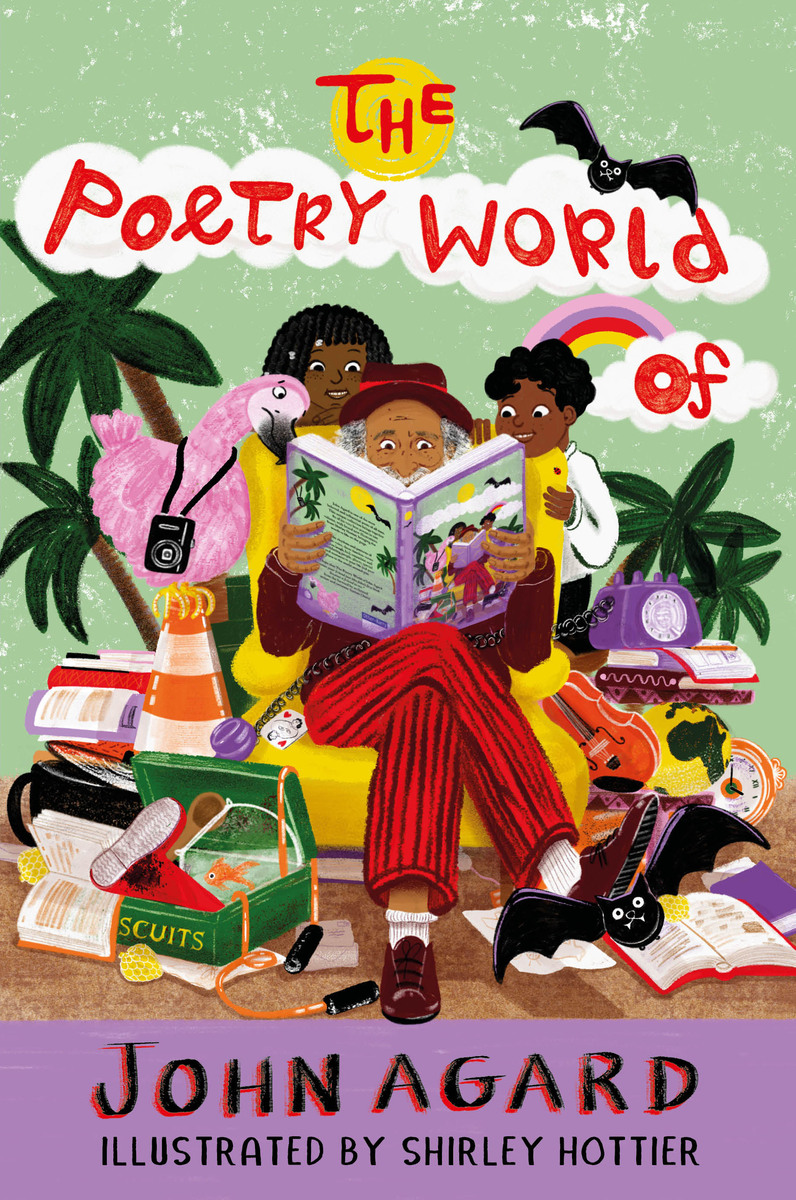 immediateconnection. ‘There was no question that Shirley had connected to the spirit of my poetry,’ he says. He praises her ability to capture the tone and personality of his poems. ‘She did a beautiful job,’ he says simply. Even without the book in front of him, he remembers vividly how her illustrations made an impact. ‘She has many, many illustrations that strike you. I think even the cover,’ which he recalls and describes with heartfelt affection: ‘She very cleverly used a kind of caricature of my face… almost like a grandfatherly, fourth‑generation type Caribbean persona relating something to grandchildren. It invites the reader in and keeps in touch with the storytelling tradition.’
He admired her restraint and imagination. ‘She didn’t say too much… she left a lot to the imagination.’ Her black‑and‑white work, he notes, ‘worked beautifully with the text.’ For Agard, her illustrations did not merely accompany the poems, they expanded them, offering new ways for readers to enter the world he had created.
Agard’s relationship with poetry stretches back to childhood, though he insists he never approached it academically. ‘I never intellectualised it,’ he says. ‘All my growing‑up passions… I look back and they were linked a bit to language.’ His first dream was to become a lawyer, inspired by courtroom drama. ‘I love the expression “Objection, Your Honour… overruled”.’ As a child, he would stand before the mirror, performing imaginary trials with the same enthusiasm that young people today might bring to rapping.
Acting soon followed. At fourteen, he joined a junior amateur theatre company in Georgetown, Guyana, where he grew up and attended a Jesuit college. He remembers his teachers fondly. ‘They were very, very good teachers. My favourite teacher, Father Maxwell, was Scottish. He turned me on to language.’ Another teacher, Michael Jeune, was a playwright, poet, and actor; ‘Very inspiring,’ Agard says. These mentors shaped his early love of performance and storytelling.
He recalls playing Captain Hook in Peter Pan, the White Rabbit in Alice in Wonderland, Bottom in A Midsummer Night’s Dream, and a witness in Witness for the Prosecution. He imagined himself walking the red carpet, dreaming of an actor’s life. But as he continued writing poetry, something shifted. ‘I realised that there was something exciting about the magic of words.’
He speaks reverently of language, describing it as a force that swept him away. Poetry, for him, is a continuation of that lineage, a place where language is charged with meaning, rhythm, and imagination.
His reflections broaden into a meditation on poetry’s place in the world. He describes children today as ‘surrounded by an ocean of jaded language… hurried text… double‑speaking slogans.’ Poetry, he believes, offers something different. ‘Poetry can take them to a space where language is charged… where language gives them the vibration of something beyond the everyday.’ He sees poetry as nourishment, a ‘healthy injection into the psychic anatomy of this generation.’
When he speaks about the impact his work has had on children, his voice softens. “Oh, it’s exciting! It’s touching.” He shares a story of an adult who approached him after a reading, holding a long out of print copy of I Din’ Do Nuttin. The man had bought it as a young teacher in the early 1980s and used it throughout his career. Agard remembers the teacher’s insecurity about reading Caribbean‑inflected poems without a Caribbean accent. Agard reassured him: ‘Read it in your own voice… go for it. Embrace the spirit.’ Moments like this move him deeply. ‘Those things… you don’t think about that, but then it gives you a very exciting buzz.’ Writing, he explains, is solitary, so when someone says his work has touched them, it means a great deal. ‘If someone, maybe a stranger, says, ‘I never really liked poetry at school,’ and then responds to your poem… it means a lot.’
He reflects on the power of language to resonate across generations. His poem Half‑Caste, he notes, ‘has touched many generations.’ His secret is that he always remains playfully serious about language and the power it can wield. He describes himself as standing ‘in the shade of ambivalence,’ carrying a ‘parasol of ambivalence’ wherever he goes. Ultimately, what matters most to him is that children find joy, freedom, and possibility in poetry. ‘How wonderful for children to enter a space… where language resonates.’ His impact on young readers is not something he takes for granted – it is something he cherishes.
As he reflects on decades of writing, performing, collaborating, and inspiring, Agard’s voice carries the same warmth and mischief that animate his poems. His retrospective is not merely a collection of work: it is a celebration of language, imagination, and the countless readers, teachers, artists, and children who have joined him on the journey.
The Poetry World of John Agard is published by Otter-Barry Books, 978-1915659477, £12.99 hbk.


