
Then We’ll Be Happy: A conversation with Alan Carrigan
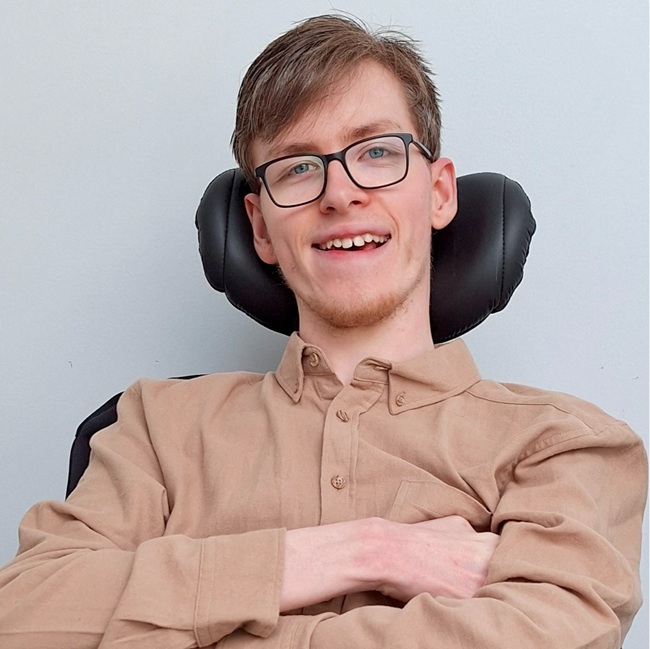
Then We’ll Be Happy is Alan Carrigan’s debut novel. It tells the story of seventeen-year-old Sam and his determination to win control in his own life. Like Sam, Alan, has cerebral palsy and uses a wheelchair. BfK’s disability expert Rebecca Butler has reviewed the book and spoke to Alan.
Can you tell us what inspired you to write this book?
 When I was growing up, a lot of the disability representation I saw was either of a disabled person being really inspirational, defying the odds, or really depressed because of their disability. Neither of which was particularly helpful to me when I was a teenager. So, I decided to write the type of book I needed but rarely saw growing up.
Was there anything you wanted to include in it but didn’t?
In the first few outlines, I wanted to include as much nuanced disability representation as possible. I really tried to get a chapter about flying/travel in there. Which would’ve fit if I’d replaced the bus with an international school trip, but in doing so I would’ve had to lose so many of the elements that make the book what it is. Ultimately, I had to do what was best for the story and for the characters.
What did you find the hardest thing to write about and why?
The emotional scenes. Especially when it’s Sam and another person with very little set dressing, so, if you pardon the pun, the dialogue has to do a lot of the talking. It’s challenging because the book is written in first person, which means any description has to be filtered through how Sam is perceiving it. But as the writer, I need to find little ways of framing things so the reader can get a sense of how the other person is feeling during a moment, even if Sam doesn’t recognise it himself.
What was your favourite scene?
Sam’s birthday, when his friends from power chair football take him to a bar. I have never personally been out drinking, so it was fun to imagine what that looks like and specifically how caregiving in friendship can coexist. That scene also had to be a major turning point for many characters, so it was fun to see it evolve as my understanding of how to build tension into a story also evolved.
Can you tell us about your writing process and, given your disability, what kind of aids did you use and how satisfactory or frustrating were they?
Yes, the book was almost entirely written with voice recognition. Coincidentally, about a year in, I switched computers, and I’m now a Mac user. Even though the software is the same, the dictation settings are very different. I wouldn’t say that one particular method is better than any other, but the interesting thing about dictation in general is that it only picks up a small amount of what I say, enough to get a mismatched first go at a chapter so that the next morning I could go in and manually try to decipher what Alan from yesterday meant. My editor always remarks that I’m exceptionally quick at getting the edits back to her, and I think that is because for every draft that I do, I’m essentially doing two drafts. The draft that the computer thinks I said, and the draft where I actually make it read like sentences.
Why did you not make any of Sam’s assistants less than perfect?
It’s not something I did intentionally, but I didn’t want the people helping Sam to be the story. This is, in my eyes, a story of a young man trying to find his place in the world. If I twisted Jim into being something devious for example, that would be a whole other story. It would be interesting though.
How did you decide which procedures needed more explanation for the non-disabled reader? Was this something you and your editor worked on together?
It’s a mix of my wonderful editor, Rachel Leyshon, and people in various writing courses. Admittedly, it was a difficult balance to strike. In early drafts, I would tend to overexplain. But the number one note I got eventually was less is more, which sounds like a cliché, but in the case of this book, is something I found to be true.
Who inspired Amiee, and how difficult was it for you to write a female voice?
[Amiee is Sam’s friend, who although she’s the same age, and with a similar condition, lives in an old people’s home. Sam meets her on the bus he takes to school.]
One day, the radio happened to be on in the car when fellow Irish disabled author, Geraldine Lavelle, was being interviewed. Geraldine spent most of her 20s in institutionalised care. So, when I needed a reason for another young disabled person to be on the bus, I turned to Geraldine’s books as a jumping off point for my research. As for how difficult it was to write a female character, her voice just came to me like any other character in the book. She just happened to be female. Hopefully, I’ve written her well, but I think that’s for the readers to decide.
What was your reason for deciding that Aimee would be cared for in the residential care home, Blooming Oaks? The inflexible schedule will resonate with many readers.
Truthfully, I knew that for the plot to work, Sam’s mam, Kathleen, could not have a car, so I was trying to think of another way for Sam to get to school. The Blooming Oaks bus just came to me, along with Aimee, and once I started dictating in her voice, I knew she was too fun to be a one-off character, so I developed her backstory through lots of interviews and back-and-forth with people in similar situations to Aimee, as well as inviting Geraldine to do a sensitivity read, and this is what I landed on.
How long have you been working on the book?
I have taken this book through many iterations throughout the years, but the earliest version was started in July 2022, and I finished the writing part of the book in March 2026. So, I’ve been writing most days for the better part of three years.
Are there any others in the pipeline?
I have a few things drafted and ready to pitch, nothing officially under contract as of yet. But fingers crossed!
Dr Rebecca Butler writes and lectures on children’s literature.
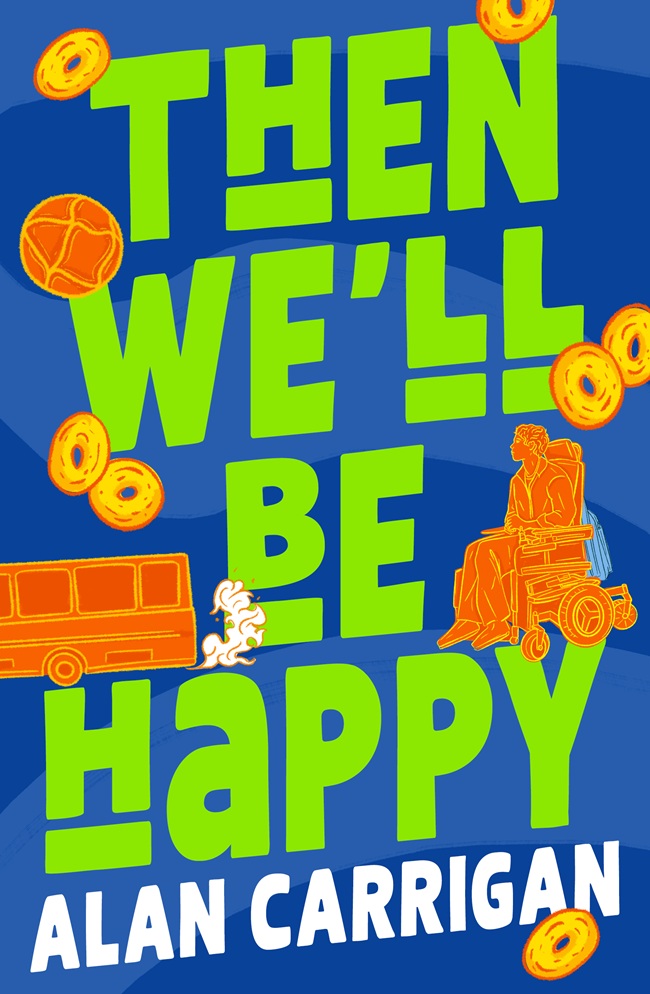
Then We’ll Be Happy by Alan Carrigan is published by Chicken House, 978-1917171212, £8.99 pbk.


