
Through the Sideways Door: an interview with Guy Bass and David Roberts
By Damian Kelleher
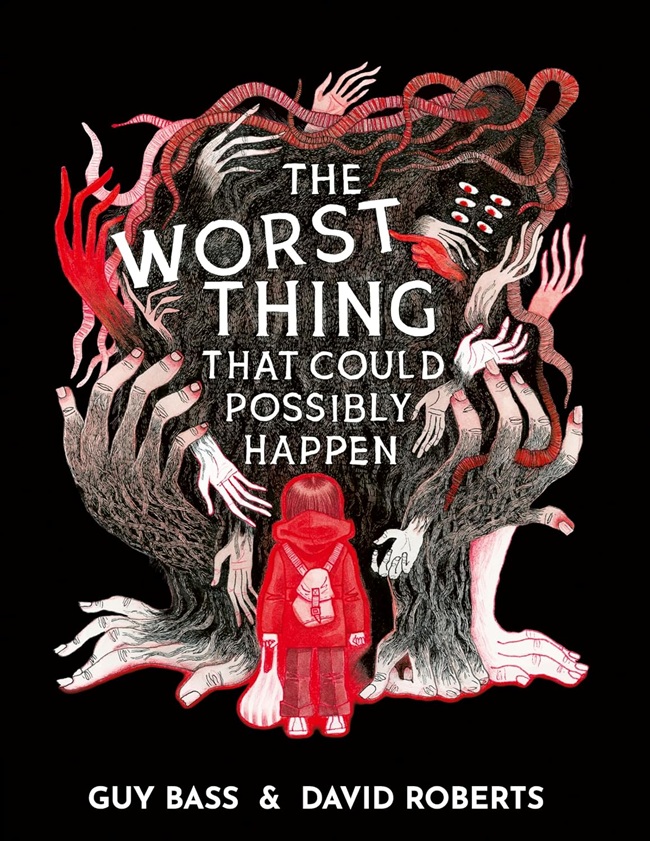
One of the hottest days of a sweltering summer seems an odd time to sit down to discuss a book that will send the coldest of shivers down young spines this autumn. But I’m meeting Guy Bass and David Roberts on London’s South Bank to talk about their new collaboration, The Worst Thing That Could Possibly Happen. It’s a deliciously unsettling collection from the pen of award-winning Stitch Head author Guy Bass that includes stories, poems, comic strips and adverts – yes, adverts – that will spark fear and fun in equal measure among curious readers of all ages. Illustrator David Roberts, of The Dunderheads and Tinder fame, ramps up the spookiness with a range of illustration styles to complement the creepy subject matter.
You’ve been friends for a long time, but this is the first book you’ve worked on together, isn’t it?
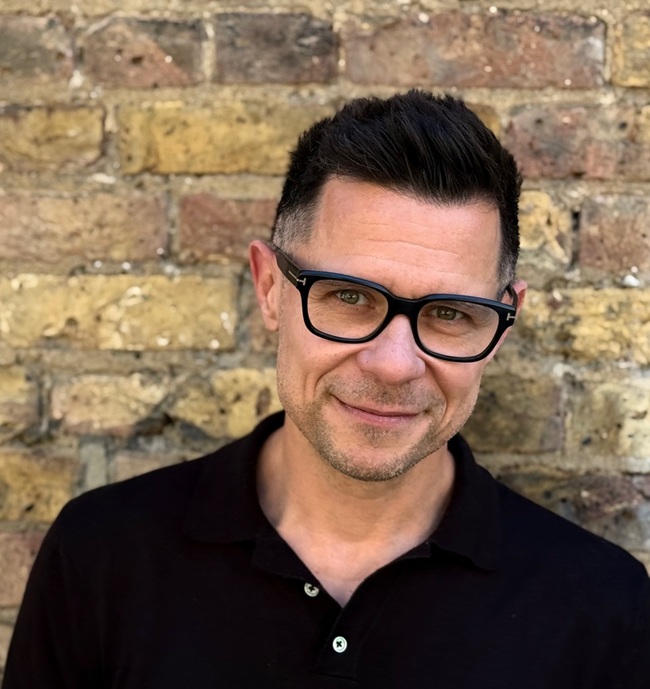 GB: We had been talking for years and years – a decade plus – about working together but we just couldn’t find the right thing.
DR: Back in the day we were out together on the road doing a Little Tiger tour [their publisher]. I am shameless about asking authors to write stories for me! I don’t know where it comes from because I’m not a confident person at all – I’m very timid about things like that – but if I’m with an author I’m like ‘Give me a story!’. So I kept nagging Guy, ‘write me something’. And I assumed it would be a picture book…
GB: At that point, I associated David with picture books. But when I saw Tinder [written by Sally Gardner] it all started to make sense. I’d never seen him work in that way before.
The book feels like you had been working on it for a long time, Guy?
GB: I think it was a slow burn. I had written a load of short stories and they weren’t really connected. I thought, what am I going to do with these? And then I realised, if I give this an overarching theme, I can pull all these together into something cohesive.
The idea behind it is taking all the stuff I really loved as a kid – comics, watching TV, playing with my friends, all of that – and imagining, what if that were infiltrated by some sort of evil force? The TV would flicker and the book would invite you to do terrible things and it made it all sound quite fun, but ultimately it would take you to a dark place.
There used to be lots of scary books for children but there seems to be much less published now.
GB: I think that’s true, especially for younger readers. A part of that was taking children away from potential harm.
DR: If you go back, I have got books by Charles Keeping which are properly terrifying! Those illustrations were a big influence on me when I 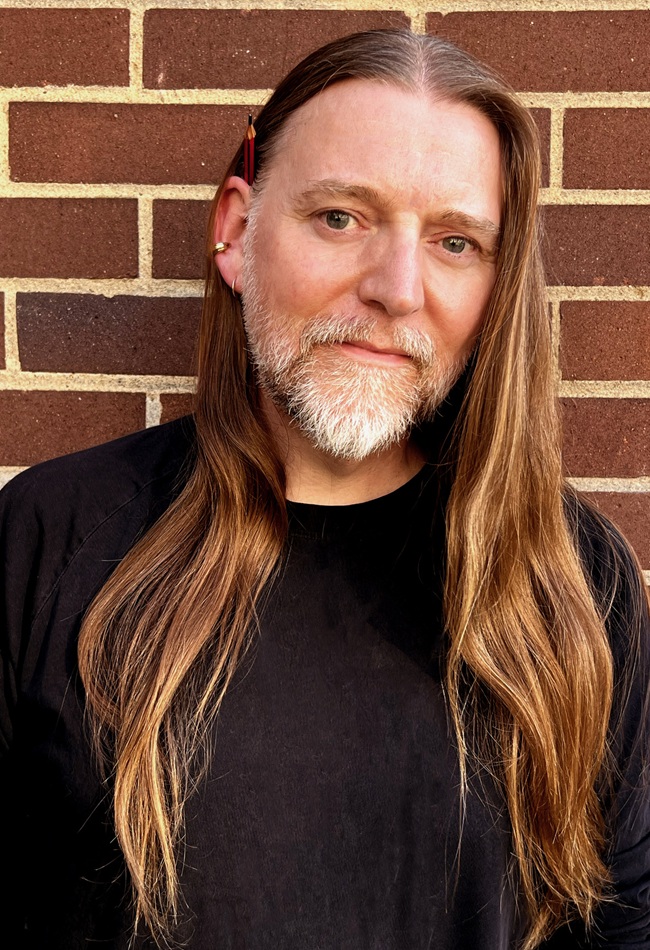 started work as an illustrator. I was looking at these and thinking, “Oh so you can go here, you can go into this darkness, and it can still be okay”. But I don’t think you would get illustrations like those now in children’s books – people would push back on them.
GB: The thing about scary books is that the reader is in control. If kids want to stop reading, they can. Whereas if you’re watching something scary with your mates, you have to run out of the room to escape!
Illustrating horror stories is tricky because so much of what makes the story work is in the reader’s imagination, isn’t it?
DR: A few years ago, I worked on Chris Priestley’s Uncle Montague’s Tales of Terror. They were very dark and sinister. And I learned from that – there was one note Chris gave me – don’t show anything. Just hold back as much as you can. In doing that I learned to try and create an atmosphere more than an explicit image. With this, I was always thinking about what to show and what to hold back from, what to imply and what to have coming in off the side of the page. That’s why the stories finish with all these kids pointing – to nothing. They’re pointing to the thing that’s coming next – but we don’t know what that is.
GB: The pointing image is always at the end of each story. So if you are a little bit freaked out, then you have a moment to ask yourself, ‘am I going to turn the page?’ The stories do get darker as the book goes on.
You have a lot of fun with the format too – there are stories, poems, comic strips, ads. Let’s talk about the Giggly tibs, a pastiche of children’s TV characters…
GB: They were based on Teletubbies which are terrifying anyway…
DR: In one of our earliest meetings, we talked about coming to the project with different illustration styles. Guy saw the Giggly tibs on a television screen, but I thought that’s not going to translate well, I wouldn’t be able to get across the crackly lines and stuff. Then I thought about the Mr Men style, where the characters are drawn flat on, just staring out at you. And I thought, that’s going to be quiet and creepy…
GB: It’s definitely scarier as a result because you see them turn on the parents as well.
And what about the ‘book within a book’, Were Everywhere?
GB: Dave, you came up with that idea.
DR: I thought it was so brilliant, I just loved it. The first book I ever bought was A Hole Is to Dig by Ruth Krauss and Maurice Sendak – it’s my favourite book of all time. Because I’m dyslexic, as a child when I looked at a whole page with words, I just switched off. But A Hole Is to Dig was just a sentence with a picture on each page and I thought we could do the same here, Except that whereas theirs is super sweet and lovely and heartfelt, ours would be terrifying!
Kids will enjoy spotting the recurring motifs from The World Behind the World – like the sideways door.
GB: Really early on in my career, a teacher asked me for some titles for stories to inspire kids, and one that I came up with was The Sideways Door. I liked it so much I didn’t give it to them – I kept it! I had it in my head for years and I kept thinking, I’ve got to do something with this. And so it became a portal into The World Behind the World, all these things leaking out through these sideways doors.
The retro styling you use throughout the book is also part of its charm.
DR: I said to Guy ‘Do you want it to look quite 80s?’ and he said, ‘Go further back, let’s go into the 70s’. This is basically my childhood! It’s like looking at photographs of what me and my friends looked like – the hair, the jumpers and the dresses that my sister used to wear. I looked a lot at these little pamphlets of black and white photography from a council estate in 1979 and referred to a lot of photos of kids and they’re all jumping around. I used that to get the style of what they were wearing – the parka one girl is wearing, the turn ups on the trousers, all the hairstyles. It all holds it in time, although there’s something off kilter about it. You don’t know when that time is exactly. There are mobile phones but everyone’s dressed from a different era. But are they really from a different time or not?
Tell me about the fantastic cover. Did it take a while to design?
DR: The cover took ages. The only time I’ve ever done more cover roughs is for Tinder. The question was, what image do you choose? How do you draw readers in without showing too much.
GB: There has to be a suggestion of evil but not much more than that. The only thing I didn’t want the cover to answer was the question, ‘What’s the worst thing that could possibly happen?’ because that’s what the book has to do.
DR: The glow is really important around the central figure – I wanted her to have that Ready-Brek look! I like the idea of drawing people from behind because you’re really with that person, and I didn’t want to show the child’s face because then you are suggesting the book is all about that child. The child is anonymous and what we see is this thing – and what is it? The image has to pose a question as well as the title.
It feels the sort of book that has to be read at bedtime. It’s apt that the final story Nothing to Worry About ends with a child in bed.
GB: I realised I had to end it with someone in bed listening to the sound of the pipes. That’s a sound I always used to listen to when I was a kid, this rhythmic tempo, and I’d be thinking, it’s probably fine…
DR: When I first read that ending, ‘But I can still hear breathing’, well…that’s truly scary.
Damian Kelleher is a writer and journalist specialising in children’s books.
The Worst Thing That Could Possibly Happen by Guy Bass and David Roberts, Little Tiger, 978-1788954198, £16.99 hbk.


