
This article is in the Reading in the Middle Years Category
Journeys into Reading
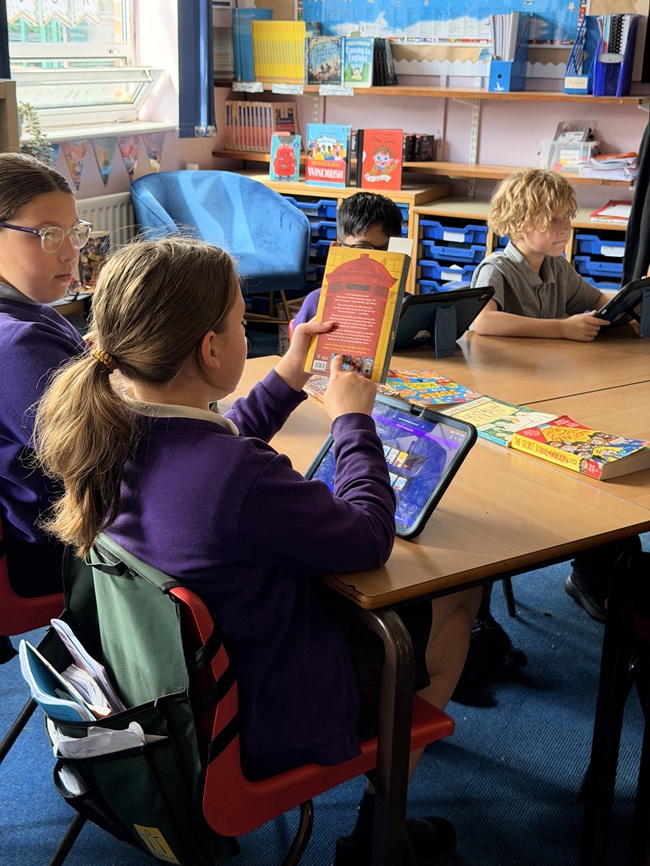
It’s Friday afternoon in Chestnut class. I’ve been invited into the school to award a reading prize to Year 6, who are settling down to watch a movie with biscuits and juice, their reward for being Reading Class of the Week for the sixth successive time this term. ‘Well done, Chestnut class’, you may be thinking. But chatting with some of the children it becomes apparent that they have learned how to play and win the game. One girl confides that she always records more pages than she has actually read, and others agree, letting me into their secret.
In another school, I’m shown around to see how they have embedded ‘reading for pleasure’ across the school. A group of learning support assistants are working through the Reading Record Books for the entire school. They are systematically recording how many times each child has read at home during the week. Class results are imported into a pie chart, which is displayed in the Reading Assembly. Everyone can see the winners and the losers. The winners are cheered and applauded.
I’m using these examples not to shame schools, but to reflect on how the practices we put in place with the best of intentions can have consequences that may not be what we intended. Parents and children may feel ‘policed’, children who read fewer times, pages or words may feel less valued than their avid reading peers. Children may feel that the point of reading is the extrinsic reward received at the end. Take away the reward, and the incentive to read drops immediately, as research has shown. This is not conducive to developing a culture in which readers read because they want to.
Both schools want to do the best for the children and had put things in place to try and build a reading culture. They both had relatively new library spaces with a good range of up-to-date books, comfortable seating and a welcoming atmosphere. Books were visible throughout the school, in reception areas and classrooms. It’s sad to think these efforts are undermined by some of the practices around independent reading.
We understand how this happens. Headlines about decline in reading can lead to knee-jerk reactions. Responses may follow this line of thinking: children aren’t reading. We must make sure they are doing more. They must read more at home, as this has been shown to be beneficial, so we had better document it to make sure it’s happening. Let’s set a minimum expectation and reward the children who achieve it with points or prizes. Or worse, censure them when they fail to meet the standard we expect.
The reasons for the decline in reading are multiple and complex, from issues around social disadvantage, the absence of a conducive space for reading, the demands on family time, the closure of public libraries, the allure of attractive forms of entertainment that take up the time and physical space that may at one time have been available for books and reading. Even our definition of what constitutes real reading plays into this debate. Does an audiobook count? What about the football results? Is reading Where’s Wally? as good as reading Skellig? There’s so much anxiety around children’s reading – and anxiety is catching. If adults are anxious, children will pick it up.
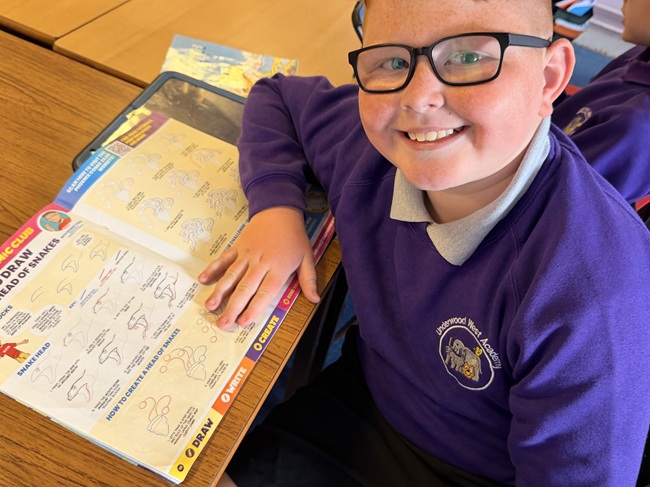 There is no one simple solution, but we must strive to find ways to genuinely engage with readers. And the starting point is to focus on ‘readers’; the noun, rather than ‘reading’ the verb.
The imperative for us to do something about it is well documented. Children who read for pleasure are more likely to achieve academic success, experience greater well-being, and develop a honed sense of empathy.
And there is plenty of evidence pointing to the essential factors that will help us nurture future readers. Top of the list is agency – the freedom to choose what you want to read and when to read.
There are many excellent organisations and researchers leading work with parents, and this is an important part of the tapestry. However, my own focus has been on the practice in school and how we can build on what we know works. Most children are educated in school and therefore we know that if we get it right in school, we can have a significant impact. We have reason to be optimistic because good teaching DOES make a difference. I have witnessed it many times over.
Amongst the schools that I have visited over the past 12 months, I have seen excellent practice where children’s reading is valued – regardless of whether it matches the teacher’s tastes or not, where time has been allocated in the timetable for meaningful book talk (timetabling is an essential element alongside those powerful incidental discussions), where book, magazine and comic collections match the children’s interests, where parents are invited to be part of the conversation without feeling coerced or that they are failing their children. Critically, in these schools, senior leaders are fully involved in children’s reading and in most cases are readers themselves.
A year ago, I relaunched The Reading Journey an app that designed to support children’s independent reading and help build reading identities. It is intended to be used in a school setting where a reading for pleasure pedagogy is embedded.
Using the app, children build their reading bookshelves and record in real time what they are actually reading. They have the option to 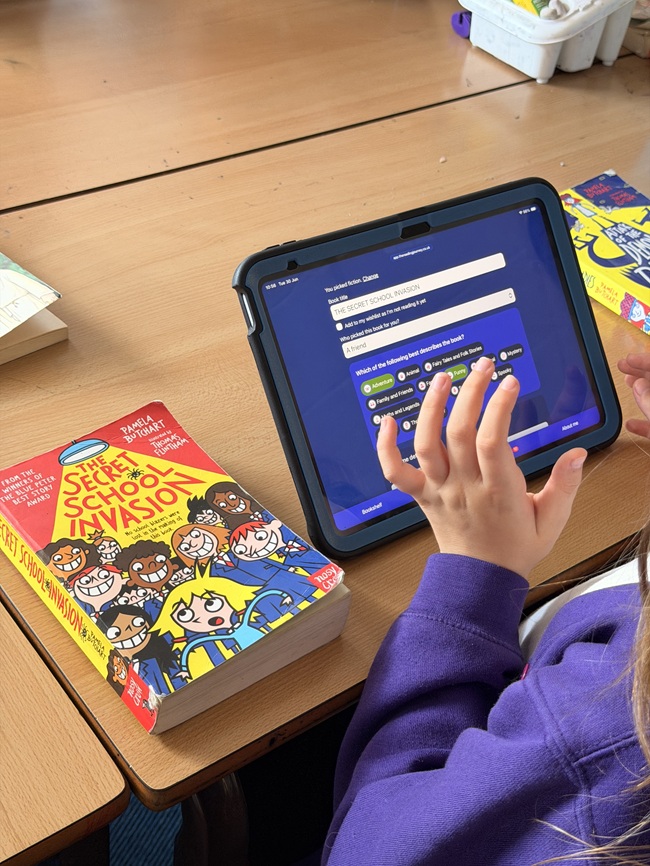 comment on their reading in a journal or by voice note. They can add books to their wishlists and recommend books (or other reading material) to their classmates. They can highlight their favourites and indicate what they haven’t enjoyed.
From interviews and group conversations with children about The Reading Journey, I have observed notable shifts in reading. Firstly, the visual of a personal bookshelf allows them to present themselves as readers in the way they want to be seen. Nowhere is this more evident than with the series or completist reader. I’ve seen many bookshelves populated with the entire Bunny Vs Monkey series.
I have been delighted by conversations where children have shown an awareness that reading does not follow a linear trajectory. One Year 5 girl shared her love for popular diary reading, and yet sitting on her bookshelf was a copy of Jon Bond’s Mini Rabbit Lost, a book that one might expect to be read by a much younger child. She talked animatedly about how periodically revisiting this book reminded her of her reception class days – it was, for her, a place of comfort.
Children have demonstrated many times over that they are discerning readers; they will explain to me how Lottie Brooks, Dork Diaries and Nina Peanut are as distinct as they are similar. They will present a diverse array of motivations for reading, indicating that there is more to their choice than simply following the crowd.
It is in the unique differences, rather than the big ‘what children are reading’ headlines, that we uncover the stories that lead us to connect with readers. They will reveal their ‘hidden’ reading. The reading done at home that they didn’t think counted. I’ve seen more religious texts of all faiths than I had expected. I’ve seen children uploading books that are from their parents’ childhood collection – a rich seam for further investigation. They talk about their passions and hobbies and how these feed in to their reading choices.
 It has been heartening to hear from teachers how less avid or lower attaining readers have particularly like the bookshelf. With books that are shorter and often finished more quickly than their peers, they see their bookshelves growing rapidly and this corresponds with growth in their reading self-image.
However, to make the most of this rich evidence of children’s reading, we need to be making connections. I’ve already suggested that time needs to be built into the school day. A minimum of two half hour sessions a week, allows time for teachers to catch up with what children are reading and to organise book talk sessions. The Reading Journey has a school and class dashboard that facilitates pupil to teacher messaging and provides a quick overview of what the class are reading.
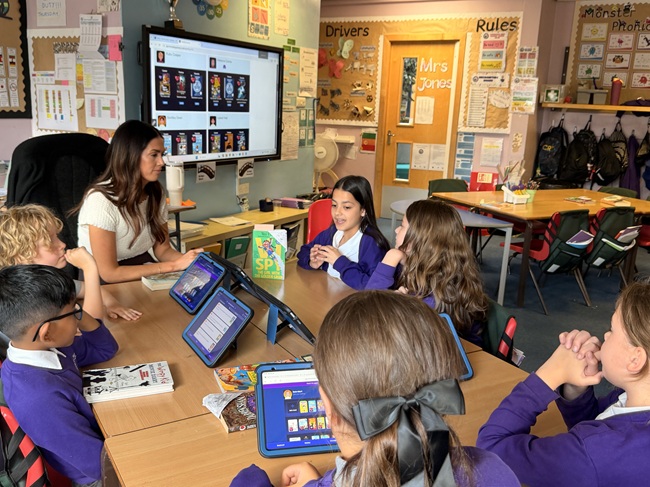
The class presentation view is one of the most powerful tools for enhancing book talk sessions. Using the whiteboard, children can view each other’s reading material and can make peer-to-peer recommendations, which can be added to wishlists. Teachers can also recommend books. It is important to note that children can be hidden from this view for sensitivity reasons or at their request.
A typical booktalk session might look like this: the teacher shares the presentation view. This might prompt a conversation about the most popular book of the week or focus on one or two children who could present their books to the class. The teacher shares their own bookshelf. A quick book recommendation session with books added to wishlists. After this, the teacher sits and discusses books with a small group. In one session I observed, the teacher gathered a group of Vi Spy fans while the other half of the group had never read one of these books. The children led the discussion and were asked questions by their classmates. The rest of the class read independently or shared books with friends and completed reading journal entries.
At another school, the teacher started the conversation by discussing adventurous reading (one of the reading behaviours encouraged within The Reading Journey). They shared an example of their own about the exciting discovery of reading outside their comfort zone. Several children talked about their own adventurous reading. The class then moved into small groups with a set of discussion prompts to aid book sharing.
There have been many other offshoots from this work. One school inspired us with their approach to inviting parents and carers to share in their children’s reading journeys.
From a research perspective, the thousands of books uploaded to The Reading Journey every day give us interesting insights into what children are choosing to read, with scope for many more studies into the finer details of children’s reading.
Special days and celebrations, book vending machines and booknics can spark interest in reading, but it is the simple, everyday practices that sustain it. If you would like to know more about The Reading Journey, visit thereadingjourney.co.uk. We are offering schools a free trial for half a term to try out with a group or class of children.
Nikki Gamble is the Director of Just Imagine, she is a former teacher, university lecturer and author of Exploring Children’s Literature (Sage, 2019) and co-author of Guiding Readers: Layers of Meaning (UCL, 2016).


