
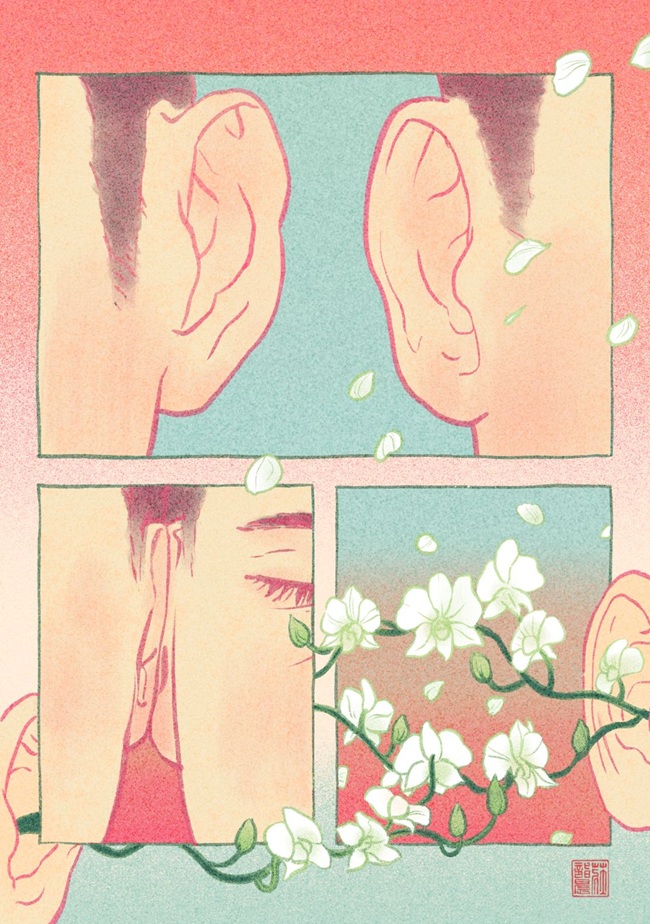
Queer as Comics: a guide to the new exhibition at the Quentin Blake Centre for Illustration
The new Quentin Blake Centre for Illustration opened in Islington, North London earlier this summer, the world’s largest space dedicated to illustration. It has three opening exhibitions, among them Queer as Comics, the first major exhibition on queer comic-making in the UK, spanning 1940s to the current day. Curator and comics expert Paul Gravett takes us through the exhibition.
Queer as Comics presents a chronological survey from 1946 to today, so 80 years, of comics made by over 60 different LGBTQIA+ creators. 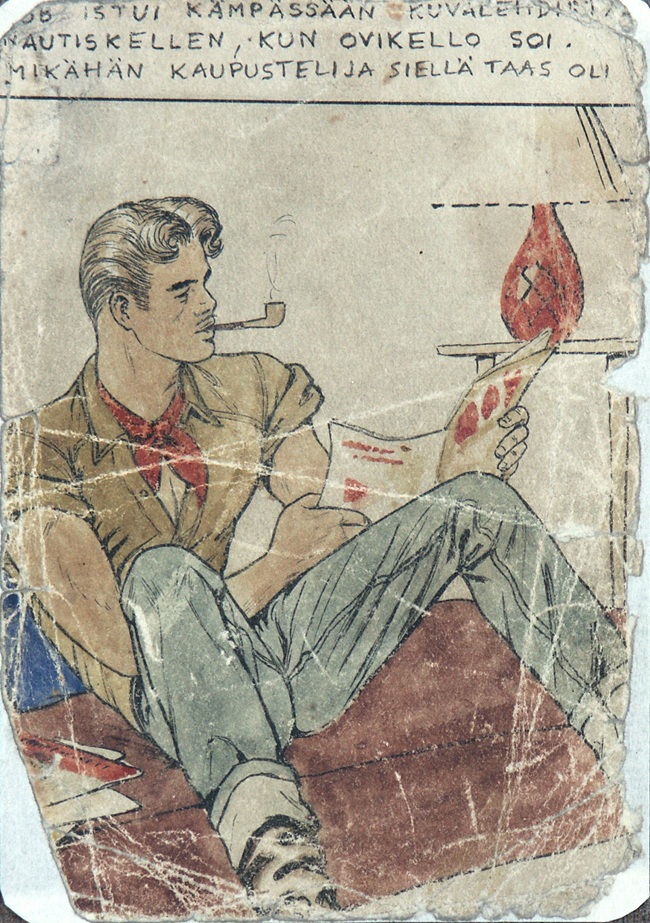 While there’s one aspect exploring the diversity of makers based in the UK and North America, there are also artists from elsewhere around the world, ranging from Finland, where two significant pioneers emerged in the 1940s and 1950s, namely Tom of Finland and Tove Jansson, to more recent and current creators, for example from France, The Netherlands, Lebanon, Cameroun and the Asian diaspora. This exhibition also invites visitors to discover the inclusivity of queer comics by artists of colour and from across the wide rainbow of identities and communities.
Underlying this exhibition are the many striking parallels between the history of queer people and the history 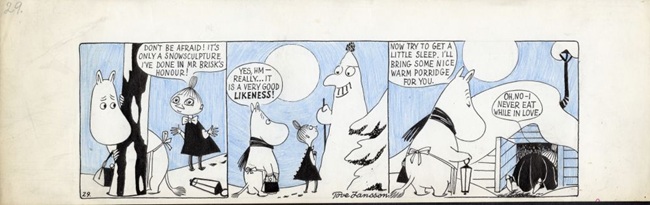 of comics. Both have had to endure misunderstanding, prejudice, criminalisation and more for decades. But both have also gradually achieved great progress, liberation, respect and acclaim since the late 1960s. For the comics medium, the first and biggest advances could not happen within the constraints of the mainstream system of publishing and distribution. So more individual self-expression had to emerge first elsewhere.
Self-published magazines became platforms for this in the 1950s and 1960s, sold direct to readers through the mail. Out of America’s counterculture and call for gay and lesbian liberation and civil rights developed in the mid-Sixties grew an entirely different network of creators, publishers and retailers devoted to comics not solely for children but for adults. They were called underground comix – to distinguish them from regular mainstream fare available on the high street. Through these comix, young adult creators could finally talk to their own generation and age-group from their shared perspectives.
This progress continued internationally and led to comics being made and sold in a book format, or graphic novel, which has become one 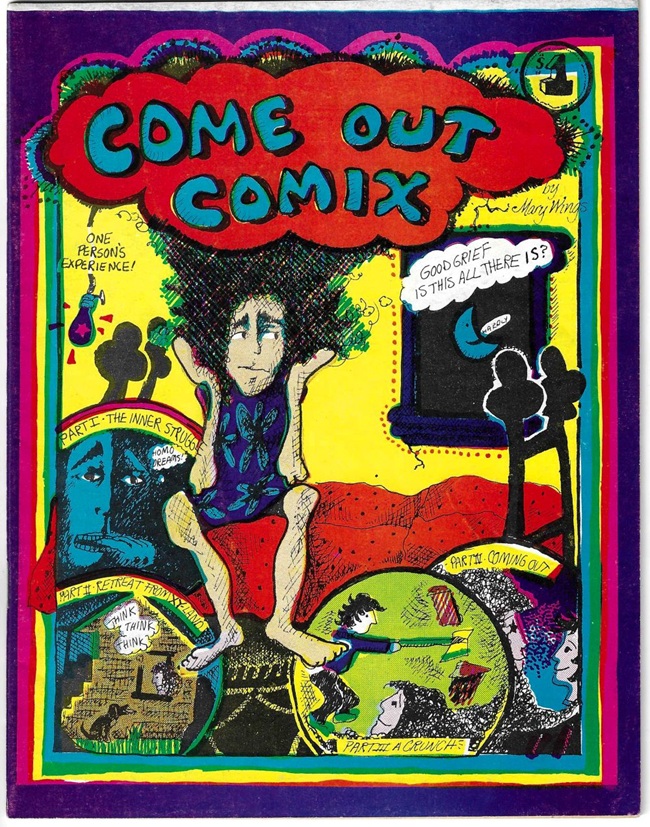 dominant trend into the 21st century, joined of course by digital comics, made and read online and via smartphones.
Putting this exhibition together has been a very personal experience but every reading of a comic is different and very personal. So comics that may not have been intentionally LGBTQI+ can be interpreted individually. A formative example of this for me was reading The Rise and Fall of the Trigan Empire, a British fantasy comic set in a sort of ancient Rome but with space rockets and aliens. It was gloriously illustrated in painted colour every week by Don Lawrence for educational magazine Look and Learn. It was certainly a formative awakening for me. One of the first definitely gay comics I discovered in 1978 was Lycaons by Alex Barbier in the French anthology magazine Charlie Mensuel. It was immediately striking for its dreamlike, fully painted colour artwork, as if Francis Bacon made comics, and its story’s feverish atmosphere, which I later realised was strongly influenced by William Burroughs. So I was delighted to include a page of Barbier’s original artwork from this series in Queer as Comics.
Among many other essentials to include were British pioneers Oliver Frey and Bill Ward, whose archives are held by the Bishopsgate Institute in London. I also wanted to bring into the spotlight pioneering queer comics creators who can often be overlooked. Rand Holmes from Canada is not always given the due credit for being the first comics artist to come out in public bravely in his comics in 1971, unmistakably and in all but name, because his character Harold Hedd was his unmistakeable alter ego and look-alike, and whom he showed in one single-page strip in an intimate scene with another man. Another priority to me while putting the exhibition together was to spotlight under-recognised if not forgotten, utterly brilliant British cartoonists like Lucy Byatt and Jeremy Dennis.
I think there’s a lot the exhibition tells visitors about queer comic-makers. For example, that there’s a genuine courage in being individual, being yourself, in your work and in your life. I’d say that autobiography is a strong approach within queer comics, but it does not always have to be entirely real and first-person. Autobiography can also inform or inspire many other kinds of comics, even what may appear to be the wildest of fantasy.
As to why comics are such a good vehicle for queer themes, I think again there’s a number of reasons. Comics can be a one-person medium, fluid and flexible, letting a single, singular writer-artist express themselves personally and powerfully through varied mixes of words and fixed images. As neither ‘pure’ text or ‘fine’ art, comics is non-binary and fluid in how these combine, contrast, counterpoint, even contradict. And such a supportive, inclusive, ever-expanding community of creators and readers of comics has blossomed over recent years, through festivals, online forums, locally, nationally, globally.
I’m really pleased that this exhibition is one of the opening ones at the new Quentin Blake Centre for Illustration and it’s a demonstration of QBCI’s commitment and fearlessness to celebrate illustration in all its variety and dynamism. And especially in the current climate where certain battles, that we thought had been won, have to be fought and won again, from gay and lesbian rights to marriage equality and now trans rights. In these threatening times, progress faces prejudice and pushback, but tolerance, acceptance and intelligence will prevail, as they have done before. Who you are and who you love are fundamental to our being human and alive.
I’m going to finish by highlighting some comic creators that readers of Books for Keeps should look out for and recommend to young readers. Alice Oseman’s Heartstopper is a tender portrayal of more than one queer love story – there’s a reason it’s touched so many. Also British, Shazleen Khan’s webtoon Buuza pulls you into a richly imagined fantasy world with a captivating, multi-ethnic cast, and now it’s getting big mass-market book compilations. And Bex Glendining’s On Starlit Shores is another endearing fantasy-tinged generational story building connections between a granddaughter and her grandmother. There’s such a vibrant range of other affirming graphic novels to explore, among them Damian Alexander’s Other Boys, Raina Tegelmeier’s Drama, Niki Smith’s The Golden Hour and Tillie Walden’s Spinning.
I also hope readers will be able to visit the exhibition on a trip to the Quentin Blake Centre for Illustration.
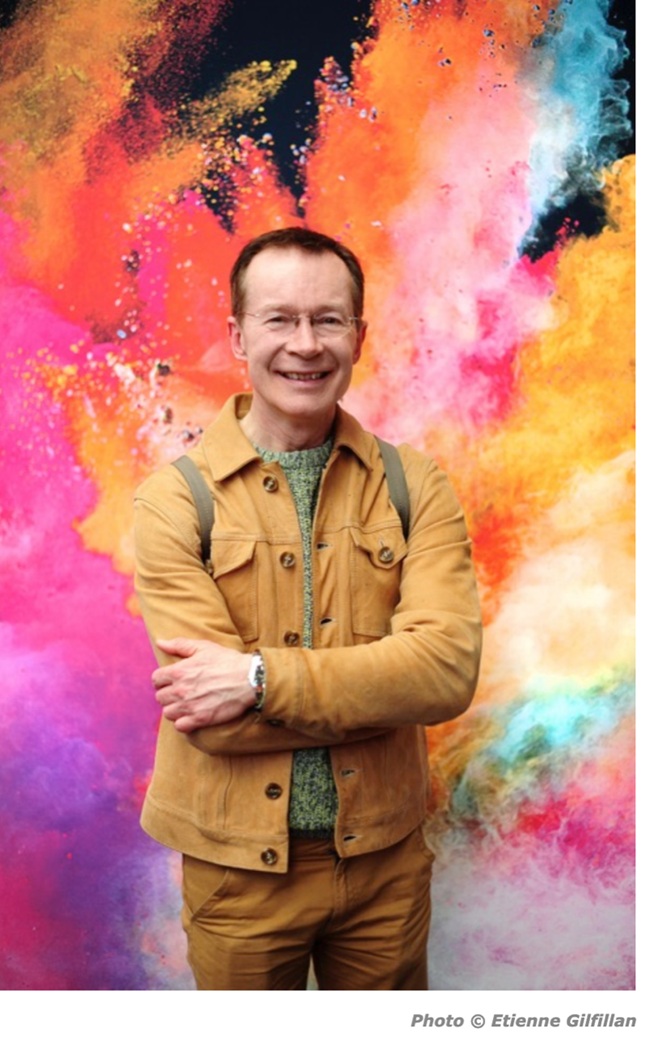 Paul Gravett is a London-based writer, historian, curator and lecturer specialising in international comics art. He has written, co-written, edited or contributed to over twenty books about this field, as well as curating or co-curating numerous exhibitions, from The British Library, London and National Comics Centre in Angoulême, France to The Centre Pompidou, Paris and the first exhibition of Asian Comics for The Barbican Centre, currently touring museums in the USA. For more details visit www.paulgravett.com.
Quentin Blake Centre for Illustration, 1 Myddelton Passage, EC1R 1AG
Weds–Sun, 10am – 5pm.
Queer as Comics, 5 June 2026 – 4 October 2026
Tickets include entry to all exhibitions on the day of your visit: £16.50 adult / £6.60 child including donation.
Free for members. Annual membership from £45.


