
‘You Did Us Proud’ Children’s Hour Remembered
Nicholas Tucker looks back on the golden age of a national institution for Books for Keeps.
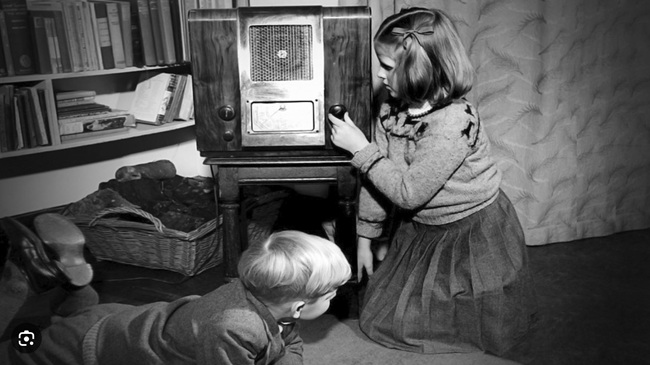 The BBC’s once famous radio programme Children’s Hour, founded in 1924, was particularly good at putting on weekly serials. Thanks to the skill of radio actors plus their back-up teams and in particular the sound-effects department, children listening at home had few problems visualising what was going on, with their own imaginations on hand to complete the picture. A few sniffy critics had warned against the possibly corrupting effect of mass radio on children lulled into listening rather than learning to fend for themselves. They were soon won over, given the programme’s strong and evident belief that only the best was good enough for young listeners. Sometimes employing live musicians and on special occasions even symphony orchestras and a chorus to provide background music, Children’s Hour aimed high and regularly got away with it.
Leading authors and editors worked on scripts acted by performers at the top of their game. Children’s parts were mostly taken by mature female actors expert in sounding like ten-year-olds. Hardy professionals, such as Denise Bryer, would appear in the Radio Times listings with a bare ‘D’ standing for her Christian name, so as not to give the game away. But such devices were not needed for Billie Whitelaw, a gifted child actor whose name was conveniently in tune with the boy characters she often played.
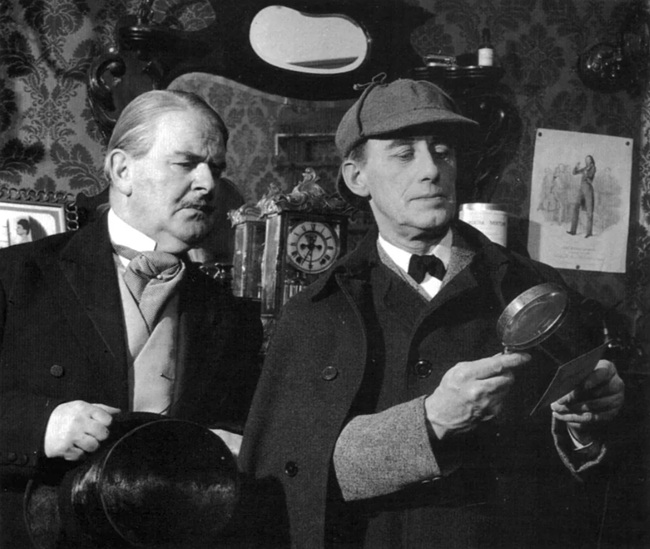
With its ever-friendly hosts there to provide continuity, initially introduced as honorary ‘Uncles and Aunts’, Children’s Hour aimed at a warm family atmosphere. Its regular actors often became favourites in themselves, with young listeners happy to greet yet another radio appearance by Geoffrey Wincott, Wilfred Babbage, Vivienne Chatterton, Patricia Hayes and many others. At the head, the peerless Norman Shelley took on Pooh Bear, Toad of Toad Hall and was the definitive Dr Watson to Carleton Hobbs’ inspired Sherlock Holmes.
Classic stories increasingly unreadable by modern standards were sympathetically turned into drama serials made up of half-an-hour chunks. Memorable scenes taken from John Bunyan, Walter Scott, Mrs Molesworth, Charles Kingsley and other literary giants from the past captivated children unlikely to have read the originals.
Who could resist David Balfour’s nightmare ascent up a shaky staircase in the serialisation of Robert Louis Stevenson’s Kidnapped? Sounds of lashing rain and a howling wind accompanied his footsteps to the intended doom engineered by his wicked Uncle Ebenezer. Here was immediacy even the original text could not hope to rival.
Modern authors were also well represented. The dramatisation of Rosemary Sutcliff’s Eagle of the Ninth, set in Roman Britain and one of the finest of the post-war productions, unforgettably featured warriors fighting pitch battles to a frantic background of neighing horses and clashing swords. Other favourites just as convincing concentrated on humour or gentle domestic adventure. The Swish of the Curtain, adapted from Pamela Brown’s novel started when she was aged fourteen, re-visited the ever-popular daydream whereby children put on their own play. Noel Streatfeild’s serial The Bell Family, written for Children’s Hour, was another great favourite.
Richmal Crompton’s William stories were also there along with W.E Johns’ best-selling Biggles adventures. But there was no room for a resentful Enid Blyton, whose submitted short stories in 1936 were considered ‘small beer,’ and a play written four years later derided as ‘stilted and long winded.’ In 1941 Erich’s Kästner’s classic story set in Berlin, Emil and the Detectives, was turned into another popular series; a brave choice in the middle of a world war. In Toytown going out at the same time, Dennis the Dachshund was allowed to continue with his German expressions (‘Nicht wahr?’) and mangled sentence structures: ‘The furniture too large was into the house to go.’ Mischievous but good-hearted, he first appeared in 1928 when the Toytown stories were first published. Only a few objected to his continued presence years later on the airwaves.
Cinema, theatre and future television adaptations have also played an important part in boosting children’s literature but none quite as successfully over so many years as BBC radio. Particular triumphs like its versions of The Wind in the Willows and Alice’s Adventures in Wonderland were reissued as long-playing records. Frequently repeated with the same cast, it was not just children who enjoyed such treats. There was plenty of variety too, with choices from the largely forgotten, such as Hugh Stowell Scott’s Barlasch of the Guard, to ever-popular serials involving Richmal Crompton’s great character William. Anthony Buckeridge’s schoolboy duo, Jennings and Darbishire, also had many fans. Increased book sales regularly followed these and other hit broadcasts.
Acquainting the nation’s youth with the best that was written for them both currently and in the past was always the aim at a time when there were almost no dedicated children’s libraries and cheap paperbacks had yet to arrive. Generations of children provided with such riches were to benefit richly as a result. For after the demise of Children’s Hour the BBC did little more to advance the cause of children’s literature. Future radio adaptations were sporadic and largely ineffective, and literary serials directed at children on television dwindled over the years.
But at the time, the BBC was outstandingly supportive of both children and their books, with Children’s Hour remaining just that – a warm-hearted programme on every day, totally dedicated to the young, packed with good features and put over by welcoming and affectionate broadcasters. Evacuated children fortunate to have access to a radio could still feel at home again by tuning in to the truncated version running in wartime. Listening to a good story expertly brought to life along with legions of other children also switching on was also a pleasure in itself. Chatting to others in the family after a programme or to friends the next day at school, recalling best moments or speculating what might happen next was also part of the fun. I have yet to meet anyone from those times who did not truly enjoy Children’s Hour. BBC Radio, you did us proud!
Nicholas Tucker is honorary senior lecturer in Cultural and Community Studies at Sussex University.
Books mentioned:
Winnie-the-Pooh, A.A. Milne, illus. E.H. Shepard, Farshore, 9781405280839, 160pp, £9.99 pbk.
Toad of Toad Hall, A.A. Milne, Samuel French Ltd, 9780573050190, 84pp, £10.99 pbk.
Kidnapped, Robert Louis Stevenson, Penguin Classics, 9780141441795, 304pp, £9.99 pbk.
Eagle of the Ninth, Rosemary Sutcliff, OUP Oxford, 978-0192777591, £9.99pbk
The Swish of the Curtain, Pamela Brown, Pushkin Children’s Books, 978-1782691853.
The Bell Family, Noel Streatfeild, Vintage Children’s Classics, 9780099583363, 368pp, £7.99 pbk.
Just William, Richmal Crompton, Macmillan Children’s Books, 978-1529076820, £7.99pbk
Biggles the Camels are Coming, W.E Johns, Canelo, 978-1835980095, £12.99 hbk
Emil and the Detectives, Erich Kästner, Vintage Publishing, 9780099572848, 176pp, £7.99 pbk.
The Wind in the Willows, Kenneth Grahame, illus E. H. Shepard, Farshore, 978-0755500796, £8.99pbk
Alice’s Adventures in Wonderland, Lewis Carroll, Penguin Random House, 9780241725108, 160pp, £14.99 hbk.
Barlasch of the Guard, Hugh Stowell Scott, CreateSpace, 9781530332854.
Jennings and Darbishire, Anthony Buckeridge, House of Stratus, 9780755101535, 210pp, £7.99 pbk


