Cyanatope, Connection and Carnegie Medals: An Interview with Kate Rolfe
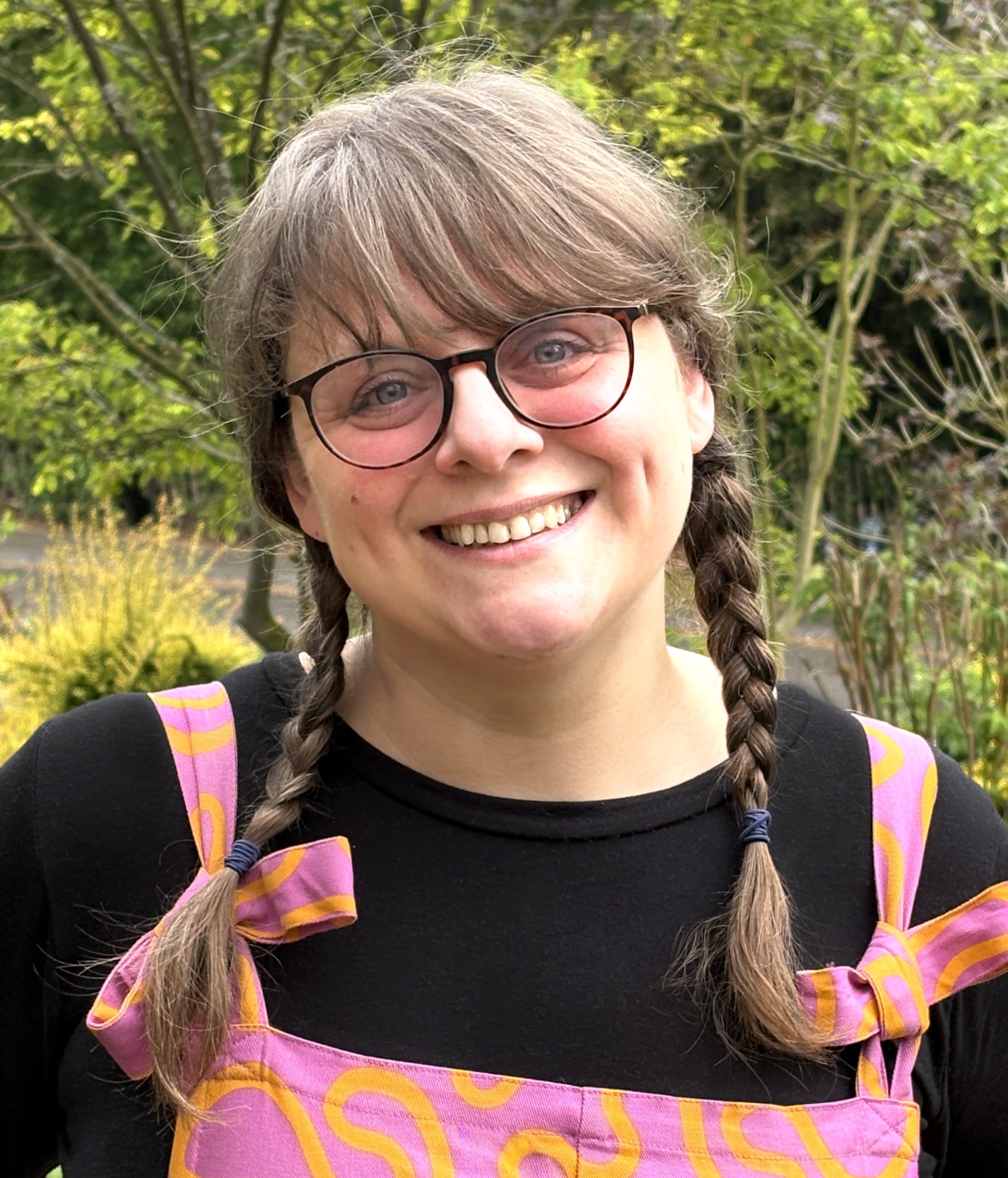
Empathy, a joyful championing of neurodivergent perspectives, and a fascination with the magic of sunlight photography lie at the heart of Kate Rolfe’s creative practice. The newly crowned winner of the Carnegie Medal for Illustration crafts deeply resonant, multi-layered visual narratives that encourage readers from every generation to embrace their own vulnerabilities and navigate life’s unique hurdles. Jake Hope interviewed Kate for Books for Keeps.
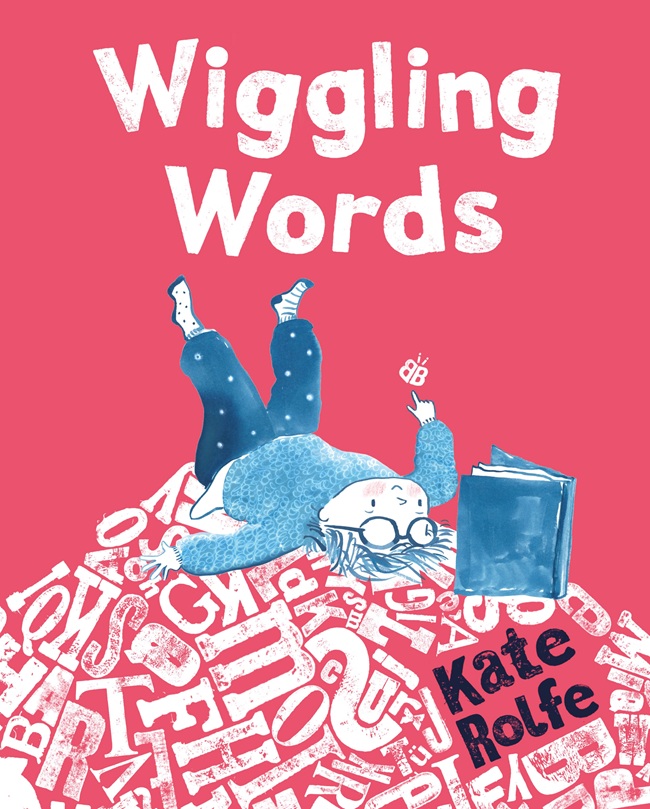 Kate Rolfe is the winner of the Carnegie Medal for Illustration 2026 with her second picture book Wiggling Words. As a keen library user the award is particularly meaningful for Kate. ‘I’ve loved books all of my life. I’ve got a huge passion, especially for picture books, but also for children’s books right up through the ages. I love visiting my local library and librarians are some of the most unsung heroes in our communities. They are responsible for knowing the children that come in and placing books into the right hands. Having the right book at the right time has the power to change lives.’
Those familiar with Kate’s first picture book, Wolf and Bear shortlisted for the awards in 2025 will be pleased to know that the cyanotype which was utilised to such mesmerising effect, has made a welcome return. Cyanotype is a 19th-century camera-less photographic printing process that produces a distinct, vibrant blue monochrome image using sunlight. Kate explains the background to her using the technique. ‘When I meet my mum [a textile artist], we have a bit of a tradition where we choose an art material that neither of us have ever tried before and we decide to give it a go. About five or six years ago, mum and I chose cyanotype and we became totally obsessed. We spent the whole week making cyanotypes from morning through until night.’
Both Kate and her mum continue to use it to this day. ‘I use it in lots of different ways in my illustration. It is half science and half art. I can wake up in the morning and have a bit of a theory about what I might like to try. I might cut this and layer that on top and you just don’t know what you’re going to get. You put it outside and it might depend on the time of year, the angle of the sun and the time of day, there are many factors . It keeps everything really exciting and that motivates me.’
The light is what appeals to Kate. ‘It has a luminous, ethereal, slightly ghostly feel about it. It endlessly entertains and interests me.’ Experimentation of this kind plays a crucial part in Kate’s creative approach. ‘Picture books are the ideal medium for exploring big ideas because the interaction between the words and the images is so closely linked. You can create an immersive experience of something as opposed to just trying to tell somebody about it with words or just trying to show it. It’s that combination. You can actually express something in quite a visceral and direct way.’
Kate describes picture books as being like visual poetry. ‘Text becomes really poignant because there’s so little of it. That paring back process allows the reader to step in and bring their own life experience to it. What I found with Wolf and Bear is that it has a really wide interest appeal, it’s popular with two-year-olds who enjoy saying no, but it’s found its place with older children navigating friendships and experiencing emotions that can feel bigger than themselves. Adults, too, have explained how it resonates with them. You bring yourself to a picture book and the space that allows that is created through the small amount of words and the relationship that exists between those and the big, immersive illustrations.’
The idea for Wiggling Words grew out of artwork Kate created based around her experiences with dyslexia. The collection was titled Navigating Dyslexia and won a World Illustration Award, meaning the pieces were showcased internationally. ‘I’d just finished my dissertation on my MA which was quite a tricky process for me. I struggled with the reading it involved and I witnessed my peers not struggling. I’d seen how they approached this and the approach was remarkably different from my own. I hived myself off in the letter room at the Cambridge School of Art and practically moved in there for several weeks. I printed masses of letters on the page and drew a little character trying to move around those mountains of letters to express how I had felt going through that process of all of the reading.’
Kate wasn’t trying to create a story at this point as she explains, ‘I was just navigating how I’d felt doing all of the reading so I called the collection Navigating Dyslexia. I was making artwork because I felt like I was the only person who felt that way. Luckily Navigating Dyslexia caught people’s imaginations as many people shared similar experiences and emotions. It was much later on that I turned it into a book.’ The book began life as a silent story, or wordless picture book. ‘The words came much later. It could have worked as a silent story, but I love the words in it, they help to carry and communicate more.’
The Carnegie Medal for Illustration is awarded to a book that creates an outstanding reading experience through illustration. Kate reflects on how illustration can create such a reading experience. ‘There’s lots of things that can make an illustration outstanding. It could be the use of colour, it could be the use of tone, it could be how brilliantly drawn a character is. There are so many different elements. For me personally, it’s all about emotional communication. It’s that gut punch, when you open a book and suddenly it feels as though you’ve been punched in the gut and are left thinking, I know that feeling, I recognise that feeling, I understand exactly what that character is going through right now. That for me is the thing that I respond most to when I see great illustrations.’
Kate’s hope is that Wiggling Words will do this for many, if not all children. ‘We all have to learn to read at some point. So it’s not just a book for dyslexic children. We’ve all gone through that process or have yet to go through that process where we learn to recognise letters and learn to somehow make meaning from these weird little shapes on the page. It might not be a mountain of letters, but we all have our own personal mountains, and finding creative solutions to those is so important. I hope it will resonate.’
Driven by the idea of this emotional connection, Kate is already working on new ideas, ‘I’m always juggling new book ideas. I have so much that I want to say and talk about and share and communicate. And I’m dying to make these ideas into books. I hope to work on some older books too. I’ve got ideas and things that I’m working on. I just, I love all children’s books and I am dying to make more of them!’
Jake Hope is a reading development and children’s book consultant, and chair of the working party for the Carnegie Medals.


