
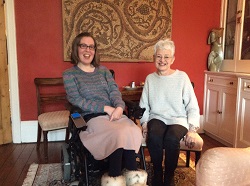
An Interview with Jacqueline Wilson
Rebecca Butler interviews Jacqueline Wilson about her new novel Dancing the Charleston for Books for Keeps.
 RB: You said that you enjoyed the research process for Dancing the Charleston. Could you please explain for our readers how you conducted this research and what led you to enjoy it?
JW: I don’t do conventional historical research, studying the social history of the times. I read a lot of novels written during the nineteen twenties, from Virginia Woolf to Milly-Molly-Mandy. I also loved buying twenties ephemera, pamphlets, magazines, souvenir guides – they gave me a real feel of the period. I even found a scrapbook of dress designs similar to the ones the fictional character Aunty made in my book.
RB: Within the research you conducted, what was the easiest topic you had to address and what was the hardest?
JW: I loved finding out about the 1924/25 exhibition at Wembley. I peered at the map for so long, walking my fingers up and down the pathways, that I feel I could easily find my way around if I was whizzed back into the past. I don’t think anything was particularly hard – I wouldn’t include it if it meant too tedious a search.
RB: In the research process, did you discover anything that surprised you? Or anything that pleased you or saddened you?
JW: I was amazed at the enormous scope of the Wembley exhibition – and fascinated by the oddness of some of the exhibits – like the life size model of a man made out of butter. I was also astonished that adults weren’t allowed to accompany their children into the amusement park.
RB: Many of the celebrated novels about the 1920s focus on the affluent middle class (e.g. Evelyn Waugh, Scott Fitzgerald). Why did you decide to focus on working class characters?
JW: I always like to write about children who are the odd ones out, the outsiders, the disadvantaged. I was brought up on a council estate in Kingston, and left home at seventeen to live in a girls’ hostel in Dundee, so my own background was working class.
RB: This book describes Mona taking the entrance examination for the Girls’ High School. Your books don’t usually deal in detail with the mechanics of the educational process. Why on this occasion does this book do so?
JW: It’s Mona’s chance to change her life, so it seemed important to include it (even if it doesn’t sound as if she did very well!).
RB: The book is set in the immediate aftermath of the Great War. Was it a deliberate decision on your part to mention the war but not to allow it to overhang the book?
JW: Yes, it was deliberate, because Mona doesn’t know very much about it – though she owes her very existence to wartime circumstances.
RB: In your book The Werepuppy there is a character named Mona. Is there significance in the fact that the same name occurs in the current book? Or is this mere chance?
JW: My goodness, I didn’t think anyone had ever heard of my long-ago book The Werepuppy. I’d completely forgotten about that Mona – but she’s nothing like the one in Dancing the Charleston.
RB: Mona drops her best friend Maggie in a sudden and brutal move. Why did you think this necessary?
RB: Mona was upset that Maggie mocked Mr Benjamin. I feel Maggie often mocked Mona too, though her mother was always lovely to her. Anyway, I think girls often do fall out with each other.
RB: Which scene in the book did you most enjoy writing? And why?
JW: I think I’ll choose the Sea Creatures Ball, because it was a delight making up all the bizarre costumes (a starfish; even an octopus!)
RB: Can you tell Books for Keeps readers anything about the book or books on which you are currently working?
JW: I’ve written another story about the grown up Tracy Beaker, due out in October – and now I’m halfway through a new book. I can’t seem to stop writing!
RB: On behalf of the readers of Books for Keeps, thank you for once again granting us an interview.


