
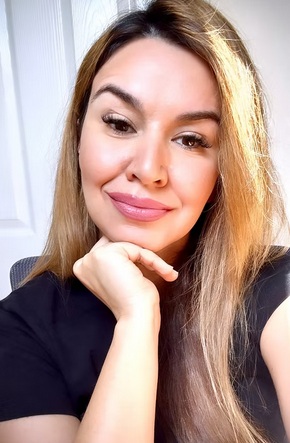
Writing about the people behind the headlines: an interview with Fidan Meikle
Fidan Meikle’s debut novel, My Name is Samim, won much acclaim and attention, appearing on numerous prize lists including those chosen by children. Her new novel, My Name is Zayn, is out now. Fidan spoke to Michelle Pauli about her books and what inspired them.
 A child’s too-small Spider-Man cap and a crumpled map of constellations. There are details at the heart of Fidan Meikle’s new novel My Name is Zayn that are heartbreaking to read – those small objects that ‘carry such huge meaning,’ as Meikle puts it, because ‘they carry home.’
The cap is a treasured possession of Musa, a boy who 13-year-old refugee Zayn shares a room with in a UK hotel for asylum seekers. When Musa disappears – leaving a sketch of Spider-Man on an empty bed – it is devastating.
But this, Meikle has discovered, is the way to write about enormous and almost unbearable things for children: you write small. ‘Whenever you’re writing about big, devastating subjects, writing small is always the key,’ she says. ‘I didn’t need to describe the explicit horrors of trafficking networks to convey the danger and the fear. Instead, I focused on something small – Musa’s empty bed and Zayn’s helplessness, his confusion, his anger.’
Underneath those small objects lies a real and largely unreported crisis: between 2021 and 2023, more than four hundred unaccompanied asylum-seeking children went missing from hotels in the UK.
Meikle, an Azerbaijani-British writer based in West Lothian, won the Jhalak Children’s and YA Prize and the FCBG Children’s Book Award for her powerful, and ultimately hopeful, debut middle grade novel My Name is Samim, the story of 13-year-old Afghan refugee and orphan Samim navigating the British asylum system. My Name is Zayn tells the parallel story of his equally brave best friend, who is separated from Samim during a terrifying Channel crossing. When boys begin disappearing from the hotel where Zayn is staying – hounded by a local gang, with the police failing to act – he knows he must find them himself.
‘Reading those reports for the first time, it felt like a punch in the gut,’ Meikle says of the moment she first encountered the missing children statistics while researching the first book. ‘It was terrifying to realise that these children, these vulnerable children who have been through wars, sea crossings, these harrowing journeys, were vanishing from the very places meant to protect them, and in such huge numbers, with almost no mention of that in the media. It was shocking.’
She threw herself into research: legal documents, news archives, freedom of information requests to local authorities, reports from charity organisations working on the ground. ‘I want to make a point that it’s not a secret what happened to these children. It’s out there. But for some reason it was hugely overlooked by the media.’ She was also fortunate to work with Ayman Alhussein as a sensitivity reader – a young man who had himself been placed in a refugee hotel as a child. ‘His perspective was one of my biggest anchors in writing this book,’ she says.
In the first novel, Zayn was Samim’s light in the dark: the joke-cracking, loyal sidekick who helped Samim hold it together when everything was  falling apart. But as the first book took shape, ‘Zayn kept pushing his way to the front,’ Meikle says, smiling. Beta readers – children, in particular – were unanimous: Zayn was their favourite character. ‘As he grew on the page, it became very clear to me that he had his own story to tell – and it was possibly an entirely separate story from Samim’s.’ Zayn uses humour as a shield, his banter keeping the darkness at bay. Meikle wanted readers to fall in love with ‘his cheekiness and his jokes and his courage,’ so that ‘when his grief and anxiety and his fears surface, it hurts, because they know him and not just his story.’ She succeeds.
Both books begin with the same three words: ‘My name is’. It was a deliberate choice and, Meikle says, a defiant one. The language routinely used about refugees and asylum seekers – small boats, illegal migrants, refugee crisis – is designed to strip away humanity and make it easier to look away. But, says Meikle, ‘our names carry so much – our history, our family, our home, our language, our backgrounds. And by making the title a direct declaration from the child, I’m asking the reader to stop looking at headlines and at the categories and boxes we’re all put into and start looking at a person behind that.’
Zayn is not a statistic; he’s a football-obsessed boy who loves donkeys. Samim is a gifted chess player who can recite Pi to thousands of digits. ‘Refugees is a small part of their experience,’ Meikle insists. ‘Something they’re not guilty of, and something that should never have happened to them. Trauma doesn’t erase who we are, and it doesn’t define us.’ She spent a long time establishing who her characters were before their worlds fell apart. ‘I never wanted any of my characters to become ‘just’ refugee children, because refugees are not who they are. It’s what happened to them.’
Meikle’s own path to these stories is also full of complexity. Born in Azerbaijan, she wrote first in Azerbaijani and then in Russian – the second official language in the Soviet era. Writing in English came later and ‘with a huge dose of imposter syndrome.’ For years she was certain she could not become a published author in English. Then, in early 2021, a newsletter from a charity she supported arrived in her inbox. Inside was a first-person story written by an Afghan boy who had lost his brother crossing the Channel. ‘I couldn’t stop thinking about him. It haunted me,’ she says. Those questions – what does hope look like after such a loss? what does carrying on look like? – drove her to write Samim’s story and plan Zayn’s.
Her background as a poet also shaped her writing: ‘Poetry teaches you to pay attention to rhythm, to quiet spaces and silences between words.’ And writing in English seems to release something of Azerbaijani, her first language: ‘a deeply vivid, figurative language, full of rich imagery, symbolism, metaphor, similes, proverbs,’ so that ‘that native way of seeing the world naturally surfaces and spills onto the page.’ Living between cultures, she adds, gives you ‘a double lens. You’re constantly translating the world around you – not just words, but social cues and humour and body language. You know what it feels like to sit in a room where everyone understands a joke except you, or to have a memory of home that no one around you shares.’ It is why, she thinks, she is so drawn to stories about ‘home not as a place on a map, but more as a feeling.’
However, writing Samim and Zayn’s stories took an emotional toll. There were scenes Meikle postponed for as long as she could, returning to earlier chapters and editing work that was already done. ‘I was lying to myself,’ she admits. ‘But it’s this emotional shield you build because you know when you write that scene it’s going to tear you apart.’ Her family always knew which days she had been writing the most difficult passages, but she has no regrets. ‘You need to feel all of that to be able to convey all of that.’
She emerged knowing exactly what she wanted, and, more importantly, did not want, readers to feel, which is pity. ‘Pity looks down on someone. What I really want them to feel is connection.’ She wants a child reading My Name is Zayn to understand what it takes – the sheer, unimaginable courage – to lose everyone you love at nine years old and to stand later in a foreign school corridor, trying to fit in. ‘No matter where we all come from, we all deserve safety. We all deserve a safe place to call home,’ she says.
Saying goodbye to Samim and Zayn was like ‘saying goodbye to my sons and letting them find their own way in the world. I’m still grieving that farewell.’ She sobbed writing the final paragraph, and relived it with each subsequent edit. But she is at peace with where they finished. ‘I’m very happy with how it ends. I know in my heart they’re going to be all right.’
Michelle Pauli is a freelance writer and editor specialising in books and education. She created and edited the Guardian children’s books site.
My Name is Zayn by Fidan Meikle is published by Floris Books, 978-1835750117, £7.99 pbk.


