Doomsday: An interview with Kevin Moran
Andrea Reece interviews Kevin Moran, the author of the bestselling Doomsday Club books.
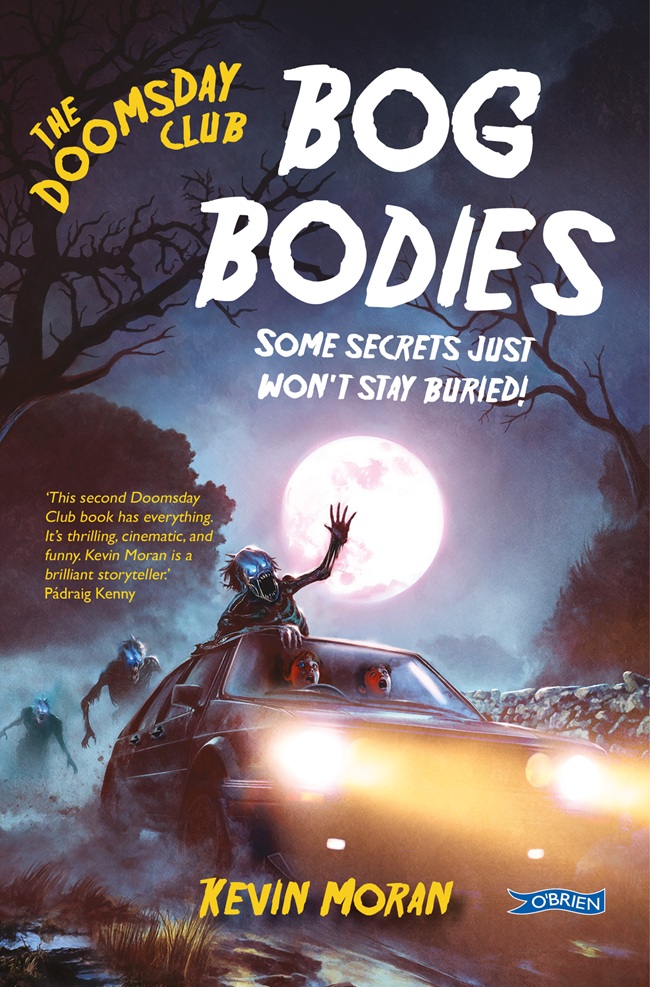 Kevin Moran’s debut, The Doomsday Club, about a group of young Irish boys who inadvertently open a portal into another world, releasing some scary creatures in the process, was published in 2025. It won the Eilis Dillon Award at the Children’s Books Ireland Awards and picked up several shortlistings. Then The Doomsday Club: Shape-Shifters became a bestselling World Book Day title this year, and now his new novel is out, Doomsday Club Bog Bodies. If that reads like an overnight success story, Kevin is quick to correct that impression: there were ten years of writing and unsuccessful pitching before things came together. Advised to have something else underway while you look for a taker for a finished book (in this case a YA fantasy novel), Kevin started what became The Doomsday Club around 2023. Writing it was great fun, indeed, ‘I was enjoying it so much I knew that was going to feed into the book.’ It was shortlisted for the Staróg Prize, which offers new writers representation, and then he found himself at a pitching event with the O’Brien Press: ‘All of my terrible experience of pitching stood me in good stead, because I knew exactly how to pitch this one: It’s Stranger Things, but it’s modern-day Dublin and it’s four boys who hate each other.’ No wonder O’Brien decided to snap it up.
Kevin was teaching full time at that point in sixth class, equivalent to year 7 in England, and this had a major impact on his writing: ‘I guess I was telling stories about the kind of kids I was teaching, so it just lent itself to the Doomsday Club.’
His four lead characters, quiet, shy Conan, clever, hardworking Yash, easy going Jerry and can’t-stay-out-of-trouble Jack are all appealing and thoroughly believable, but for many readers (and certainly this one) Jack will be the favourite. Is it the same for Kevin? ‘I don’t know if I have a favourite. I think probably in the first book I would have said that I didn’t, that I love them all in their own ways and they’re all amalgamations of kids I’ve taught over the years, and bits of myself too. But I think the more I’m writing the series, the more I’m getting fonder of Jack. Any teacher will tell you, you have a Jack in your class every single year, the boy who is going to cause a lot of trouble. And then you teach him and you realize that he has his outbursts, he’s emotional, he just doesn’t know how to handle it. He’s a sweet kid deep down but just can’t express himself right. And I think teachers love that; they love seeing that kid and then seeing the change in them, seeing them come back when they’re in secondary school and how much they’ve grown.
‘That’s kind of what I wanted to write about; as well as writing the fun and the horror and the adventure, that turning point in schools where the gap in maturity between the kids changes.’
His characters have a lot to deal with of course in addition to the usual trials and tribulations of growing up. In this episode, that includes 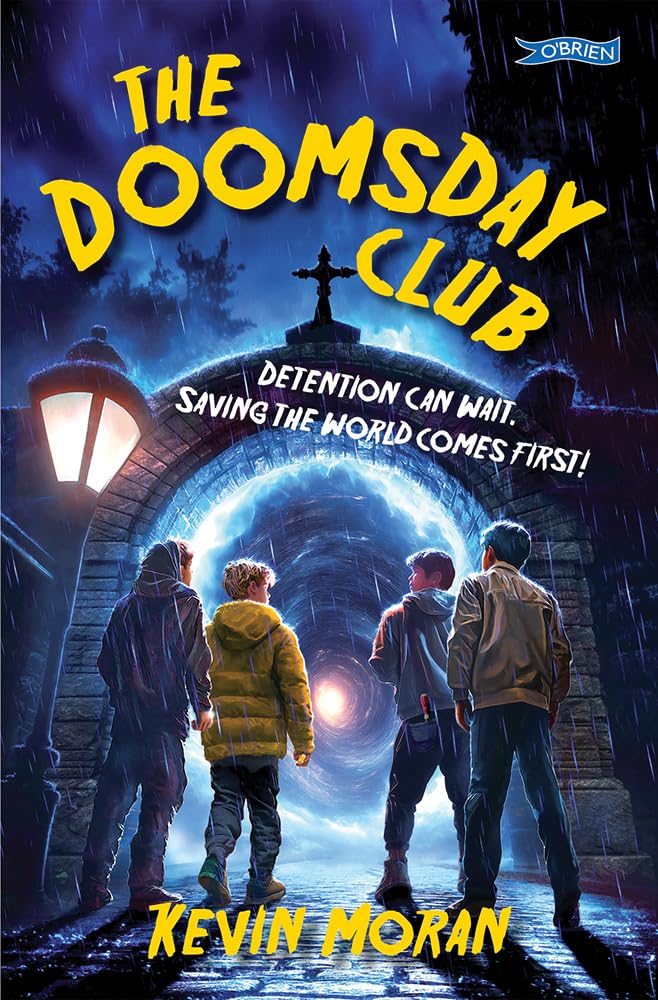 combating a thousand- year-old demon and killer bog bodies (think muddy zombies). What drew Kevin to that kind of story?
‘I was a kid in the 90s when horror hit big time. Goosebumps is what got me into reading. They were just compulsively readable. Plus, there’s that sense of achievement that you’re reading lots of books because they’re short and accessible, and collectible, too. It’s almost like Pokémon. And there were things like Are You Afraid of the Dark, the TV show, and adventures like The Goonies or ET. I love that very ’80s/ ’90s idea of a bunch of ordinary kids on their bikes fixing problems, and nobody’s there to help them. I speak to kids about this when I do events. I show them pictures of E.T., The Goonies, Stranger Things, and then a picture of the front of the World Book Day book and ask, what do they have in common? Well, they’re kids, they’re roughly the same age, they’re on bikes, they’re fighting monsters, all this. And I ask them what the difference is. The two biggest things are the others are all either from the ’80s or written now but set in the ’80s. And they’re all American. I wanted something that was modern, about the kids that I teach, and that was Irish with real locations. And then Irish mythology comes into it too.’
Readers in the UK will be intrigued by that Irish mythology and the way the books’ characters are so accepting of old beliefs. Kevin recognises that and gives the example of his father, ‘a very logical, sensible person’, except when it came to the subject of fairy forts, when all of a sudden, magical things were deadly serious. It’s an example he uses in the book in fact.
But mostly, he says, ‘I get a real kick out of kids reading about places that they might recognize. It’s nice to have Dublin be a character and it’s lovely to have a bit of the Irish language in the book, but also not have it be a case that you need to understand the Irish language to read it.’
BookTrust have put The Doomsday Club on their Bookbuzz scheme. ‘It gives me such a kick that these thousands of kids in the UK are reading a book with the Irish language in it,’ he says. ‘Even with mythology, a lot of what people know is Norse mythology or Roman or Greek or Egyptian. But there are plenty of weird, strange stories in Irish or Welsh mythology, and it’s nice to have them become a bit more popular.’
Alongside the genuine creepiness of the stories, Kevin also makes them very funny, a scene in the latest book, in which Jack takes to the wheel of a car to escape rampaging bog bodies, having had just one lesson, for example, is terrific.
‘I think the second book is definitely funnier,’ he says, ‘The reason is that the best humour always comes from the characters. You can’t write a handful of jokes and then divvy them up amongst the characters. It just doesn’t work. Whereas if you have clearly defined characters, the humour comes from just putting them into situations and thinking what they would say or do. In Bog Bodies, when I knew them so well and didn’t have to introduce them, I found that kind of humorous dialogue came much quicker because well, of course Jack would say this in this situation, or of course Jerry would be doing this. It’s just so much fun to write and I think if you’re enjoying what you’re writing, it comes across.’
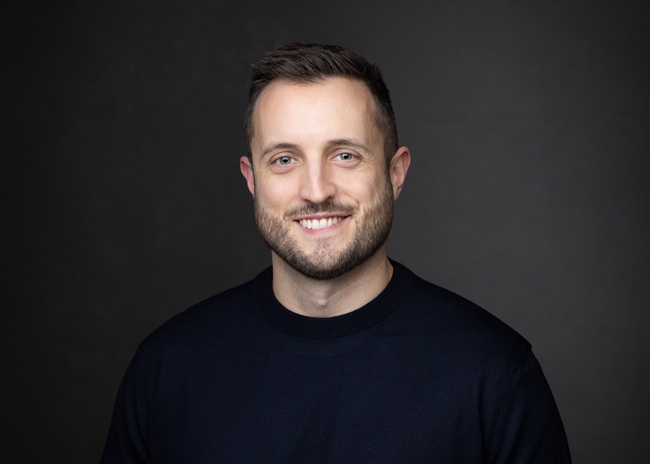
Kevin Moran by City Headshots Dublin
He’s delighted to see the current upsurge in spooky stories for young readers. ‘I think kids enjoy a thrill and I think they’re looking to be excited by books again. Not that books ever stopped being exciting, but kids are chasing a thrill more, and a lot of the new scary books are very accessible, very easy to read. We’re really seeing a huge drop off with reading, particularly for boys, of 11, 12, 13. I see it when I’m teaching that age range. The girls are much more open to moving on to YA, or Romantasy or even adult crime novels, whereas the boys are reading football books or Diary of a Wimpy Kid and then they’re just stopping. I think that’s definitely been corrected now.’ He names Jennifer Killick as an example and highlights Jack Mackay’s Gloam too, ‘It’s fantastic, really creepy and kids get a thrill, but it’s that safe thrill of “I’m lying in bed. I can put my head under the covers if I need to.”’
He really enjoys seeing kids getting excited by the Doomsday Club books. ‘It’s one of the reasons I wrote it. I knew the Conans of the world would be interested, but I wanted to make sure there’s something that the Jacks will like too, those who wouldn’t be as keen on picking up a book.’
Kevin is working on the third book in the series now. Will there be more? ‘I think three is a nice number,’ he says, and ‘I’ve always had an idea of how it would end.’
Fans needn’t despair though: ‘Even after that, I want to keep writing books that are fast-paced, funny, action-packed, engaging and just get kids loving reading because it can be great.’ Hear, hear.
Andrea Reece is Managing Editor of Books for Keeps.
The Doomsday Club Bog Bodies by Kevin Moran is published by the O’Brien Press, 978-1788496148, £8.99 pbk.


