
Steve Cole and The Wild Ones an interview
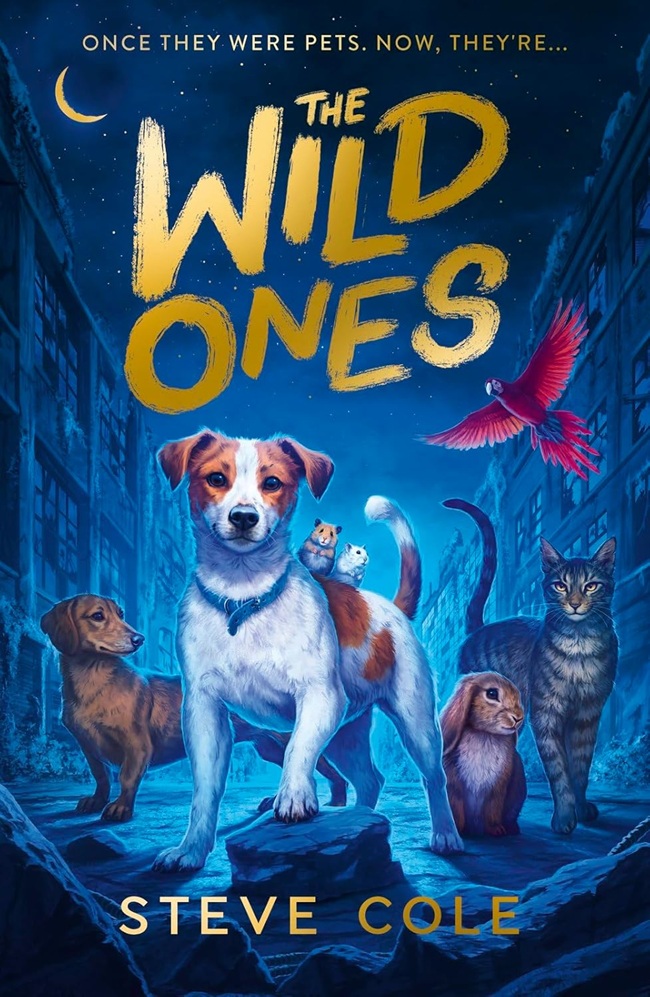
Steve Cole is the author of over 200 books, including the Astrosaurs series, Doctor Who novels and Young Bond titles. But The Wild Ones, marks a new direction for him. The story of a band of pets forced to fend for themselves after an apocalyptic event, it’s a thrilling survival quest adventure that will have young readers gripped. Graham Marks interviewed Steve about the book for Books for Keeps.
 We meet, remotely, just after Steve Cole has returned from a stock signing tour which took him to Birmingham, Sheffield, Leeds, York, Newcastle, Manchester, Liverpool and beyond. It was, he says, lovely to meet the booksellers and see The Wild Ones on display.
Steve’s writing career stretches a long way back, his debut being a series of poetry pop-up books published in 1997. ‘My day job at the time was working for BBC Preschool Magazines, I would generate copy for the magazines and because I enjoyed it, I would write little stories and poems for some of the titles. One of the illustrators we used, Louise Gardner, said that a publisher she worked for was looking for an author. And so I sent in a couple of samples on the Friday and they called me back on the Monday to ask me if I would like to write these books. That’s how I started.’
Working at BBC Magazines also took him into the world of Doctor Who. ‘I considered myself an editor because that’s what I was doing, mostly. In fact, I was looking after a ridiculous number of novels, two 80,000-word novels each month. It was insane, on top of videos and audios and nonfiction and it was just me doing it. It was crazy. But it did give me some on-the-job writing experience!’
He is, very obviously, someone who can’t help telling stories. Had he always wanted to be a writer? ‘To this day, I feel kind of twitchy if I haven’t got stories on the go when I wake up…looking back, I didn’t know what I wanted to do, and I didn’t even think being an author would be possible, but I still have copies of the books I was writing, age seven or eight, little episode guides to non-existent TV shows starring me as Peter, the boy investigator, and my sister Anne, getting involved with ghosts and aliens and monsters and stuff.’
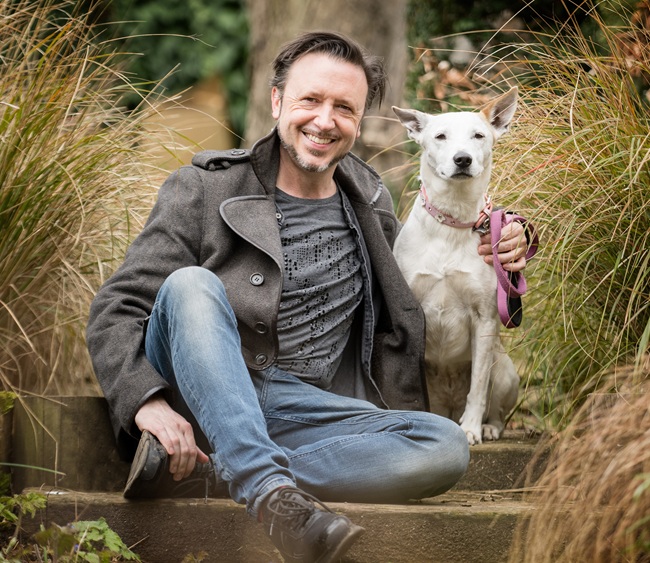
At the launch of The Wild Ones Steve told us that the idea came to him during the COVID lockdown. Did he get a pet then himself or did he just know people who did and wondered about what would happen when the nightmare was all over? ‘I did have a pet already, a rescue dog called Clara that The Wild Ones is dedicated to – in fact, because she was a lot of my inspiration, I wanted to make her a main character, but then I got upset at the thought of putting her through these horrors. She makes a cameo appearance right at the end in the safe place, so it’s all right. But no, I was just reading on the news about how sales of dogs had gone up, and I was thinking this is so shortsighted because what happens when everyone has to go back to work? And then obviously you know what it’s like as a writer, you then take it a step further and it becomes, what if the people didn’t just go to work? What if they left the house but didn’t come back? What if that was it? What would happen to the pets then?’
The ‘event’, The Big Growl that kickstarts this story is never explained – I assumed either alien invasion or massive nuclear/chemical warfare –
Steve Cole
but did he have anything specific in mind? Because the vicious ‘things’ in the story, the widespread destruction and the complete disappearance of humanity point to something pretty apocalyptic. ‘I did wonder how best to approach that…in the end, I felt it was best to leave it vague because the animals would have no clue of what happened. You couldn’t have a dog informing you that some nuclear strike had occurred or whatever. In my mind what I think happened is, as you say, some wider conflict, [and we find ourselves on] the fringe of a big disaster. I think it’s more scary not knowing what happened.’
With no way to understand what’s occurred, and being conditioned to depend on others, this new world is way beyond anything the animals have ever had to deal with. ‘The rabbit character, Punzel, knows rabbits can’t survive in the wild, so he’s particularly terrified of the whole thing. If he hops outside, that’s going to be the end of him. I was taking innocents and putting them in a scary situation.’ The particular tightrope Steve had to walk was to keep the story child-friendly, all the while exploring some extreme circumstances. ‘There is drama, which gives the animals depth and has the reader sympathizing with those characters, and maybe seeing something of themselves in them.’ We, and the animals, understand that ‘outside’ is dangerous, and that’s enough for all of us.
With a cast of six protagonists – two dogs, a cat, a parrot, a rabbit and a brace of hamsters – it’s the cat, Chandelier, who is something of the villain of the piece and as a cat person I found that a tad unfair. ‘Well, she does go on a journey…and I think she’s worked it all out by the end,’ Steve says. ‘It’s like in a wartime occupation story, [with] a sympathizer who turns on the others. So Chandy, who’s never seen other cats, isn’t the most sympathetic character but she learns…it’s not just the Jack Russell, Scamp’s, journey. You want the others to have gone through something as well, and in Chandy’s case, it was a pretty hard lesson to learn.’
Was the cast of characters, as we meet them, there right from the start? ‘They were…although originally I did have some gerbils in there as well, and some of the gerbils died early on when the ‘things ‘invaded. But that seemed just a bit too dark to kick off the book with, so I ended up ditching them. This book was very different for me because I actually took a long time to write it, going in wrong directions, revising, changing, because [I had no idea] what would happen to it. I was writing something, it felt like after all these years being a writer, that I wanted to do; it felt quite important.’
While we’re talking characters, I have questions about Pam, the pet centre employee who disappears after a couple of chapters; I’ll admit to spending the entire book waiting for Pam to turn up again, because she played such an important role to begin with. In any of the iterations, did she reappear? ‘I thought about it, but I felt that her absence had actually become such an empowering thing for the animals that to bring her back would diminish the importance of the journey that they’d been on. Although the happy ending would be to have Pam somehow make it back, [it’s better] we don’t know what happened to her. So it’s a sad situation, but as Scamp says, by the end, he’s not sure that he could go back to being a pet, but he knows he’ll always be a good friend. I think that is what the story needed, really.’
A story isn’t only about character and circumstance, it’s also about place – in his mind’s eye, where is the story set? ‘That’s an interesting question…well, it has to be near the coast, which was one of the first images I had for this story, beach huts being kind of a safe space outside of the city…but I didn’t have a specific place in mind, it was really just a town someplace. I think it’s the journey that’s the important thing rather than the actual location, much as the situation they’re in is more important than the reason for it being there.’
Without spoiling anything for anybody, I can say that the ending – generally not only the hardest, but most important part of any book – is here, both hopeful and tinged with sadness. Did he know right from the outset that’s how it was going to be? ‘Yes, that’s there in the original notes. It was a way of showing that life can move on. Patticake, the dachshund, becomes a symbol of the old world. He survived the adventure and seen his friends safe and happy in their new surroundings, and he’s told his stories to some of the young ones, and it’s kind of time for him to go. And so when people ask me if there should br a trigger warning I say, ‘Well, all the animals complete their journey,’ and I hope that it’s told in a way that will make adults more upset than children. But I like to think it’s still a happy ending and although it’s sad, I hope I handled it sensitively.’
Do not worry, reader, he did.
I have one final question, which is: are we going to get to find out what happens next? ‘Well, not immediately, but never say never. I’m working on another animal adventure, but it won’t feature the characters of The Wild Ones or be set in that particular world. But as with all these things, if there’s interest and if there’s demand, obviously I’ve already thought about what might happen next, because you know what it’s like as a writer, you can’t resist a “what if…”’
Graham Marks is an author, advertising copywriter, journalist and interviewer. After ten years living in the USA, he’s now back and living in Glasgow and his latest novel, Going West!, will publish later this year.
The Wild Ones by Steve Cole, illustrated by Johanna Tarkela is published by Scholastic, 978-0702349157, £7.99pbk.


