

Authorgraph number 278: Brian Moses
Brian Moses interviewed by Ferelith Hordon
I met Brian Moses online for a lively conversation around his work and most particularly his collection On Poetry Street and, of course, his latest book – a free-verse chapter book, I am Ray’s Imaginary Friend. Brian is well known for his many poetry collections, picture books, anthologies and early years’ chapter books. He is also well known for his performance poetry in which he will accompany himself with an instrument – very often a drum; who can forget Walking with my Iguana which you can hear on the Children’s Poetry Archive as well as on his YouTube channel?
 When did poetry become important to him? Did he grow up with poems in his childhood? Did he read Lear or Lewis Carroll? Surprisingly not: ‘I really came to poetry through the lyrics of rock music. I was listening to the Beatles and Bob Dylan… and reading the lyrics on the back of the album sleeves. And that was my first introduction to words and how you can assemble words into something meaningful. Then I encountered the Mersey Scene – Roger McGough, Brian Patten, Adrian Henri … That was a kind of Road to Damascus moment for me.’ He realised that poetry could be fun and meaningful for a teenager like him. ‘It spoke to me and really started me off writing’. School had provided no support. Indeed, his one effort at writing a poem had merely elicited a comment about his handwriting. At Secondary School his teachers had little enthusiasm in teaching poetry presenting it as dull and difficult, ‘It was in a way inappropriate material at an inappropriate age,’ he comments. As a result, it took a long time for him to find a connection with the traditional canon. However, visiting the Lake District as an adult brought Wordsworth to life, a visit to Cawdor Castle opened him to Shakespeare. Now he explores all the time. I am reminded of the anthologies he has edited. ‘One of the best was when Macmillan asked me to do an anthology of my favourite traditional poems. That was just lovely.’ Does he have a particular favourite poet? ‘Charles Causley – a wonderful, wonderful writer,’ is his immediate response.
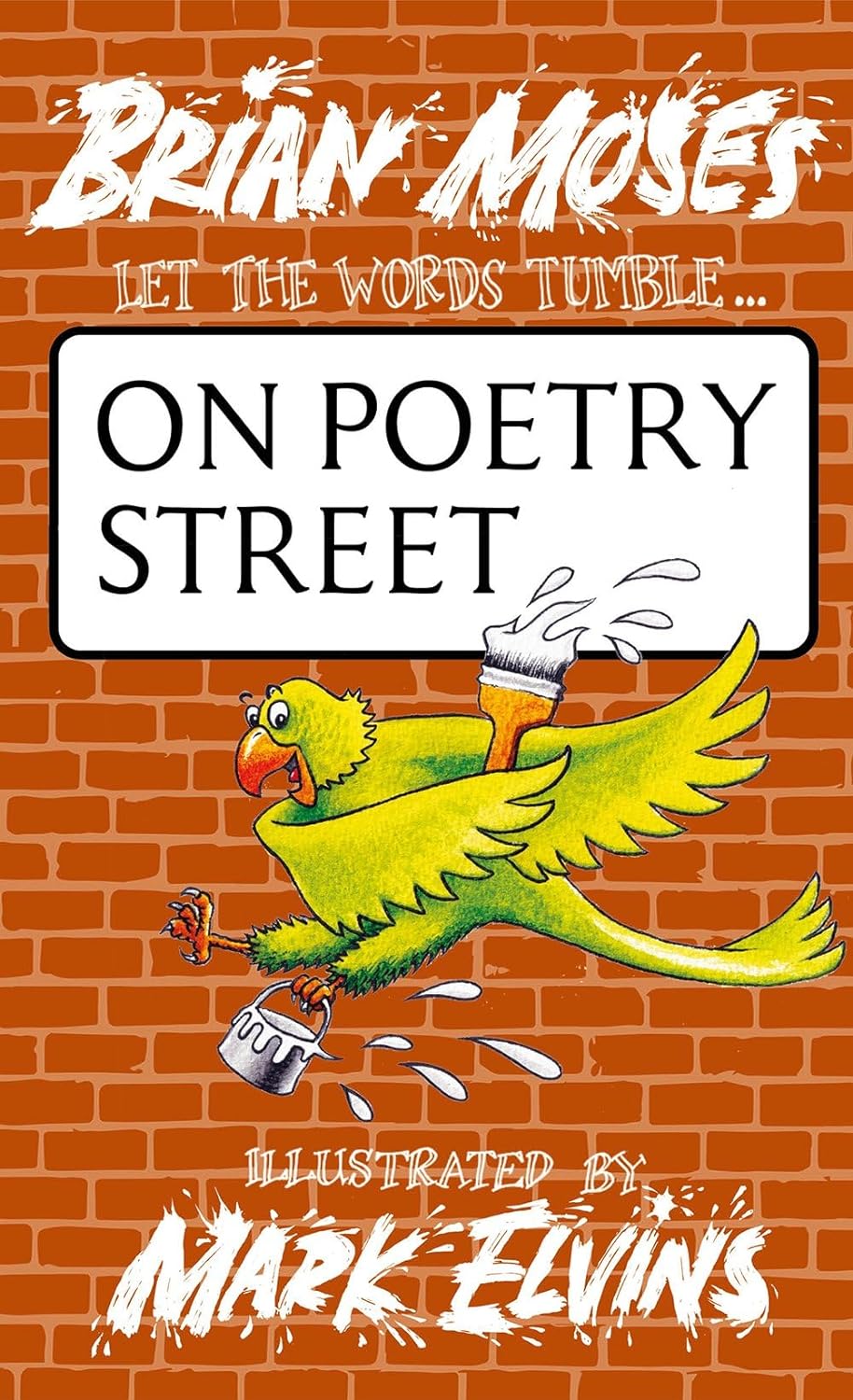
Who does he see as his audience? ‘I haven’t written much for the Secondary age range, although as I always say to people, I write poems for children and for the child in every adult.’ His work is very much aimed at a younger audience often involving school visits. This came about when he was a teacher, using the work of poets like Kit Wright and Michael Rosen: ‘That’s when I realised poetry could be written directly for children and when I started writing my own poetry.’ Does he find a reluctance today among the teachers to use poetry in class? Often, he will be told by a teacher that the children are afraid of poetry; Brian feels rather that it is the teacher who is afraid of poetry. This was the impulse behind On Poetry Street –to make a way into poetry for teachers. ‘The models are there and they can use them,’ he says. Then there is the performance element. Does he consciously compose with a beat in the background as he works? Yes – often he will be tapping on his desk aware of the rhythms behind his words – not always of course but when the poem seems to 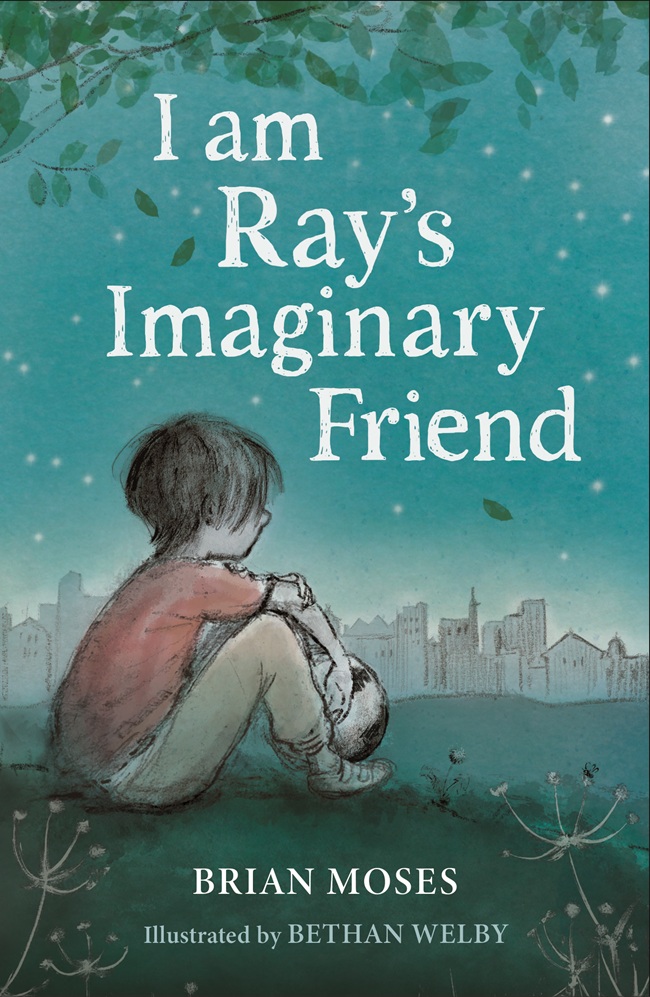 demand it. We are back with that teenage introduction to poetry.
It is his poetry that people will recognise, contemporary, fun, full of rhythm demanding to be spoken aloud. However, I Am Ray’s Imaginary Friend marks a new direction. Why has he decided now to try a verse novel? He had read Love That Dog by Sharon Creech and thought it an interesting format but took no action at that point. It was only after reading an article about imaginary friends that a spark was lit, the result this new book, a story about an imaginary friend in the words of that imaginary friend. He was also particularly interested in writing a verse novel for a younger audience: ‘Verse novels are quite popular at the moment, but I cannot think of many for the younger age. One aspect really struck me, as an author who has written early chapter books, which is where is the boundary between a conventional prose narrative and this free-verse composition? Was it something to do with the absence of description?’ I noticed that in I am Ray’s Imaginary Friend there is very little description. Did he find a tension between writing free verse with its very direct, stripped back format and the fiction he had written before? ‘I think because I was thinking it was really going to be for 7 to 10 year olds it was to do with economy of language and speaking to them directly, and wanting them to really focus on the narrative as it went along without putting in too much description…I just wanted it to be as direct as possible, so somebody reading it through would travel very easily from one bit to the next.’ How much was autobiographical I asked. Did he have an imaginary friend as a child? ‘No – I had a friend across the road…I didn’t need an imaginary one.’ His childhood in fact was a very happy one, an only child roaming the countryside and beach round Ramsgate. But there are some autobiographical elements in this new book – the poem Inch for example, answering the owls, Bess the dog (Jess in real life), the Ukrainian family, aspects of village life – and humour. He may not have had the experience of an imaginary friend, but he knows people who have. For him it was an interesting way to tell his story, and he wasn’t aware of any other book using this particular approach and voice, ‘I always think, with my poetry too, there are very few new subjects to write about today. It is just finding that angle, that different way in to express yourself…’
As the verse novel becomes more popular might there be a risk of the format seeming to be an easy one, leading to lazy writing? Brian agrees a little but feels that, ‘It is easier to tell when something doesn’t work. You have got to have an idea yourself that this really is justifying the technique you are using… yes, I wanted to challenge myself because I hadn’t written a verse novel before…and to me it seemed to be working.’ He comments that there are so many who think they can write children’s poetry; you just have to be funny, whereas: ‘I think we underestimate how sophisticated children are’. He is convinced children deserve thoughtful, thought-provoking writing. And here in On Poetry Street and I am Ray’s Imaginary Friend, Brian’s commitment to providing the best for a young readership is very clear.
Ferelith Hordon is co-editor of Books for Keeps and editor of IBBYLink, the online journal of IBBY UK.
Books mentioned, published by Scallywag Press
On Poetry Street by Brian Moses, illustrated by Mark Elvins, 978-1915252593, £8.99 pbk
I Am Ray’s Imaginary Friend by Brian Moses, illustrated by Bethan Welby, 978-1836300342, £8.99pbk


