
The Wide, Wild World of Ursula Dubosarsky
Jon Appleton introduces the work of Australian children’s author Ursula Dubosarsky.
 I once read an essay by Beryl Bainbridge who said she avoided writing short stories because they wasted material you could stretch into a novel. Bainbridge’s now-classic novels were concise and succinct – and short. So too are the novels of multi-award-winning Australian writer for young people, Ursula Dubosarsky.
Perhaps you are unfamiliar with Ursula’s work. So here are the first paragraphs of three of her novels.
Let’s kick off with The First Book of Samuel (1995):
Most of this story happened when Samuel was nearly twelve, and Theodora just thirteen. But stories can only happen because of all the things that happened before, no matter how small and sudden those things may have seemed at the time. Or no matter how large and terrible, and no matter how much a person might prefer to live as if such things had never happened. They happened, it’s on the record, and that is why things are as they are.
We’ll look next at Zizzy Zing (1991):
This is a story about things that happened in the summer. You know what they say about summer – either lots of things happen to you or nothing happens to you at all. Well, this summer was one of the first kind, and some of those things were terrible things. Things to make you shout out in the night.
And this is how she begins The Golden Day (2011):
The year began with the hanging of one man, and ended with the drowning of another. But every year people die and their ghosts roam in the public gardens, hiding behind the grey, dark statues like wild cats, their tiny footsteps and secret breathing muffled by the sound of falling water in the fountains and the quiet ponds.
These beginnings represent a quality of Ursula’s work for older readers which makes it so intriguing and exciting: a sense of sheer abundance, offering a freight of experience outside – but essential to – the realm of the tale being intimately told. Her novels are imbued with a whole raft of other stories, entire quiet histories of families and public global conflicts and the trajectory of cultures. This embeds the narrative with wisdom and caution and optimism.
This abundance is ironic, when you think about it, because the novels are short (succinct, spare – choose your own term).
Unlike Beryl Bainbridge, Ursula hasn’t avoided writing short stories. ‘I think I’m more a natural short story writer than a novelist,’ she told me from her home in Sydney. ‘Perhaps my mind is one that thinks like a short story, in sort of emotional moments. The intensity draws me – you can’t sit back and relax when you read (or write) a short story – every word counts, you have to pay attention – like reading (or writing) a poem.’
Short stories operate differently to novels. Where the characters come from and what has happened already influence a novel’s plot. But in short stories characters are compelled towards a moment of reckoning, where they must make their own decisions, which will inform the rest of their lives. This makes for bracing reading.
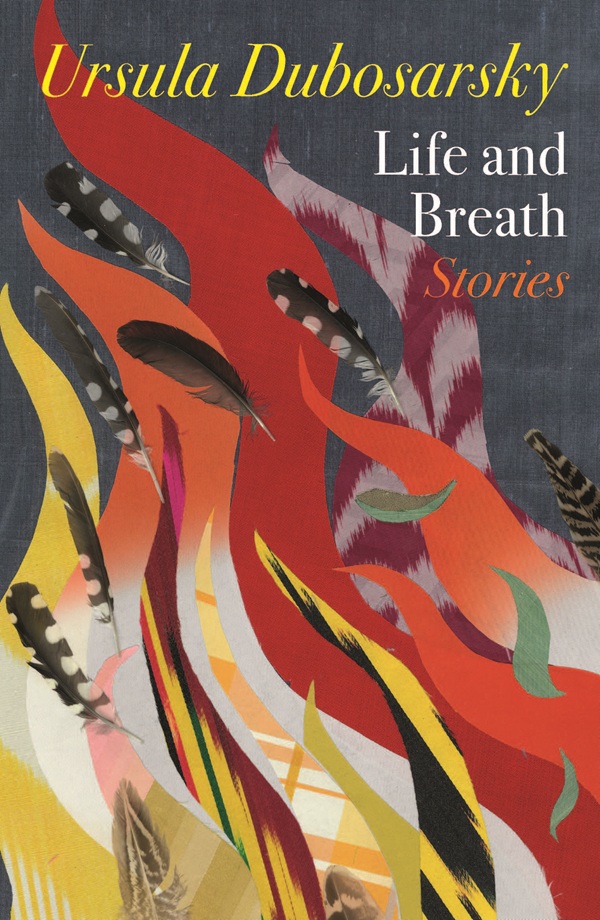
I’m proud to have just published a collection of Ursula’s stories, which previously appeared in magazines and anthologies, called Life and Breath. (I recommend you seek out her novels too).
Part of the marvel of these gems is that they absolutely bear the legacies of human experience that equip the novels. Details – like a character’s name (Alaric, Rosabel …) or a flavour (sarsaparilla), or a type of clothing or … or … so many things, tell us the present circumstances of the story owe so much to other unforgotten lives, and times.
They bear a trace of exoticism, too, which is also ironic, as they are all firmly set in Australia. Ursula explained that while she gets ideas ‘when I’m away from home, they are almost all ideas about Australia.’ She has spent time in Argentina (where her husband was born), in Israel, the UK and most of all in Paris (where her daughter lives). Yet: ‘I think where you live and the times you are living in seep into everything you write … I suppose each writer has to work out for themselves where and when they feel they are most at ease writing about, most themselves, dare one use that overused word “authentic”! For me, at any rate, that has always been Sydney – more or less late-twentieth-century Sydney.’
Authentic and exotic – strange bedfellows, perhaps, but both in evidence in Life and Breath, which varies in tone and theme, in length and scope. (You’ll laugh out loud and quietly reflect with equal satisfaction.) Overall, it’s an excellent place to start your journey into the wide, wild world of Ursula Dubosarsky’s writing.
Jon Appleton is a children’s book editor, researcher and author, and editor of the gab, a zine published five times per annum which celebrates innovation and inclusivity in children’s books from the second golden age of children’s books. He manages the website http://www.janmark.net.
Life and Breath is available now from Roffo Court Press, 978-0993547386, £8.99 pbk.
Free teachers’ notes for Life and Breath are available at ursuladubosarsky.squarespace.com/life-and-breath


