
Comics in the Classroom: Meet Rochdale’s Graphic Novel Reading Ambassadors
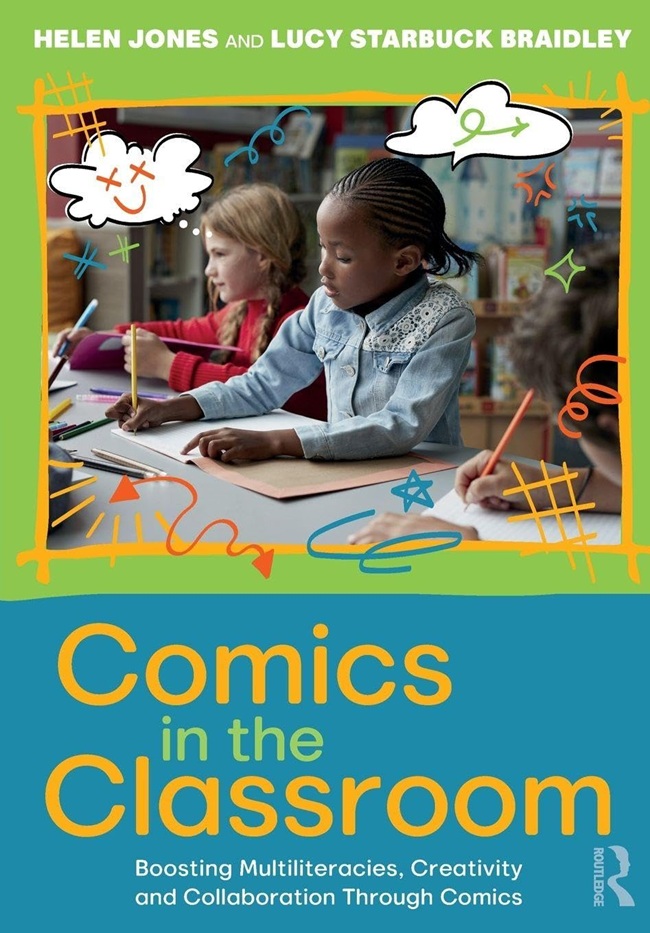
In their new book Comics in the Classroom, Helen Jones and Lucy Starbuck Braidley explain the different ways in which comic can be used in the classroom to transform learning experiences and enhance engagement, with a focus too on reading for pleasure. In this extract, they spotlight work happening across a range of schools in Rochdale and the impact reading comics is having there.
 In her previous role as an advisory teacher for Rochdale Local authority, Claire McGreevy was a long-time advocate for reading for pleasure in schools. Throughout her practice she noticed groups of children who were disengaged from reading. When she left the classroom to become an advisory teacher, she had a particular remit to boost reading for children with a social worker. As she explains, I took on this role specifically to support schools strategically, with improving educational outcomes because, historically, children with social workers face so many challenges, but developing that reading habit is absolutely essential. And they can go on to achieve even better than their peers with the right support.
In order to improve attitudes towards reading, Claire designed a now award-winning graphic novel project that would see care experienced children, and children with a social worker, take on the role of classroom reading advocate, with a particular focus on graphic novels.
The ten primary schools involved in the pilot received professional development for staff on comics and graphic novels and collections of graphic novels for their classrooms. Gail Reed from Harwood Park school in Rochdale was one of the participating teachers. The training sessions provided in the project were key to getting staff on board and changing perceptions towards illustrated texts. Prior to the project the school had picturebooks and a small range of comics in the library, but largely viewed them as starting points that children should move on from as their reading journey progressed. This perception shifted when the impact that access to graphic novels had was observed throughout the project, one participating teacher noted ‘As a school, and as a teacher I had to re-evaluate and think well, why am I not using the picturebooks? Why am I not using these and putting them in our book area?’
As well as the main library, comics-rich reading corners were set up in each class, which were overseen by the reading ambassadors. Child empowerment was central to the implementation and ultimate success of the programme, the children played an active role in the selection of the books they had in their classroom and as a result, the graphic novel collections were incredibly popular.
As well as advising on the book stock, the reading ambassadors are charged with keeping track of borrowing records in their class, with noting down requests for new titles and with tidying reading areas, something they take great pride in. Alongside the reading ambassadors, Gail has also become an important reading role model in the school, engaging with graphic novels as a reader and positioning herself as an equal in their reading community: ‘I’ve got really involved in reading them myself as well and sharing that knowledge with the children… I’ve borrowed them off the children, and the children have borrowed ones I’ve got.’ This mutual exchange and interactions around text have been a key part of building the reading culture in the school: ‘the fact that I had read the books as well, that blew their minds.’
The children’s book knowledge has improved alongside the staff and they have pride in their collections:
‘The children know more now they’ve taken it on board. They know which ones they like, which ones they’ve chosen and they’re like, ‘Oh, I want that one’, ‘Oh, can we get this one?’, ‘Can we order this one?’… they’ve then got ownership as well. They have the ownership of loaning the books out and they’ve taken that responsibility… I’ve never had one that’s gone home and got wet or got eaten by a dog and not come back. The pride that they’re taking looking after them as well and comments from parents of ‘He won’t read’…’He didn’t read in the whole of last year, yet he’s been in your class and he’s read this book, this book and this book.’
The projects’ original aim of encouraging disengaged readers was certainly met, something Gail attributes to the overall accessibility of the form: ‘We have a lot of mobile children or children with EAL, so it’s helped them as a kind of a gateway into the reading’. As well as the frequency of interactions around books occurring in school, children’s reading behaviours outside of school also started to shift, with children who would have previously spent much of the evening playing online, coming in to proudly discuss the book they’ve been reading instead. It wasn’t just the disengaged readers accessing the form and finding value in it; higher-attaining children in the cohort also enjoyed exploring a new reading format. The universality of appeal of the graphic novel collections has increased social interaction around books outside of the classroom too, with lower-attaining children being able to access the same books as their peers:
They can still read those books…. they’re reading something their friend is reading. They can join in a discussion with their friends at playtime about Bunny vs Monkey or The Investigators… They’re not excluded from that conversation in any way.
The project was originally run with children in Year 5, but as they moved into a new academic year, Gail began to notice a ripple effect across the school. The buzz around reading graphic novels has spread across year groups, with younger children overhearing conversations on the playground or from siblings at home, and beginning to seek out the reading material for themselves too. Now, on World Book, more children are coming dressed as characters from graphic novels and the passion for comics has taken root across the school.
A collaboration with the local library enables children to access a wider collection of graphic novels that can sustain them outside of school, including during the school holidays, when reading frequency typically drops. Children are taken to the public library on a regular basis during the school day to build their confidence and skills in library usership and staff have made sure there is a growing collection of graphic novels to support their reading preferences.
The validity of comics as a reading form has been further solidified at Harwood Park by their inclusion in the school curriculum, as a way to improve access to the complex Victorian text, The Hound of the Baskervilles, ‘In our English lesson, we pulled out the graphic novel and use a section of the original text with the section of the graphic novel and the children have been so engaged…so it supports our overall curriculum’ and children particularly enjoy the non-fiction comic series I Survived, with the Second World War edition complementing their curriculum learning in history. As well as curriculum coverage, comics are also promoted as a creative activity, Gail’s weekly comics club provides opportunity for children to both read and create comics for pleasure – something that will be explored in more detail in later chapters of this book.
The graphic novel project instigated by Clare McGreevy in Rochdale has already extended beyond the initial scope of the project and become embedded in the school’s approach to reading for pleasure. Gail is optimistic about their future place in the school’s reading culture, ‘I think it will only grow because it started off with a small section in the library and within a year that’s doubled’. It provides a fantastic example of the impact that providing access to quality comics and graphic novels, and empowering children to make their own reading choices can have on all learners, including the most disengaged or disadvantaged amongst our cohorts.
Comics in the Classroom by Helen Jones and Lucy Starbuck Braidley is published by Routledge, 978-1041036180, £23.99 pbk.


